
 English
 中文简体
中文简体 عربى
عربى

Content
- 1 Why Choosing the Right Ice Making Machine Defines Your Business Operations
- 2 Types of Ice Making Machines and Their Commercial Applications
- 3 Machine Configurations: Cube Ice Integrated vs. Cube Ice Split Ice Machine
- 4 Key Factors When Buying an Ice Maker Machine for Business
- 5 Cleaning and Maintenance of Ice Making Machines
- 6 Making the Final Decision: A Practical Framework for Business Ice Machine Selection
- 7 References
Why Choosing the Right Ice Making Machine Defines Your Business Operations
The right Ice Making Machine is not simply a utility appliance — it is a direct contributor to product quality, customer satisfaction, and operational efficiency in any food service, healthcare, or retail environment. The global commercial ice machine market was valued at approximately USD 3.2 billion in 2023 and is projected to grow at a compound annual rate of 5.4 percent through 2030, driven by expanding food service infrastructure, rising standards in healthcare hygiene, and the growth of premium beverage culture that demands specific ice types and presentation quality. Whether you are outfitting a new bar, scaling a hotel operation, or equipping a healthcare facility, the machine type, configuration, and capacity you select will directly determine how consistently and cost-effectively you can meet that demand.
This guide provides a practical, detailed breakdown of the principal Ice Making Machine categories available for commercial use, the two primary machine configurations that govern how ice is produced and stored, the key technical and operational factors that should drive your purchasing decision, and the cleaning and maintenance practices that protect your investment and ensure ongoing compliance. Each section is designed to give operators, purchasing managers, and food service professionals the information needed to make a well-informed, specific choice rather than defaulting to generic industry recommendations.
Types of Ice Making Machines and Their Commercial Applications
Commercial ice machines are not interchangeable. The type of ice a machine produces has a direct impact on the consumer experience, the functional suitability of the ice for its intended application, and the operating economics of the machine over its service life. Three categories dominate the commercial market: the Gourmet Cube Ice Machine, the Nugget Ice Making Machine, and the standard cube ice machine. Each produces ice through a distinct freezing process that results in a different shape, density, clarity, and melt rate, all of which determine where each type performs best.
Gourmet Cube Ice Machine: Crystal Clarity for Premium Beverage Presentation
The Gourmet Cube Ice Machine produces the most visually impressive and functionally sophisticated ice available in commercial equipment. Gourmet cube ice is formed by a slow, top-down freezing process in which water is continuously circulated over a refrigerated evaporator plate, allowing dissolved gases and minerals to be pushed out of the ice matrix as it forms. The result is a crystal-clear, dense ice cube with a slow melt rate and minimal dilution impact on beverages. Gourmet ice cubes typically have a melt rate 25 to 40 percent slower than standard cube ice under identical ambient conditions, a measurable quality advantage that translates directly into better beverage flavor and fewer complaints about watered-down drinks.
The trade-off is production speed. Because the slow-freeze process is time-intensive, a Gourmet Cube Ice Machine produces significantly lower daily volumes than an equivalent-footprint standard cube machine. A gourmet machine occupying a given cabinet space might produce 150 to 300 pounds of ice per 24 hours, while a standard cube machine of comparable size produces 300 to 600 pounds per day. This makes gourmet cube machines best suited to environments where ice quality is the defining purchasing criterion and daily volumes are moderate.
The ideal commercial settings for a Gourmet Cube Ice Machine include:
- Craft cocktail bars and upscale lounges where the visual presentation of a single, clear cube in a whiskey glass or premium spirit is part of the premium experience the customer is paying for
- Fine dining restaurants where beverage quality is an extension of the dining brand
- Hotel bars and premium event spaces where a consistent, high-quality beverage presentation is expected by the clientele and is a brand differentiator
- Specialty coffee and tea shops serving iced premium beverages where ice dilution would compromise the flavour profile of the drink
When specifying a Gourmet Cube Ice Machine, operators should verify that the machine uses a continuous-flow water purge system during the freeze cycle, as this feature is the primary mechanism that produces optical clarity. Machines that use a static freeze method without water circulation will not achieve the same clarity, even if marketed using gourmet terminology.
Nugget Ice Making Machine: Soft Ice With Broad Cross-Industry Appeal
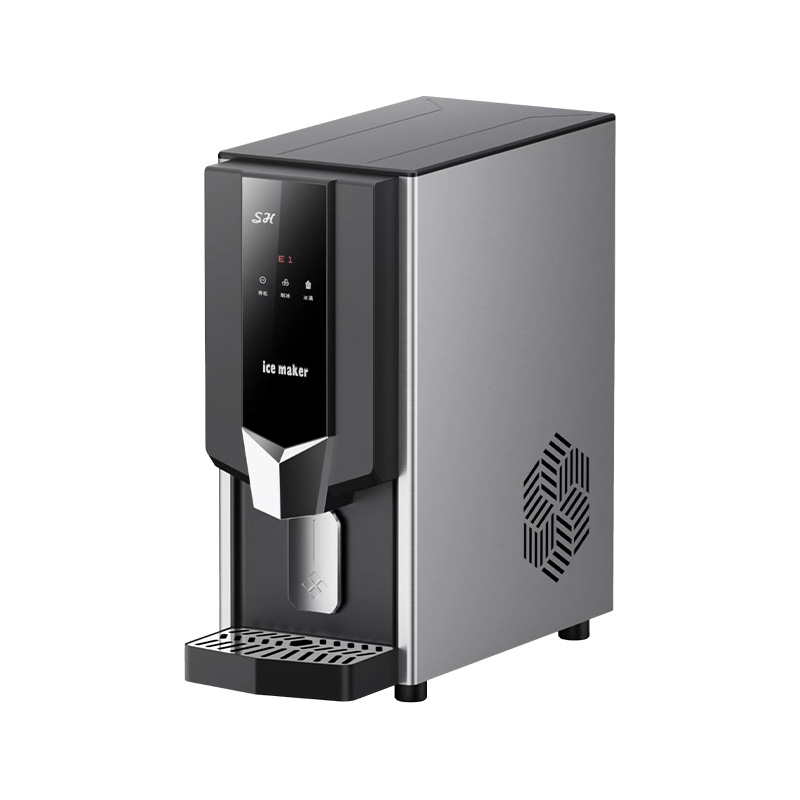
The Nugget Ice Making Machine occupies a unique position in the commercial ice market because the ice it produces is genuinely unlike any other commercial format. Nugget ice, sometimes called pellet ice or chewable ice, is formed by extruding compressed flaked ice through a die to create small, cylindrical nuggets with a soft, compressible texture and a porous internal structure. This porous structure gives nugget ice two key commercial properties: it absorbs beverage flavors rather than simply chilling them, and it is soft enough to chew comfortably, a quality that has made it a consumer favorite across multiple market segments.
Nugget ice has achieved near-cult status among consumers in self-service beverage contexts, with national fast-food chains and convenience store operators reporting that customers specifically choose their locations based on nugget ice availability. Sonic Drive-In in the United States built significant brand loyalty around its nugget ice machines, and the brand's baggedice retail product consistently ranks among the highest-selling items in its convenience market segment. This consumer preference data is commercially significant for any operator evaluating whether the higher unit cost of a Nugget Ice Making Machine relative to a standard cube machine is justified by the differentiation benefit.
In healthcare settings, nugget ice is the preferred format for patient hydration because its soft texture is safe for patients with swallowing difficulties, post-surgical restrictions, or dry mouth conditions. Many hospital and clinical dietary departments specify nugget ice as the standard patient ice format, and a dedicated Nugget Ice Making Machine is a standard capital equipment item in clinical nutrition and patient services procurement lists at major healthcare institutions.
The key commercial advantages of the Nugget Ice Making Machine are:
- High production speed relative to footprint: nugget ice machines are among the most volume-efficient commercial ice machines available
- Consumer preference: documented preference for nugget ice in self-service contexts drives repeat visits and increases beverage attachment rates
- Healthcare suitability: soft texture meets dietary and clinical requirements for patient-safe ice
- Efficient cooling in blended applications: the small nugget format distributes evenly in blended drinks and smoothies
Standard Cube Ice Machine: The Workhorse of High-Volume Commercial Operations
Standard cube ice machines produce full-cube or half-cube ice through a grid evaporator system and represent the highest-volume, most cost-efficient format in commercial ice production. Full cubes, measuring approximately 1 to 1.25 inches on each side, are the classic commercial ice format with a slow melt rate suitable for most cold beverage applications, bagged ice retail, and display cooling. Half cubes are the same geometry at roughly half the volume and melt faster, making them preferred for fountain drink dispensers, blended beverages, and high-speed bar environments where rapid chilling is more important than minimal dilution.
A mid-range commercial cube ice machine can produce 500 to 1,200 pounds of ice per 24 hours at an operating cost significantly lower per pound than gourmet or nugget formats, making standard cube machines the default choice for high-volume applications where consistent supply at manageable cost is the primary objective. Hotels, large restaurant groups, institutional food service operations, and ice bagging businesses all rely on standard cube machines as the foundation of their ice supply infrastructure.
| Ice Machine Type | Ice Characteristics | Typical Daily Output | Best Commercial Application | Relative Cost Per Pound of Ice |
|---|---|---|---|---|
| Gourmet Cube Ice Machine | Crystal clear, dense, slow melt | 150 to 300 lbs | Premium bars, fine dining, hotel bars | High |
| Nugget Ice Making Machine | Soft, chewable, porous, flavor-absorbing | 300 to 700 lbs | Healthcare, self-service, convenience retail | Medium |
| Standard Cube Ice Machine | Hard, clear to semi-clear, versatile | 400 to 1,200 lbs | Hotels, restaurants, ice bagging, food service | Low |
Machine Configurations: Cube Ice Integrated vs. Cube Ice Split Ice Machine
Beyond ice type, the physical configuration of the machine determines how it fits into your facility layout, how much ice it can store at any given time, and how scalable your ice production infrastructure is as your business grows. The two principal configurations in commercial ice production are the Cube Ice Integrated Ice Machine and the Cube Ice Split Ice Machine. Selecting the wrong configuration for your environment and volume requirements is one of the most common and costly mistakes operators make when specifying commercial ice equipment, because a configuration mismatch often cannot be corrected without replacing the entire machine.
Cube Ice Integrated Ice Machine: Compact All-in-One Performance
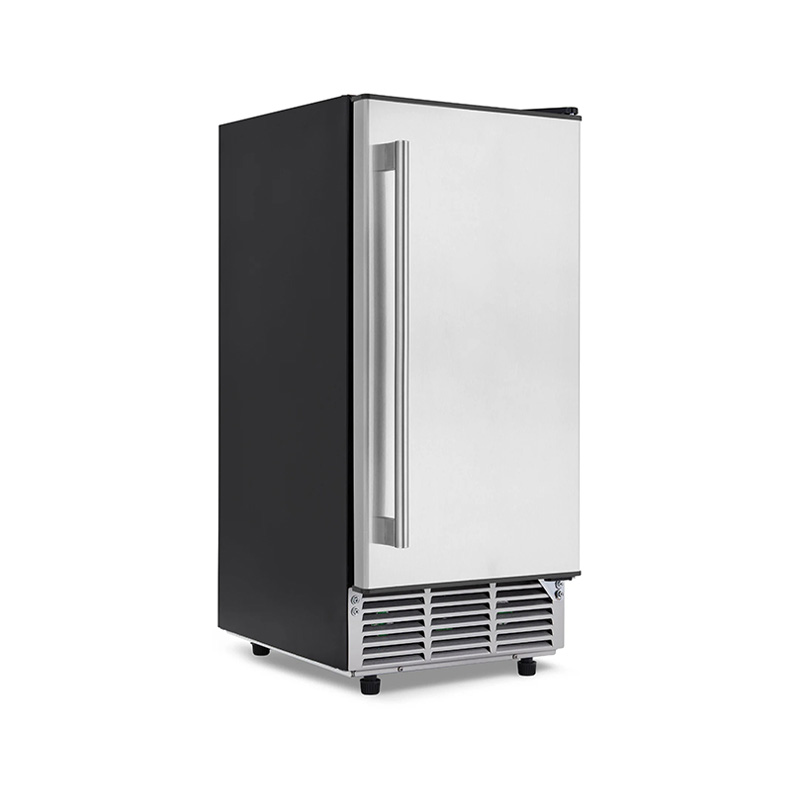
The Cube Ice Integrated Ice Machine combines the ice-making mechanism and the storage bin into a single self-contained unit. The ice is produced in the upper section of the machine and falls directly into the insulated storage bin below, from which it is dispensed by the operator. This all-in-one design has a smaller footprint than a split configuration for equivalent production capacity and eliminates the need to connect separate components during installation, significantly simplifying both the setup process and the service relationship with the equipment supplier.
The Cube Ice Integrated Ice Machine is the preferred configuration for space-constrained commercial environments where the operator needs to produce and store a moderate daily volume of ice within a defined floor area. Standard integrated units measure 22 to 30 inches in width and can fit into standard under-counter or countertop positions in restaurant prep areas, café counters, and small hotel bars. Storage capacities in integrated units typically range from 25 to 100 pounds, which is sufficient for food service operations with daily ice requirements of up to approximately 200 to 400 pounds.
The primary limitation of the Cube Ice Integrated Ice Machine is scalability. Because the storage bin size is fixed relative to the ice-making mechanism, an operator whose ice demand grows beyond the unit's combined production and storage capacity has limited options short of replacing the entire machine. This makes the integrated configuration better suited to businesses with stable, predictable ice demand rather than those anticipating significant growth in ice consumption over the equipment's service life.
Ideal settings for the Cube Ice Integrated Ice Machine include:
- Small to medium restaurants with moderate and predictable daily ice needs
- Cafés and coffee shops where counter space is premium and ice demand is secondary to other beverage operations
- Office break rooms and small hospitality suites requiring self-contained ice production without dedicated equipment rooms
- Specialty retail environments such as smoothie shops or juice bars with defined peak hours and manageable daily ice volumes
Cube Ice Split Ice Machine: Scalable Power for High-Demand Operations
The Cube Ice Split Ice Machine separates the ice-making head from the storage bin, allowing each component to be specified independently based on the operation's production and storage requirements. The ice-making head sits on top of a separately purchased storage bin and connects via a short ice chute, with the bin sized to match the operational demand rather than being constrained by the machine's physical cabinet dimensions. This separation creates a flexibility and scalability that the integrated format cannot provide.
The most significant commercial advantage of the Cube Ice Split Ice Machine is the ability to combine high production rates with large storage reserves, a combination that is essential for businesses with high peak demand periods where ice must be produced and accumulated in advance of service hours. A hotel that serves a large event, a restaurant with a popular brunch service, or a catering operation that must have several hundred pounds of ice ready at the start of each event requires this production-plus-storage buffer that only a split configuration can efficiently provide.
Split configurations also allow operators to add a second ice-making head to the same storage bin if demand grows, effectively doubling production capacity without replacing the storage infrastructure. This modular expandability is particularly valuable in growing food service businesses or facilities with unpredictable seasonal demand peaks. Additionally, if the ice-making head requires service or replacement, the storage bin and its ice supply remain intact and accessible, reducing the operational disruption of a service event compared to an integrated unit where the entire machine must be removed.
The environments where the Cube Ice Split Ice Machine delivers its greatest value include:
- Hotels and resort properties requiring continuous ice supply across multiple service points including rooms, bars, restaurants, and banquet operations
- High-volume restaurants and quick service operations with defined peak service periods requiring pre-produced ice stockpiles
- Ice bagging and retail ice operations where consistent large-volume production is the core business function
- Healthcare facilities and institutional food service operations with consistent high-volume daily requirements and the need for reliable uninterrupted supply
| Feature | Cube Ice Integrated Ice Machine | Cube Ice Split Ice Machine |
|---|---|---|
| Unit Design | All-in-one (maker and bin combined) | Separate ice head and storage bin |
| Floor Space Required | Minimal (single footprint) | Larger (head plus bin stack) |
| Scalability | Limited (fixed bin size) | High (add second head or larger bin) |
| Storage Capacity | 25 to 100 lbs typical | 100 to 1,000 lbs or more |
| Installation Complexity | Simple (plug and play) | Moderate (component alignment required) |
| Best For | Small restaurants, cafés, limited space | Hotels, large venues, high-volume operations |
Key Factors When Buying an Ice Maker Machine for Business
Selecting the right Ice Maker Machine for Business requires evaluating several interdependent technical and operational factors that together determine whether a machine will reliably meet your operational demands at an acceptable total cost of ownership. Price tag and brand recognition are starting points but not the full evaluation framework. The following factors should each be assessed and documented before a purchasing decision is made.
Production Capacity: Matching Machine Output to Peak Business Demand
Production capacity, measured in pounds or kilograms of ice produced per 24 hours, is the foundational specification for any commercial ice machine and the first number an operator must determine before comparing equipment options. The standard industry method for estimating daily ice requirement is to identify the peak single-day ice consumption your operation has experienced (or is projected to experience at full operation) and add a safety margin of 20 to 25 percent to account for temperature variation, equipment efficiency decline over time, and unexpected demand spikes.
Industry benchmarks for ice consumption by establishment type provide a useful starting framework:
- Full-service restaurants: approximately 1.5 pounds of ice per meal served, plus bar and display cooling needs
- Fast food and quick service restaurants: 4 to 6 pounds of ice per 10 customers served (fountain drink-heavy service)
- Hotel ice machines (guest room floors): 5 pounds per room per day as a standard planning figure
- Healthcare facilities: 10 to 12 pounds per patient per day for combined therapeutic, dietary, and clinical use
- Bars and nightclubs: 3 pounds per seat for seated service venues
It is important to note that published production capacity figures for commercial ice machines are based on standardized test conditions: an inlet water temperature of 50 degrees Fahrenheit (10 degrees Celsius) and an ambient air temperature of 70 degrees Fahrenheit (21 degrees Celsius). In real-world installations where inlet water temperatures reach 70 to 80 degrees Fahrenheit and ambient kitchen temperatures run at 85 to 95 degrees Fahrenheit during service periods, actual production can be 15 to 30 percent below the rated specification. Always size your machine to the higher-demand scenario rather than the published rating when operating in a warm environment.
Cooling Systems: Air-Cooled vs. Water-Cooled for Your Environment
Every commercial ice machine must remove heat from the refrigeration process, and the method by which it does so — either by exhausting heat into the surrounding air or by using water to carry heat away — has significant implications for installation requirements, operating costs, and performance in specific environments.
Air-cooled ice machines are by far the most widely installed type, accounting for approximately 85 percent of commercial ice machine installations in food service. They are simpler to install (requiring only water supply, drain, and electrical connections), less expensive to purchase than water-cooled equivalents, and cost nothing to operate in terms of cooling water consumption. Their limitation is sensitivity to ambient temperature: an air-cooled machine installed in a hot, poorly ventilated kitchen will experience both reduced production and accelerated component wear because the condenser is working against a higher-temperature ambient environment. Air-cooled machines require a minimum clearance of 6 to 12 inches around condenser air intakes and exhausts and should not be installed in rooms where ambient temperature regularly exceeds 95 degrees Fahrenheit.
Water-cooled ice machines use a supply of cool water passed through the condenser to remove heat, exhausting the warmed water to drain. Because the condenser temperature is governed by the water supply temperature rather than the ambient air temperature, water-cooled machines maintain consistent production output regardless of how hot the surrounding environment is. This makes them the correct choice for installations in equipment rooms with poor air circulation, high-temperature industrial kitchens, or any setting where managing the condenser heat load in the ambient space is a practical concern. The trade-off is water consumption: a water-cooled machine uses 100 to 200 gallons of condenser water per 100 pounds of ice produced, a consumption rate that adds meaningfully to operating costs in markets with high water pricing and creates ongoing drain load that must be accommodated in the facility's plumbing design.
A third option is the remote condenser configuration, in which the condenser unit is located outside the building (typically on a rooftop or exterior wall) and connected to the ice machine head by refrigerant lines. Remote condensers eliminate condenser heat from the kitchen environment entirely, which is valuable in facilities where HVAC load management is a priority, and they perform consistently regardless of indoor temperatures. Remote configurations have higher installation costs and require a refrigeration technician for any service work on the refrigerant circuit, which adds to the total cost of ownership compared to self-contained air-cooled or water-cooled units.
Drainage and Installation: Gravity Drain vs. Condensate Pump
Every commercial ice machine generates wastewater from the ice-making process (purge water, harvest water, and bin meltwater) that must be removed from the machine and directed to a drain. How this drainage is accomplished depends entirely on the relationship between the machine's drain outlet height and the facility's drain inlet location.
Gravity drain is the simplest and most cost-effective drainage solution: the machine is positioned so that its drain outlet is higher than the drain inlet, and water flows freely by gravity through a drain line with a minimum fall of 1 inch per foot of horizontal run. Gravity drain requires no additional equipment, has no moving parts that can fail, and adds no operating cost. It is the preferred drainage method when the facility layout makes it physically feasible.
Condensate pump drainage is required when a gravity drain configuration is not possible because the drain inlet is at the same level or higher than the machine's drain outlet, or when the drain is located a significant horizontal distance from the machine and a gravity fall cannot be achieved within the available space. A condensate pump collects the machine's drainage water in a small reservoir and pumps it upward or over a longer horizontal distance to the nearest available drain. Condensate pumps are reliable but introduce a mechanical component that requires periodic maintenance and represents a potential failure point if the pump fails, causing water backup and potential overflow around the machine. When specifying a condensate pump installation, always use a pump with a float switch that will shut down the ice machine if the pump fails and the reservoir reaches capacity, preventing overflow damage.
Energy Efficiency and Certification: Reducing Operating Costs Over the Machine Lifetime
For an Ice Maker Machine for Business, energy consumption is a significant operating cost that accumulates over the machine's 7 to 12 year typical service life. Energy Star certified commercial ice machines use 10 to 20 percent less energy and 10 to 20 percent less water than non-certified models producing equivalent daily volumes, a savings that translates into hundreds to thousands of dollars in utility cost reduction over the machine's life depending on local energy rates and production volume. In markets with high electricity costs, the operating cost differential between an Energy Star certified and a non-certified machine of equivalent production capacity can justify a higher purchase price within 2 to 3 years.
Beyond Energy Star certification, operators should also review the machine's published energy consumption figures in kilowatt-hours per 100 pounds of ice produced, as this provides a direct per-unit-of-output cost basis for comparing machines across brands and capacity classes. Lower energy consumption per 100 pounds is always preferable, assuming all other performance specifications are equivalent.
Cleaning and Maintenance of Ice Making Machines
The maintenance practices applied to a commercial Ice Making Machine determine not only the quality and safety of the ice it produces but also the machine's operational reliability and service life. Poorly maintained ice machines are among the most common sources of foodborne illness outbreaks in commercial food service environments, according to the United States Food and Drug Administration's food safety inspection reports. Ice is a food by definition under food safety regulations in most jurisdictions, and the machine that produces it must meet the same sanitation standards as any food-contact surface or food preparation equipment. Establishing and following a documented cleaning and maintenance schedule is not optional for any business operating a commercial ice machine.
Water Filtration Systems: The Foundation of Ice Quality and Machine Longevity
The quality of the inlet water supply has a direct and measurable impact on both the quality of the ice produced and the long-term health of the ice machine's internal components. Municipal water supplies in most markets contain dissolved calcium, magnesium, silica, and other minerals that precipitate out of solution during the freezing process and accumulate as scale on the evaporator plates, water distribution system, and harvest mechanism of the ice machine. Scale accumulation of even 1 millimeter on the evaporator plate surface can reduce ice production efficiency by up to 25 percent and increase energy consumption proportionally, as the scale layer acts as thermal insulation between the refrigerant and the water being frozen.
A properly sized inline water filter with scale inhibition capacity is the single most cost-effective preventive maintenance investment for a commercial ice machine. The recommended minimum filtration system for most commercial applications includes:
- A 5-micron sediment pre-filter to remove particulates that can clog the water distribution system and distributor tubes
- A carbon block or carbon granule filter to remove chlorine, chloramines, and organic compounds that affect ice taste, odor, and clarity
- A scale inhibitor cartridge (polyphosphate or template-assisted crystallization media) to prevent calcium and magnesium scale deposition on evaporator and water system components
Filter change intervals should be based on either the manufacturer's recommended service life (typically every 6 months) or when the water flow rate through the filter drops noticeably, whichever occurs first. In facilities with particularly high water hardness (above 200 parts per million as calcium carbonate), more frequent filter changes may be required, and operators should consider a reverse osmosis pre-treatment system for the ice machine water supply if scale problems persist despite standard filtration.
Water filtration also has a direct impact on ice clarity and taste. The dissolved gases and minerals that create cloudiness and off-flavors in ice are the same compounds removed by carbon and scale inhibitor filtration. Operators of Gourmet Cube Ice Machines in particular should consider high-grade filtration a non-negotiable part of the installation, since the slow-freeze clarity advantage of the gourmet machine is undermined if the inlet water supplies minerals that cloud the ice during freezing.
Regular Cleaning and Sanitization: Compliance, Safety, and Machine Performance
Commercial ice machines require two distinct types of routine maintenance: descaling (removal of mineral scale from water-contact surfaces) and sanitizing (elimination of microbial contamination from all ice-contact surfaces). These procedures address different contamination types and must both be performed on a regular schedule to ensure that the machine produces ice that is both mechanically efficient and microbiologically safe.
The recommended cleaning frequency for most commercial ice machines is every six months, with more frequent cleaning required in environments with high ambient temperatures, high water hardness, heavy dust or airborne grease contamination (common in commercial kitchen environments), or during periods of high production intensity. Some manufacturers specify a quarterly cleaning cycle for machines operating in challenging environments, and this guidance should be followed when applicable.
The standard cleaning and sanitization procedure for a commercial ice machine follows this sequence:
- Empty and discard all ice from the storage bin. Never use a cleaning solution in a machine that contains usable ice, as the chemical residue will contaminate the ice.
- Place the machine in cleaning mode (all modern commercial ice machines have a dedicated cleaning cycle accessible through the control panel) and introduce the manufacturer-approved ice machine cleaner (typically an acidic descaling solution) into the water trough in the specified quantity. Run the cleaning cycle as directed.
- Manually remove and clean all removable components including the water distribution system, distributor tubes, bin door gaskets, and any accessible internal surfaces using a soft brush and cleaning solution. These areas accumulate scale and biofilm that the machine's automated cleaning cycle may not fully address.
- Rinse the machine thoroughly to remove all traces of cleaning solution. Run one or two ice-making cycles and discard the ice to ensure no chemical residue remains in the system before resuming production for use.
- Apply a food-safe sanitizer to all ice-contact surfaces according to the manufacturer's instructions, including the storage bin interior, bin door, and ice scoop. Allow the sanitizer to air dry without rinsing (for no-rinse sanitizer formulations) or rinse as directed.
- Clean the condenser filter and coil. The air-cooled condenser is one of the most frequently neglected components in ice machine maintenance. A clogged condenser filter reduces airflow across the condenser coil, raises condensing temperature, reduces production efficiency, and significantly shortens compressor life. Clean the filter monthly in kitchen environments and quarterly in cleaner installations.
- Document the cleaning event including the date, technician, cleaning products used, and any observations about machine condition. Maintenance logs are required for food safety compliance inspections in most regulatory jurisdictions and are valuable for tracking machine health trends over time.
Beyond scheduled cleaning, several daily and weekly practices contribute to sustained machine performance and ice safety. Ice scoops should never be stored inside the ice bin, as they introduce surface contamination from handling. The bin should be wiped down at the start of each service day with a food-safe sanitizer solution. Ice should never be touched by bare hands during service. These hygiene practices are simple, require no specialized knowledge or equipment, and contribute directly to the food safety performance of the ice supply.
Slime-forming bacteria and yeast, which produce the characteristic pink or black biofilm seen in neglected ice machines, are effectively prevented by consistent cleaning cycles combined with adequate water filtration. Once established, a mature biofilm in an ice machine is significantly more difficult to eradicate than to prevent, as the biofilm matrix protects the embedded microorganisms from chemical sanitizers that would otherwise kill them in suspension. Prevention through regular cleaning is always more cost-effective than remediation of an established contamination event.
Making the Final Decision: A Practical Framework for Business Ice Machine Selection
With the full range of machine types, configurations, technical specifications, and maintenance requirements understood, the decision-making process for selecting an Ice Maker Machine for Business can be approached systematically. The following framework consolidates the key decision points into a sequence that leads logically from operational requirements to equipment specification:
- Determine ice type first. The functional requirements of the ice in your specific operation must define the machine type. If your customers or patients require nugget ice, only a Nugget Ice Making Machine will meet that need. If premium beverage presentation is a brand priority, only a Gourmet Cube Ice Machine produces the appropriate ice. If high-volume general-purpose ice supply is the goal, standard cube is the most economical choice.
- Calculate required daily production with a realistic margin. Use the industry benchmarks provided in this guide as a starting point, add your 20 to 25 percent safety margin, and adjust for your local operating environment's temperature conditions. This figure defines the minimum production capacity your machine must achieve in real-world conditions.
- Select configuration based on space and scalability needs. If you have limited floor space and stable ice demand, a Cube Ice Integrated Ice Machine is likely the right fit. If you have or anticipate high volume needs, variable demand peaks, or potential future growth, a Cube Ice Split Ice Machine with appropriate bin sizing is the better long-term investment.
- Specify cooling and drainage to match your installation environment. Confirm whether air-cooled or water-cooled condenser is appropriate for your equipment room conditions, and determine whether gravity drain or condensate pump is required based on your facility's drain locations relative to the machine position.
- Budget for filtration and maintenance from day one. Include the water filtration system, filter replacement schedule, cleaning supplies, and maintenance labor in your total cost of ownership model. The operating cost of a properly maintained machine over its service life is a more relevant financial metric than its purchase price alone.
The right Ice Making Machine for your business is the one that consistently produces the ice type your operation requires, in the volume your peak demand creates, within the physical and budgetary constraints of your specific installation, while remaining compliant with applicable food safety standards throughout its service life. No single machine is ideal for all businesses, but every business can identify the ideal machine for its own needs by applying the structured evaluation framework this guide has presented.
References
Grand View Research. (2024). Commercial Ice Machine Market Size, Share and Trends Analysis Report, 2024 to 2030. Grand View Research Inc.
United States Food and Drug Administration. (2023). Food Code 2022: Chapter 3 Food, Section 3-202 Ice Standards and Food Safety Compliance. U.S. Department of Health and Human Services.
U.S. Environmental Protection Agency Energy Star Program. (2023). Energy Star Product Specifications for Commercial Ice Machines, Version 4.0. U.S. Environmental Protection Agency.
Hoshizaki America Inc. (2022). Commercial Ice Machine Technical Reference Manual: Selection, Installation and Maintenance Guide. Hoshizaki America Inc.
National Restaurant Association. (2023). Restaurant Operations Report: Equipment Procurement and Lifecycle Cost Benchmarks. National Restaurant Association Educational Foundation.
Manitowoc Ice. (2022). Ice Machine Buyer's Guide for Food Service Professionals. Manitowoc Foodservice Group.
Scott, J., and Williams, T. (2021). Ice machine contamination and biofilm formation: A review of microbial risk in food service environments. Journal of Food Protection, 84(6), 1002 to 1014.
American Society for Healthcare Food Service Administrators. (2022). Clinical Nutrition and Patient Food Service Standards: Ice Provision and Safety Protocols. ASHFSA Publications.
Pentair Water Treatment. (2023). Commercial Foodservice Water Filtration Guide: Ice Machine Applications. Pentair Flow and Filtration Solutions.
Follett Corporation. (2022). Nugget Ice Technology Overview: Applications in Healthcare and Food Service Environments. Follett LLC Technical Publications.