
 English
 中文简体
中文简体 عربى
عربى

Home / News / Industry News / What Is a Built-In Ice Machine and Is It Worth the Investment for Your Home
Content
- 1 What Is a Built-In Ice Machine and Why Does It Matter?
- 2 How a Built-In Ice Machine Works
- 3 Types of Built-In Ice Machines
- 4 Key Features to Look for When Buying
- 5 Built-In Ice Machine vs. Other Ice-Making Options
- 6 Installation Requirements and Costs
- 7 Maintenance and Cleaning Tips
- 8 How to Choose the Right Built-In Ice Machine for Your Home
- 9 FAQ: What Users Want to Know About Built-In Ice Machines
- 9.1 Q: How long does a built-in ice machine last?
- 9.2 Q: Can I install a built-in ice machine without a drain?
- 9.3 Q: How much electricity does a built-in ice machine use?
- 9.4 Q: Why is my ice machine making small or hollow ice cubes?
- 9.5 Q: Is the ice from a built-in machine safe to consume?
- 9.6 Q: Can a built-in ice machine be installed outdoors?
- 9.7 Q: How loud is a built-in ice machine during operation?
- 9.8 Q: How long does it take to make ice after installation or after being turned off?
- 9.9 Q: Does water quality affect ice clarity?
- 9.10 Q: What's the difference between a self-cleaning and a manual-clean ice machine?
- 9.11 Q: Can I use any cleaning solution in my ice machine?
What Is a Built-In Ice Machine and Why Does It Matter?
Walk into any well-designed home bar or modern kitchen today, and there's a good chance you'll spot a sleek stainless steel panel tucked beneath the counter — that's a built-in ice machine at work. It's not just an appliance; for a lot of homeowners, it's quietly become one of those things they didn't know they needed until they had one.
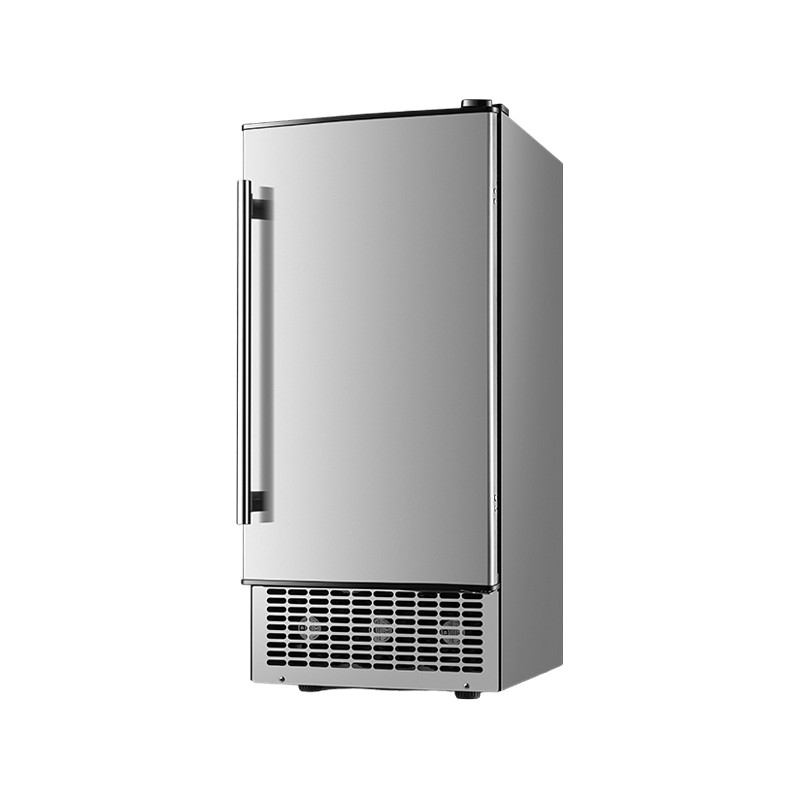
So what exactly is a built-in ice machine? At its core, it's a dedicated, permanently installed appliance designed to produce and store ice continuously. Unlike the ice maker built into your refrigerator, or a small countertop unit you pull out for a party, a built-in ice machine is integrated directly into your cabinetry or under-counter space. It has its own water line, its own drainage, and its own compressor — which means it operates independently and consistently, day in and day out.
The key distinction comes down to design intent. A refrigerator ice maker is a secondary feature — it's there, but it's not the priority. A countertop ice maker is portable and convenient, but it's not connected to a water line and has to be manually refilled. A built-in ice machine, by contrast, is engineered specifically to make ice — and to do it well, quietly, and on demand.
Why Are Homeowners Making the Switch?
The short answer: demand has outgrown what a refrigerator ice maker can realistically deliver.
Think about a household that entertains regularly. A standard fridge ice maker might produce 3–4 lbs of ice per day. That's fine for everyday use — a few glasses here and there. But the moment you have guests over, host a backyard gathering, or simply go through a hot summer weekend, you're scooping from an empty bin by Saturday afternoon.
A built-in ice machine changes that equation entirely. Most residential models produce anywhere from 50 to 80 lbs of ice per day, with storage bins that hold 20–30 lbs at a time. That's a fundamentally different level of output.
Beyond sheer volume, there's also the question of ice quality. Built-in machines are designed to produce clearer, denser, better-tasting ice — the kind you'd expect from a good bar or restaurant. Some models produce gourmet "craft ice," those large, slow-melting spheres that have become a hallmark of serious home cocktail setups.
Where Do People Actually Use Them?
Built-in ice machines show up in a variety of settings, and the use case often shapes which model makes the most sense:
Home bars and wet bars — This is probably the most common install location. Having ice on demand, right where drinks are being made, is a genuine lifestyle upgrade.
Kitchen islands — Built into the island cabinetry, these machines keep ice accessible without crowding counter space.
Outdoor kitchens — Some built-in models are rated for outdoor use, making them a natural fit for covered patios and built-in grilling stations.
Home theaters and entertainment rooms — For households that spend serious time in media rooms, having ice nearby without going back to the kitchen is a practical convenience.
Garages and game rooms — Especially popular with homeowners who spend time in these spaces during warmer months.
Is It Really Worth It?
That's a fair question, and the honest answer is: it depends on how you live. If you rarely entertain, drink mostly hot beverages, and your fridge keeps up just fine — probably not a necessary investment.
But if ice is a genuine pain point in your household — if you're buying bags of ice for parties, if your fridge bin is always empty, if you've ever wished you could get a proper drink at home without thinking about it — a built-in ice machine solves that problem permanently. It's one of those appliances that, once installed, becomes so woven into daily life that most owners say they'd never go back.
How a Built-In Ice Machine Works
Most people flip open the bin, grab a scoop of ice, and never think twice about what's happening inside the machine. That's fair — it just works. But understanding the basic mechanics actually helps when you're shopping for one, troubleshooting a problem, or trying to figure out why your ice looks or tastes a certain way.
The good news is that the process isn't complicated. It follows a straightforward cycle, and once you understand it, a lot of the spec-sheet language starts to make real sense.
The Basic Cycle: Water In, Ice Out
At the most fundamental level, a built-in ice machine does four things in sequence: it pulls in water, freezes it in a controlled way, harvests the ice, and drops it into a storage bin. That cycle repeats continuously — usually every 15 to 25 minutes depending on the model and ambient temperature — until the bin is full. Once the bin sensor detects it's at capacity, the machine pauses. When ice gets used and levels drop, production kicks back in automatically.
① Water Intake
The machine connects directly to your home's cold water supply line. Water enters through an inlet valve, which is controlled electronically. Most models include a basic filter at this stage to remove sediment and chlorine — though the quality of that filtration varies significantly between machines, and some homeowners add an additional inline filter for better taste and clearer ice.
② Water Distribution
Once inside, water is distributed over a freezing surface — typically an evaporator plate or a set of ice molds, depending on the ice shape the machine produces. In machines that make cube or gourmet ice, water is often circulated continuously over the freezing surface rather than just poured in and left. This circulation is part of what makes the ice clearer: impurities and dissolved minerals get pushed to the outside of the forming ice cube rather than trapped in the center.
③ The Freezing Process
This is where the refrigeration system does its work. A compressor pressurizes refrigerant gas, which then flows through a condenser (where heat is released) and into an evaporator (where it rapidly cools). The evaporator is in direct contact with the water or ice molds, drawing heat out and causing the water to freeze. The compressor is the heart of the machine — its quality and efficiency directly affect how fast ice forms, how loud the machine is, and how long the unit lasts.
④ Harvest
Once the ice has reached the right thickness or shape, the machine triggers a harvest cycle. A small amount of warm refrigerant or water is briefly passed over the freezing surface, loosening the ice. It then falls — or in some designs, gets pushed — off the evaporator and drops into the storage bin below.
⑤ Storage and Sensing
The storage bin is insulated but not refrigerated in most residential built-in models. Ice will slowly melt over time, and the meltwater drains away through the unit's drain line. A sensor (typically infrared or mechanical) monitors the ice level in the bin and signals the machine to pause or resume production accordingly.
Key Internal Components
|
Component |
Function |
Why It Matters |
|
Compressor |
Drives the refrigeration cycle |
Affects speed, efficiency, noise, and longevity |
|
Evaporator |
The surface where water freezes |
Shape determines ice type; quality affects clarity |
|
Condenser |
Releases heat from refrigerant |
Air-cooled vs. water-cooled affects ventilation needs |
|
Water inlet valve |
Controls water flow into machine |
Failure here is a common cause of "no ice" issues |
|
Water pump |
Circulates water over evaporator |
Key to producing clear, dense ice |
|
Bin sensor |
Detects ice level in storage bin |
Tells machine when to pause or resume production |
|
Drain pump (some models) |
Removes meltwater when gravity drain isn't possible |
Needed for installations without a floor drain nearby |
Air-Cooled vs. Water-Cooled Condensers
Air-cooled machines draw in ambient air to cool the condenser and exhaust warm air out through vents — usually from the front, since they're installed in enclosed cabinetry. These are by far the most common in residential settings. They're easier to install (no extra water line for cooling) but do add some heat to the surrounding area and require adequate ventilation clearance.
Water-cooled machines use a separate water flow to cool the condenser instead of air. They run more quietly, are less affected by high ambient temperatures, and don't exhaust heat into the room. The tradeoff: they use significantly more water overall, and installation is more complex. These are more common in commercial environments or in spaces where heat exhaust is a real problem.
For most home installations, air-cooled is the practical and cost-effective choice.
Why Ice Clarity and Quality Come From the Machine's Design
You've probably noticed that ice from some machines looks crystal clear, while ice from a standard freezer tray looks cloudy and white in the center. That cloudiness isn't a flaw in the usual sense — it's trapped air and dissolved minerals. It doesn't make the ice unsafe, but it does mean the ice melts faster and can affect the taste of whatever's in the glass.
Built-in ice machines — especially those designed for gourmet or cube ice — use the continuous water circulation method mentioned above to minimize this. Water moves constantly over the freezing surface, and the parts that freeze last (where impurities would concentrate) either drain away or form the outermost layer that gets shed during harvest. The result is denser, clearer ice that melts more slowly and doesn't water down a drink as quickly.
This is one of the clearest functional differences between a dedicated built-in ice machine and the ice maker inside a refrigerator, which typically freezes water in place inside plastic molds — fast and efficient, but not optimized for ice quality.
Types of Built-In Ice Machines
Not all built-in ice machines are created equal — and that's actually a good thing. The variety available means there's likely a configuration that fits your space, your lifestyle, and what you actually want out of the ice itself. The two main ways to categorize them are by ice shape and by installation style. Understanding both will save you from buying something that technically works but doesn't quite deliver what you had in mind.
By Ice Shape: What Kind of Ice Do You Actually Want?
This might sound like a trivial question, but ice shape genuinely affects how drinks taste, how fast ice melts, and what kinds of beverages or uses the ice is suited for. Different machines are built around producing specific shapes, so this decision should come early.
① Full Cube / Large Cube
The classic option. Full cubes are dense, slow-melting, and versatile — good for everything from water glasses to cocktails to coolers. Because they're large and solid, they don't dilute drinks as quickly as smaller or hollow ice. Most residential built-in machines that produce full cubes are targeting the home bar or kitchen market where drink quality matters.
Best for: cocktails, spirits on the rocks, everyday drinking
② Half Cube / Crescent Cube
Slightly smaller and often crescent-shaped, these are extremely common in commercial settings — restaurants, hotel dispensers, fast food fountains. They stack well, dispense easily, and fit comfortably in standard cups. They melt a bit faster than full cubes due to the higher surface area, but for most everyday purposes, the difference is minor.
Best for: soft drinks, water, general household use
③ Nugget Ice (also called Pellet Ice or Sonic Ice)
Nugget ice is soft, chewable, and porous, which means it absorbs the flavor of whatever drink it's in. It's made by compressing flake ice into small cylindrical pellets rather than freezing water directly into a mold. Nugget ice has developed a cult following in recent years, and dedicated nugget ice machines have become one of the fastest-growing segments in the residential market. They do melt faster than cube ice, which is worth knowing if you're pouring something you want to stay cold and undiluted for a long time.
Best for: iced coffee, sodas, smoothies, healthcare settings, anyone who loves chewing ice
④ Flake Ice
Flake ice is thin, soft, and snow-like. It's not commonly found in residential built-in machines, but it does appear in higher-end or specialty models. Its main strength is surface coverage — it conforms around whatever it's packed against, which makes it useful for displaying seafood, chilling bottles, or injury therapy. It melts quickly and isn't great for drinks if you care about dilution.
Best for: food display, seafood, therapeutic use, specialty applications
⑤ Gourmet / Craft Ice (Large Sphere or Bullet)
This is the premium end of residential ice. Gourmet ice machines produce large, clear spheres or oversized cylindrical bullets — the kind you'd pay extra for at a craft cocktail bar. They melt very slowly due to their low surface-area-to-volume ratio, which means a quality pour stays cold without getting watered down. These machines tend to be slower in terms of production volume, and they sit at a higher price point. But for a dedicated home bar setup where presentation and drink quality are the priority, they're in a category of their own.
Best for: whiskey, premium spirits, craft cocktails, home bars focused on quality
Ice Type Comparison at a Glance
|
Ice Type |
Melt Rate |
Best Use |
Typical Price Tier |
|
Full Cube |
Slow |
Cocktails, spirits |
Mid to Premium |
|
Half / Crescent Cube |
Moderate |
Everyday drinks, soda |
Budget to Mid |
|
Nugget / Pellet |
Fast |
Coffee, soda, chewing |
Mid |
|
Flake |
Very Fast |
Food display, therapy |
Mid to Premium |
|
Gourmet / Craft Sphere |
Very Slow |
Premium cocktails, whiskey |
Premium |
By Installation Type: How and Where It Fits
① Undercounter Built-In
This is the most common residential format. The machine is designed to slide into a standard undercounter opening — typically 15 or 18 inches wide — and sit flush with surrounding cabinetry. The front panel is usually stainless steel or can be fitted with a custom panel to match your cabinets. Undercounter machines are the workhorses of the category. They offer the largest storage bins, the highest daily production, and the widest range of features. Most have front-venting condensers, which is what allows them to be installed in enclosed cabinetry without overheating.
Typical width: 15" or 18" | Daily production: 25–80 lbs | Storage capacity: 15–30 lbs
② Drawer-Style Built-In
A newer and increasingly popular format. Instead of a top-hinged door, the ice bin pulls out like a drawer — which makes access significantly more ergonomic, especially in low undercounter positions. You're not bending over and reaching in; you're pulling out and scooping from above. Drawer models tend to be a bit more expensive than comparable door models, and the selection is narrower. But for kitchens where user experience has been thought through carefully, the drawer format is genuinely more convenient day to day.
Typical width: 15" or 24" | Daily production: 20–50 lbs | Storage capacity: 10–25 lbs
③ Cabinet-Depth / Counter-Depth Built-In
These are sized to align precisely with standard cabinetry depth — usually around 24 inches — so the front of the machine sits flush with cabinet faces rather than protruding. This is largely an aesthetic consideration but an important one in kitchens where the overall look is a priority. Most undercounter machines are already designed with this in mind, but it's worth confirming depth dimensions before purchasing, especially if your cabinetry is non-standard.
④ Outdoor-Rated Built-In
A subset of undercounter machines are specifically engineered for outdoor installation. They use stainless steel components throughout (including internal parts that would otherwise corrode in humid outdoor conditions), have sealed controls, and are rated to operate across a wider temperature range — both hotter and cooler than standard indoor models. If you're building an outdoor kitchen or covered patio setup, don't assume a standard indoor built-in machine will survive the environment. The outdoor rating matters, and skipping it is a common and costly mistake.
Installation Type Comparison
|
Format |
Best For |
Width Options |
Avg. Daily Output |
Price Range |
|
Undercounter (door) |
Most home installs |
15", 18" |
25–80 lbs |
$500–$3,500+ |
|
Drawer-style |
Ergonomic kitchens |
15", 24" |
20–50 lbs |
$1,200–$4,000+ |
|
Cabinet-depth |
Flush cabinetry look |
18", 24" |
30–70 lbs |
$800–$3,500+ |
|
Outdoor-rated |
Outdoor kitchens, patios |
15", 18" |
20–50 lbs |
$1,000–$4,500+ |
By Capacity: Residential vs. Semi-Commercial
Residential models are optimized for quiet operation, aesthetic integration, lower energy consumption, and moderate daily output. They're designed to live in a kitchen or home bar and be seen.
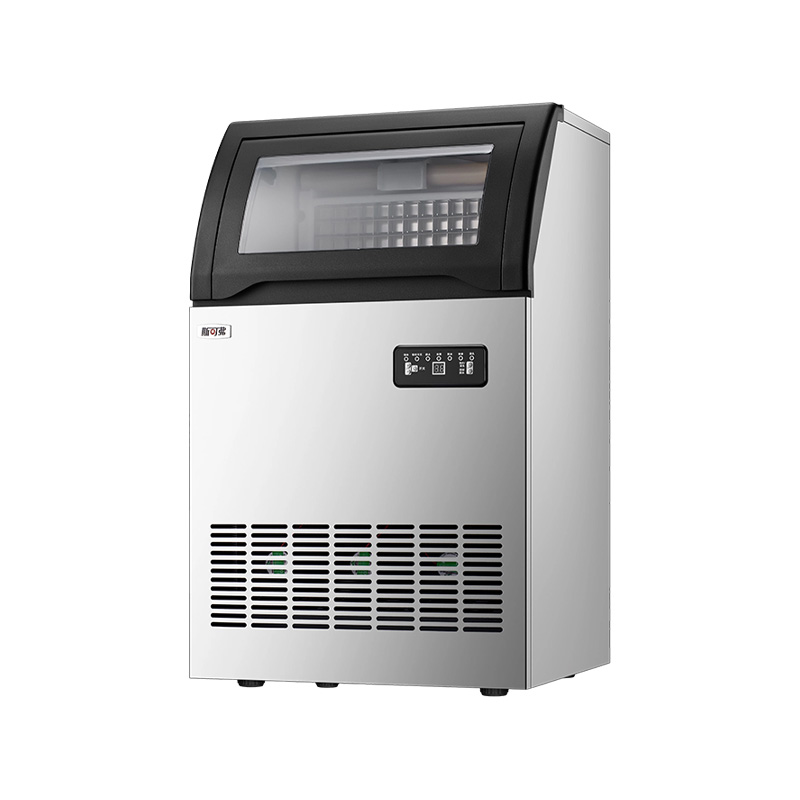
Semi-commercial models push higher daily production (often 80–150 lbs/day), use more robust compressors, and are built for heavy, continuous use. They're louder, larger, and more expensive — but if you're running a catering operation out of your home or hosting at a serious scale, they may be worth considering.
For the vast majority of homeowners, a mid-range residential model is more than sufficient.
Key Features to Look for When Buying
Shopping for a built-in ice machine can feel overwhelming once you start comparing spec sheets. Numbers, ratings, and features pile up quickly. The trick is knowing which specs actually affect your daily experience — and which ones are mostly marketing filler. Here's what genuinely matters.
Daily Ice Production Capacity
This is the single most important number on the spec sheet. Daily production is measured in pounds per day (lbs/day) and tells you how much ice the machine can make under ideal conditions — typically at around 70°F ambient temperature with 50°F inlet water.
One caveat worth knowing: real-world output is almost always lower than the rated figure. If your kitchen runs warm in summer, or your water supply comes in at a higher temperature, production drops. A machine rated at 50 lbs/day might realistically deliver 35–40 lbs on a hot day.
|
Household Size / Use Case |
Recommended Daily Output |
|
1–2 people, light use |
25–35 lbs/day |
|
3–4 people, regular use |
35–50 lbs/day |
|
Frequent entertaining |
50–80 lbs/day |
|
Heavy use / semi-commercial |
80 lbs/day+ |
When in doubt, size up. Running out of ice is far more frustrating than having a machine that occasionally sits idle.
Storage Bin Capacity
Production capacity and storage capacity are two different things, and both matter. A machine that makes 60 lbs of ice per day but only stores 15 lbs means you're working through a smaller usable reserve — fine for steady, spread-out demand, but limiting if you need a large amount of ice all at once for a party or gathering.
Look for a storage bin that holds at least 25–30% of your daily production capacity as a baseline. Most mid-range residential machines sit in the 20–30 lb storage range, which is practical for the majority of home use cases.
Energy Efficiency
Built-in ice machines run continuously, so energy consumption adds up over time. ENERGY STAR certified models meet efficiency thresholds set by the EPA and will cost meaningfully less to operate over their lifespan compared to non-certified units.
|
Model Type |
Estimated Daily Energy Use |
|
Basic / non-certified |
1.5–2.5 kWh/day |
|
ENERGY STAR certified |
0.9–1.5 kWh/day |
|
Semi-commercial |
2.5–4.5 kWh/day |
At average US electricity rates, an ENERGY STAR model can save $30–$70 per year compared to a non-certified equivalent — modest on its own, but meaningful over a 10–15 year lifespan.
Noise Level
This is one of those specs that shoppers often overlook until the machine is installed and running in their kitchen. Most residential models operate in the 38–50 dB range. To put that in context:
|
Noise Level |
Real-World Equivalent |
|
35–40 dB |
Quiet library |
|
40–45 dB |
Refrigerator hum |
|
45–50 dB |
Moderate rainfall |
|
50–55 dB |
Normal conversation |
For a home bar or entertainment space, 45–48 dB is generally unobtrusive. For a bedroom-adjacent installation or an open-plan space where you spend a lot of quiet time, it's worth prioritizing models at the lower end of that range and reading real user reviews on noise — spec sheet numbers don't always tell the full story.
Self-Cleaning Function
Mineral buildup and mold are the two main maintenance headaches with any ice machine. A self-cleaning cycle — where the machine flushes itself with a cleaning solution and rinses automatically — dramatically reduces the manual effort involved in keeping the unit hygienic. Not all self-cleaning functions are equal. Some machines simply circulate water to rinse; better implementations use a dedicated cleaning mode that runs a descaling cycle and prompts you with an indicator light when it's time.
Smart Connectivity
Higher-end models increasingly offer Wi-Fi connectivity and companion apps that let you monitor production, schedule cleaning cycles, check filter status, and receive alerts if something goes wrong. For most users, this isn't a necessity — but it's a genuinely useful feature if the machine is installed somewhere you don't check daily, like an outdoor kitchen or a basement bar.
Door Style and Finish Options
Stainless steel door — The default and most common. Durable, easy to wipe down, works with most kitchen aesthetics.
Glass door — Lets you see ice levels without opening. Looks sharp in a home bar or entertainment setup. Slightly harder to keep smudge-free.
Panel-ready — Accepts a custom cabinet panel so the machine disappears into surrounding cabinetry. Popular in high-end kitchen designs where appliance visibility is minimized.
Reversible hinge — Allows the door to swing either left or right, which is a small but practically important feature depending on where the machine sits relative to your workflow.
Water Filtration
Ice quality starts with water quality. Some machines include a basic internal filter; others have a dedicated multi-stage filtration system. If your tap water has a strong taste or odor, or if you live in an area with hard water, filtration quality should be a real consideration — both for how the ice tastes and for how quickly mineral scale builds up inside the machine. An external inline filter is an option on virtually any model and is often the most cost-effective way to ensure clean, great-tasting ice regardless of which machine you choose.
Quick Feature Comparison Summary
|
Feature |
What to Look For |
|
Daily production |
At least 20% above your estimated need |
|
Storage bin |
25–30 lb minimum for regular entertaining |
|
Energy rating |
ENERGY STAR certified preferred |
|
Noise level |
Under 45 dB for quiet spaces |
|
Self-cleaning |
Dedicated cleaning mode, not just rinse |
|
Smart features |
Useful but not essential for most buyers |
|
Door style |
Match to kitchen design; panel-ready for seamless look |
|
Water filtration |
Built-in filter minimum; inline filter for hard water areas |
Built-In Ice Machine vs. Other Ice-Making Options
Before committing to a built-in ice machine, it's worth being honest about the alternatives. A built-in unit is a real investment — in money, in installation effort, and in permanent cabinet space. For some households, a different approach genuinely makes more sense. For others, this comparison will confirm exactly why the built-in route is the right call.
Built-In vs. Refrigerator Ice Maker
This is the comparison most buyers start with, because almost every modern refrigerator already has an ice maker built in. So why add a separate dedicated machine? The core issue is that a refrigerator ice maker is a secondary feature — it's engineered to fit inside a freezer compartment, not to prioritize ice quality or output. It works, but it has real limitations.
|
Category |
Built-In Ice Machine |
Refrigerator Ice Maker |
|
Daily output |
25–80+ lbs/day |
3–8 lbs/day |
|
Storage capacity |
20–30 lbs |
4–8 lbs |
|
Ice quality |
Clear, dense, slow-melting |
Often cloudy, faster-melting |
|
Ice shape options |
Multiple (cube, nugget, gourmet) |
Typically crescent only |
|
Recovery time after heavy use |
15–25 min per batch |
Several hours |
|
Independent operation |
Yes |
Tied to refrigerator function |
|
Installation |
Requires dedicated space and plumbing |
Built into refrigerator |
|
Cost |
$500–$4,000+ |
Included with fridge |
The refrigerator ice maker wins on convenience and cost — it's already there. But if you've ever emptied the bin at a dinner party and waited hours for it to refill, you already know its limits. A built-in machine eliminates that problem entirely.
Built-In vs. Portable / Countertop Ice Maker
Portable ice makers have gotten genuinely good in recent years. They're affordable, require no plumbing, and can sit on any countertop. For occasional use or renters who can't do a permanent install, they're a reasonable solution. But the gap between portable and built-in widens the moment you look past the price tag.
|
Category |
Built-In Ice Machine |
Portable Ice Maker |
|
Water supply |
Direct plumbing connection |
Manual refill required |
|
Daily output |
25–80+ lbs/day |
20–40 lbs/day (limited by manual refill) |
|
Storage |
20–30 lbs (insulated bin) |
1–3 lbs (not insulated) |
|
Ice quality |
High — clear, dense |
Lower — often soft and melts quickly |
|
Continuous operation |
Yes — fully automatic |
No — needs monitoring and refilling |
|
Countertop space used |
None |
Significant |
|
Installation required |
Yes |
No |
|
Price |
$500–$4,000+ |
$100–$400 |
The portable machine's headline output numbers can look competitive, but the practical reality is different. Without a water line, you're refilling a reservoir constantly. Without an insulated bin, ice melts quickly and the machine just makes more — running almost continuously and consuming more energy per pound of usable ice than a built-in unit does.
Built-In vs. Commercial Ice Machine
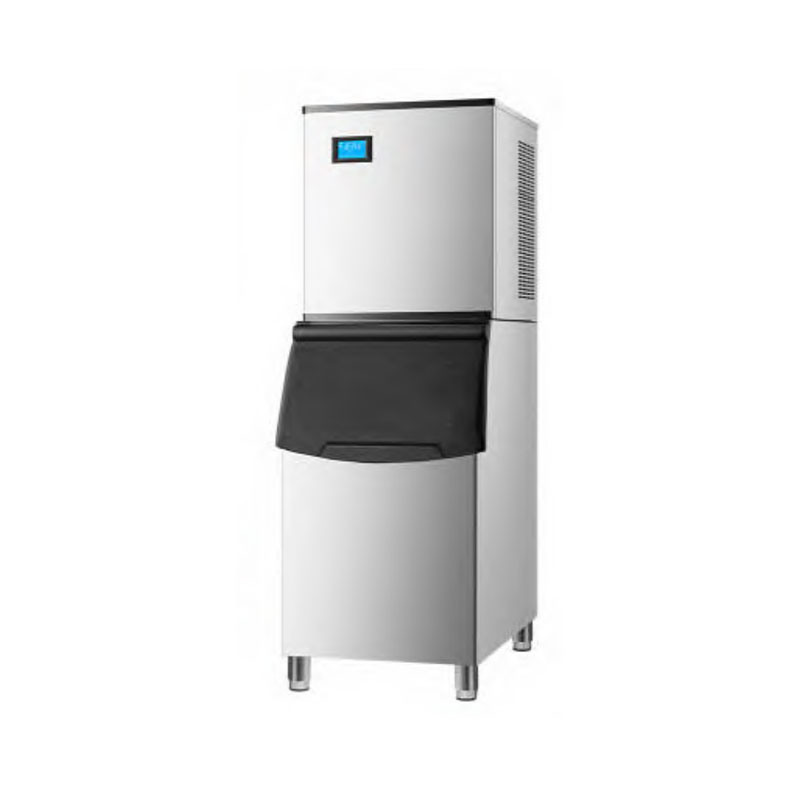
Some buyers — particularly those who entertain at scale or run a home-based catering operation — wonder whether to simply buy a commercial-grade ice machine. The output numbers are impressive: commercial units often produce 200–500 lbs of ice per day, and they're built to run hard without stopping. But commercial machines come with real trade-offs in a home environment.
|
Category |
Built-In Residential |
Commercial Ice Machine |
|
Daily output |
25–80 lbs |
200–500+ lbs |
|
Noise level |
38–50 dB |
55–70 dB |
|
Size |
15"–24" wide, standard counter height |
Large, often freestanding |
|
Aesthetics |
Designed for home integration |
Industrial appearance |
|
Energy consumption |
0.9–2.5 kWh/day |
5–15+ kWh/day |
|
Installation complexity |
Moderate |
High — often needs floor drain |
|
Cost |
$500–$4,000 |
$1,500–$8,000+ |
|
Maintenance |
User-manageable |
Often requires service contracts |
The Honest Summary
|
Your Situation |
Best Option |
|
Light use, fridge keeps up fine |
Refrigerator ice maker |
|
Renting, occasional use, budget-conscious |
Portable countertop machine |
|
Regular entertaining, home bar, daily demand |
Built-in ice machine |
|
High-volume events, catering at home |
Semi-commercial built-in or commercial unit |
For most homeowners who've started researching built-in ice machines, the decision usually comes down to a simple realization: they've already outgrown what their refrigerator can provide, and a portable machine isn't a real long-term solution. A built-in machine isn't an impulse buy — but for the right household, it's one that pays off quickly in convenience and daily quality of life.
Installation Requirements and Costs
Buying the machine is only half the equation. A built-in ice machine that isn't installed correctly will underperform, run inefficiently, or fail early. Understanding what installation actually involves — before you purchase — saves a lot of headaches and unexpected costs down the line.
Space and Ventilation Requirements
Built-in ice machines are designed to fit standard undercounter openings, but "standard" still requires careful measurement. Most residential models come in 15-inch or 18-inch widths. Before ordering, measure your available cabinet opening in three places — top, middle, and bottom — because cabinetry isn't always perfectly square.
Beyond width, clearance matters. Front-venting machines (the most common residential type) need the front grille completely unobstructed to draw in cool air and exhaust heat. Even a slightly oversized door panel that blocks part of the vent can cause the compressor to overheat and reduce ice production.
|
Clearance Point |
Minimum Recommended |
|
Front vent clearance |
Fully unobstructed |
|
Side clearance |
0"–1" (varies by model) |
|
Top clearance |
0"–1" (varies by model) |
|
Rear clearance |
1"–2" for most models |
|
Ambient temperature range |
55°F–110°F for standard models |
Plumbing Requirements
A built-in ice machine needs two plumbing connections: a water supply line in and a drain line out.
Water Supply Line
The machine connects to your home's cold water supply via a standard ¼-inch or ⅜-inch supply line, typically with a saddle valve or a dedicated shutoff valve tapped into an existing pipe. Cold water supply is preferred — hot or warm water slows ice production and can stress internal components over time. If your installation location is far from an existing water line, running new supply plumbing adds to the project cost.
Drain Line
Meltwater needs somewhere to go. Most residential built-in machines drain by gravity through a ¾-inch drain line that connects to a nearby floor drain, sink drain, or standpipe. The drain line needs a slight downward slope — typically at least ¼ inch per foot — to flow properly. If gravity drainage isn't possible, a drain pump is required. Some machines include one; for others, it's an add-on.
Electrical Requirements
Most residential built-in ice machines run on standard 115V / 15-amp household current. They should be on a dedicated circuit, meaning no other appliances share that breaker. Sharing a circuit with other high-draw appliances can cause voltage drops that affect compressor performance.
|
Electrical Spec |
Typical Residential Model |
Semi-Commercial Model |
|
Voltage |
115V |
115V or 220V |
|
Amperage |
15A |
15A or 20A |
|
Circuit type |
Dedicated recommended |
Dedicated required |
|
Plug type |
Standard 3-prong |
May require special outlet |
Professional vs. DIY Installation
The mechanical side of installing a built-in ice machine — sliding it into the cabinet opening, connecting a water line, running a drain — is genuinely within reach for a competent DIYer who's comfortable with basic plumbing. Where it gets more involved: running new supply plumbing to a location without existing water access, installing a dedicated electrical circuit (which requires a licensed electrician in most jurisdictions), setting up a drain pump when gravity drainage isn't available, and outdoor installations that involve weatherproofing.
If your installation location already has water supply, a nearby drain, and a suitable outlet, a straightforward DIY install is reasonable. If any of those elements need to be added from scratch, professional help is the smarter and often safer choice.
Average Installation Cost Breakdown
|
Installation Component |
Estimated Cost Range |
|
Basic hookup (water line + drain, existing infrastructure) |
$150–$300 |
|
New water supply line run |
$200–$500 |
|
Dedicated electrical circuit (licensed electrician) |
$150–$400 |
|
Drain pump installation |
$100–$250 |
|
Outdoor-rated installation with weatherproofing |
$300–$700 |
|
Full installation from scratch (no existing plumbing or electrical) |
$600–$1,500+ |
The machine purchase price is what gets the attention, but first-time buyers frequently underestimate installation costs — particularly when the install location doesn't already have plumbing or a dedicated circuit nearby. A $900 ice machine can easily become a $1,400–$1,600 total project once installation is factored in. Know what your location requires before you buy, get plumbing and electrical assessed early, and the process tends to go smoothly.
Maintenance and Cleaning Tips
A built-in ice machine is a relatively low-maintenance appliance — but low maintenance doesn't mean no maintenance. Ignore it long enough and you'll end up with ice that tastes off, a machine that produces less than it should, or in worse cases, mold growing somewhere you really don't want it. The good news is that keeping a built-in ice machine in good shape is straightforward once you know the routine.
How Often Should You Clean It?
|
Maintenance Task |
Recommended Frequency |
|
Wipe down door and exterior |
Weekly |
|
Clean storage bin |
Every 2–3 months |
|
Full internal cleaning cycle |
Every 3–6 months |
|
Replace water filter |
Every 6 months |
|
Inspect drain line for blockage |
Every 6 months |
|
Professional descaling (hard water areas) |
Annually |
If you live in an area with hard water — meaning high mineral content — scale builds up faster inside the machine, and you'll want to lean toward the more frequent end of those intervals.
The Two Main Problems: Mold and Mineral Scale
Mold and Slime
Ice machines operate in a consistently wet, cool environment — which happens to be ideal for certain types of mold and biofilm to develop. The most common areas are the storage bin walls, the bin liner, and anywhere water sits between cycles. Signs of mold: visible dark or pinkish spots on bin walls, ice that smells musty, or ice that has an off-taste despite fresh water supply.
Mineral Scale
Hard water deposits calcium and magnesium on internal components — particularly on the evaporator, water distribution tubes, and any surface water regularly contacts. Scale buildup reduces heat transfer efficiency, which means the machine has to work harder to produce the same amount of ice. Signs of scale: white or yellowish crusty deposits inside the machine, reduced ice production, or ice that appears smaller or thinner than usual.
Step-by-Step Cleaning Process
Step 1: Empty and remove the ice bin
Remove all ice from the storage bin. If the bin is removable, take it out entirely for a separate wash.
Step 2: Run a cleaning cycle
If your machine has a self-cleaning function, engage it now with the appropriate cleaner — typically a nickel-safe ice machine cleaner that descales and sanitizes simultaneously. Follow the dilution ratios on the cleaner packaging. Let the machine run the full cleaning cycle, which usually takes 20–45 minutes depending on the model.
Step 3: Clean the storage bin manually
Wash the bin with warm water and a mild, unscented detergent. Rinse thoroughly — any soap residue will affect ice taste. For mold spots, a diluted solution of food-safe sanitizer works better than detergent. Avoid bleach in concentrations higher than recommended, as residue can be difficult to fully rinse and will affect ice flavor.
Step 4: Run a rinse cycle
After the cleaning cycle, run a full rinse cycle with clean water to flush any remaining cleaner from internal components. Some machines do this automatically; others require a manual initiation.
Step 5: Sanitize and reassemble
Wipe down all accessible interior surfaces with a food-safe sanitizer solution. Reinstall the bin, close the machine, and let it run through one or two ice-making cycles before using the ice — discard the first batch or two, as it may carry trace cleaner residue.
Common Issues and What They Usually Mean
|
Symptom |
Likely Cause |
First Step |
|
Ice tastes or smells off |
Mold, scale, or old filter |
Clean cycle + replace filter |
|
Ice production has slowed |
Scale buildup or warm ambient temp |
Descale + check ventilation |
|
Ice cubes are small or hollow |
Low water flow or scale on evaporator |
Check water supply valve + descale |
|
Machine runs but makes no ice |
Clogged water inlet or faulty valve |
Check inlet valve and water supply |
|
Water leaking from machine |
Drain line blockage or pump issue |
Inspect drain line for kinks or clogs |
|
Loud or unusual noises |
Loose components or failing compressor |
Check for loose parts; call technician if compressor |
|
Ice has white cloudy appearance |
Hard water minerals |
Improve filtration; descale regularly |
Water Filter Replacement
This is the maintenance step people most consistently forget — and it has a direct impact on ice quality. Most built-in ice machines use a replaceable filter cartridge that sits either inside the machine or on the incoming water line. Filters typically last around six months under normal use, though heavy use or poor water quality can shorten that. A clogged or exhausted filter restricts water flow (reducing ice production) and stops removing the contaminants it was designed to catch. Most machines have a filter indicator light; if yours does, don't ignore it when it comes on. Replacement filters are model-specific — keep a spare on hand so you're not scrambling when the indicator trips.
When to Call a Technician
Refrigerant leaks — If ice production drops suddenly and dramatically with no obvious cause, a refrigerant leak is possible. This requires a certified technician and is not a DIY repair.
Compressor failure — A compressor that's cycling but not cooling, or not running at all, needs professional diagnosis. Compressor replacement is expensive and sometimes makes more economic sense to replace the unit depending on age.
Persistent electrical issues — Tripping breakers, intermittent power, or control board failures are technician territory.
Heavy scale that cleaning cycles can't clear — A professional descaling service uses stronger solutions and specialized equipment that can restore a heavily scaled machine without damaging components.
How to Choose the Right Built-In Ice Machine for Your Home
By this point, you have a solid understanding of how these machines work, what types exist, and what features matter. Now comes the part where it all gets applied to your specific situation. Choosing the right built-in ice machine isn't about finding the "best" model in the abstract — it's about finding the right fit for your household, your space, and how you actually live.
Start With How Much Ice You Really Need
Be honest about this. Most people either underestimate their usage or overestimate it based on occasional peak demand rather than typical daily reality. A practical way to think about it: on a normal day, how many ice-based drinks does your household go through? Then think about your peak scenario — the dinner party, the summer gathering, the game day. Size for somewhere between the two, leaning toward the higher end.
|
Household Profile |
Realistic Daily Need |
Suggested Capacity |
|
1–2 people, light drinkers |
5–10 lbs |
25–35 lbs/day machine |
|
Family of 4, regular use |
15–25 lbs |
35–50 lbs/day machine |
|
Frequent entertainers |
30–50 lbs |
50–80 lbs/day machine |
|
Home bar, heavy use |
50+ lbs |
80+ lbs/day machine |
Remember: real-world output runs lower than rated specs, especially in warmer months. Building in a buffer of 20–25% above your estimated need is a reasonable approach.
Match the Machine to Your Space
Measure carefully and confirm three things before purchasing:
Width of the opening — Standard undercounter machines come in 15-inch and 18-inch widths. Measure your available space precisely, accounting for any trim or framing that reduces the actual opening.
Depth — Most undercounter machines are designed to align with standard 24-inch cabinet depth. If your cabinetry is shallower or deeper than standard, this matters.
Height — Undercounter machines are typically designed for 34–35 inch clearance. Adjustable legs on most models offer an inch or two of flexibility, but confirm the machine fits your specific counter height before ordering.
Beyond raw dimensions, think about door swing direction and whether the handle will clear adjacent cabinetry or appliances when the door opens fully. A reversible hinge is a small detail that prevents a frustrating installation day discovery.
Think About Where Ice Gets Used
The best location for a built-in ice machine is as close as possible to where ice actually gets used. Common and practical install locations:
Under the wet bar or home bar counter — Ideal. Ice is exactly where drinks are being made.
Kitchen island — Works well for households that use the island as the main prep and serving area.
Adjacent to the refrigerator — Convenient for kitchen use without needing a separate water line run if plumbing is already nearby.
Outdoor kitchen — Excellent for summer use; just confirm the model carries an outdoor rating.
Entertainment or media room — Worth considering if that space sees heavy use and a kitchen run feels inconvenient.
Set a Realistic Total Budget
|
Cost Component |
Typical Range |
|
Machine purchase price |
$500–$4,000+ |
|
Installation (labor + materials) |
$150–$1,500 |
|
Annual energy cost |
$40–$120/year |
|
Filter replacements (annual) |
$30–$80/year |
|
Cleaning supplies (annual) |
$20–$50/year |
|
Occasional service calls |
$100–$300 when needed |
A $700 machine with a complicated installation can end up costing more in year one than a $1,200 machine installed in a location where plumbing and electrical are already in place. Look at the full picture, not just the sticker price.
Questions Worth Asking Before You Buy
Does this location have existing plumbing and a drain nearby? If not, factor in the cost of running new supply and drain lines before committing to that spot.
Is there a dedicated electrical circuit at this location? If not, budget for an electrician before the machine arrives.
How important is noise level in this specific space? A machine in a basement bar can run louder than one installed next to an open-plan living area.
Will ice quality matter day-to-day, or is volume the priority? If you mostly need ice for coolers and casual drinks, a mid-range cube machine is fine. If you're building a serious home bar setup, ice clarity and shape become more important.
How much maintenance are you realistically willing to do? A self-cleaning machine costs more upfront but saves meaningful time over a 10-year lifespan.
What does the warranty cover and for how long? Residential built-in machines typically carry a 1–2 year full warranty with extended coverage on the compressor (often 3–5 years). A longer compressor warranty is a meaningful indicator of manufacturer confidence in the unit's core component.
FAQ: What Users Want to Know About Built-In Ice Machines
Q: How long does a built-in ice machine last?
A well-maintained residential built-in ice machine typically lasts 10–15 years. The compressor is usually the component that determines overall lifespan — which is why a longer compressor warranty is worth paying attention to when comparing models. Machines that get regular cleaning and filter changes consistently outlast neglected ones by a significant margin. Hard water areas tend to see shorter lifespans unless descaling is done on schedule.
Q: Can I install a built-in ice machine without a drain?
Technically, yes — with a drain pump. If your installation location doesn't have a nearby floor drain or sink drain, a drain pump moves meltwater upward and away to a suitable drain point. Some machines include a built-in pump; for others it's an add-on. That said, gravity drainage is always preferable — it's simpler, quieter, and has fewer components that can fail. If drain access is genuinely difficult at your preferred location, factor pump installation into your planning before committing to that spot.
Q: How much electricity does a built-in ice machine use?
Most residential models consume between 1.0 and 2.0 kWh per day under normal operating conditions. At average US electricity rates (around $0.16/kWh), that works out to roughly $58–$117 per year in energy costs. ENERGY STAR certified models sit toward the lower end of that range. Semi-commercial units consume more — sometimes significantly more — so if energy cost is a concern, it's worth checking the annual energy consumption figure in the spec sheet rather than relying on the daily production rating alone.
Q: Why is my ice machine making small or hollow ice cubes?
|
Cause |
What's Happening |
Fix |
|
Low water flow |
Not enough water reaching the evaporator |
Check inlet valve, supply line, and water pressure |
|
Clogged or expired filter |
Filter restricting water flow |
Replace filter |
|
Scale buildup on evaporator |
Reduced freezing efficiency |
Run descaling cycle |
|
High ambient temperature |
Machine working harder than designed |
Improve ventilation around unit |
Small or hollow ice isn't just an aesthetic issue — it's usually a sign the machine is working harder than it should be, which adds wear over time if left unaddressed.
Q: Is the ice from a built-in machine safe to consume?
Yes, provided the machine is maintained properly. Built-in ice machines connected to a municipal water supply produce ice that's safe to consume — the same water you'd drink from the tap goes through the machine. The main safety consideration is keeping the internal components clean. A machine with mold or heavy scale buildup can affect ice taste and, in extreme cases, hygiene. Regular cleaning cycles and timely filter replacement are what keep the ice consistently safe and good-tasting. If you're on well water, an additional inline filtration system is worth considering.
Q: Can a built-in ice machine be installed outdoors?
Yes — but only models specifically rated for outdoor use. Standard residential built-in machines are not designed to handle humidity, temperature swings, or direct exposure to the elements. Outdoor-rated models use fully stainless steel construction (inside and out), sealed controls, and are engineered to operate across a wider temperature range — typically from around 35°F to 110°F. Installing a non-outdoor-rated machine in an exterior location will void the warranty and will almost certainly lead to premature failure. If outdoor installation is the plan, confirm the outdoor rating before purchasing, not after.
Q: How loud is a built-in ice machine during operation?
Most residential models operate in the 38–50 dB range during normal production cycles. The loudest moments are typically when ice drops into the bin — a brief rattling sound that most people find unnoticeable after the first few days. The compressor hum is consistent but generally low. For reference, a standard refrigerator runs at around 40 dB. Location matters more than the spec number in practice: a machine in an enclosed bar cabinet in a basement will feel quieter than the same machine installed in an open kitchen with hard floors and high ceilings. If noise is a genuine concern, prioritize models with published dB ratings under 45 and look for user reviews that specifically mention noise — they're more reliable than spec sheet numbers alone.
Q: How long does it take to make ice after installation or after being turned off?
Most built-in ice machines need 24 hours from a cold start before producing their first usable ice. This allows the refrigeration system to reach operating temperature and stabilize. Some machines produce initial ice within 12–15 hours, but the quality of early batches is often inconsistent — most manufacturers recommend discarding the first one or two batches regardless. After that initial period, ice cycles run every 15–25 minutes continuously until the bin is full.
Q: Does water quality affect ice clarity?
Significantly. The clearer and purer the incoming water, the clearer and better-tasting the ice. Hard water with high mineral content produces cloudier ice and accelerates scale buildup on internal components. Chlorinated municipal water can leave a taste in the ice if the machine's filter isn't keeping up. The machine's production method also plays a role — continuous-flow freezing produces clearer ice than still-freeze methods regardless of water quality. But starting with better water always produces better results. If ice clarity matters to you, an inline pre-filter on the supply line is one of the most cost-effective upgrades you can make.
Q: What's the difference between a self-cleaning and a manual-clean ice machine?
A self-cleaning machine has a dedicated cleaning mode that automatically circulates a cleaning solution through internal water pathways, then rinses. It handles the parts you can't easily reach manually. A manual-clean machine requires you to disassemble accessible components and clean them by hand with appropriate cleaning solutions. Self-cleaning doesn't mean completely hands-off — you still need to clean the storage bin and replace the filter manually — but it significantly reduces the effort and consistency required to keep the machine in good condition. For most homeowners, the convenience of a self-cleaning function is worth the modest price premium, particularly over a 10–15 year ownership period.
Q: Can I use any cleaning solution in my ice machine?
No. Standard household cleaners, bleach at high concentrations, and vinegar-based solutions can damage internal components and leave residues that affect ice taste. Always use a cleaner specifically formulated for ice machines — look for "nickel-safe" on the label, which means it won't damage the nickel-plated evaporator found in most machines. These cleaners are widely available and inexpensive. Using the wrong product might seem like a minor shortcut in the moment, but it's a common cause of premature component failure and persistent off-tasting ice.