
 English
 中文简体
中文简体 عربى
عربى

Content
- 1 What Sets a Split Ice Machine Apart From an Integrated Unit
- 2 Sizing Daily Production Against Storage Capacity
- 3 Cube Characteristics and How They Affect Use
- 4 Installation Layout and Piping Distance
- 5 Control Systems and Daily Operation
- 6 Common Applications Across Different Settings
- 7 Comparing Key Specifications When Reviewing Models
Choosing a cube ice split ice machine comes down to matching four practical factors to the operation involved: daily ice output required against peak demand, whether the physical layout allows the ice-making head and storage bin to be separated across a distance, the cube size and hardness suited to the intended use such as beverages or display, and the level of automation needed for daily monitoring. A high-turnover bar or café generally needs a unit rated for continuous production with a moderate storage bin, while a hotel or cold chain facility with fluctuating demand may prioritize a larger storage capacity paired with a slightly lower hourly output.
What Sets a Split Ice Machine Apart From an Integrated Unit
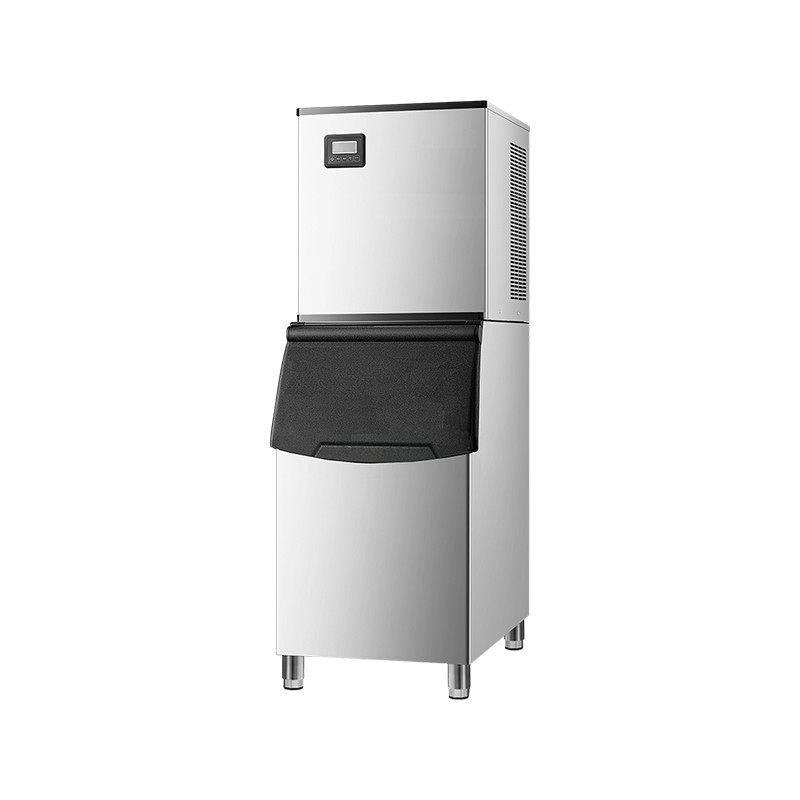
A split cube ice machine separates the refrigeration and ice-forming components from the storage bin into two connected sections, joined by insulated piping rather than housed in a single cabinet. This arrangement allows the compressor and condenser, which generate a fair amount of heat and operating noise, to be installed in a mechanical room, rooftop space, or ventilated back area, while the storage bin sits closer to where staff need to access ice, such as behind a bar counter or near a food prep station. Because the heat-producing components are physically removed from the service area, ambient kitchen or bar temperature stays more stable, and background noise near customers or food preparation surfaces is reduced compared with a fully integrated cabinet unit.
This layout flexibility also matters for buildings where space near the point of ice use is limited, since the ice-making head can be positioned in a utility area that would otherwise go unused, freeing up counter or floor space for other equipment. Integrated units, by contrast, keep everything in one footprint, which suits smaller kitchens or lower-volume operations but concentrates heat and noise output right where staff and customers are present.
Sizing Daily Production Against Storage Capacity
Ice machines are typically rated by two separate figures: how much ice they produce within a twenty-four hour cycle, and how much finished ice the storage bin can hold at once. A café serving mostly cold drinks during a concentrated lunch and afternoon window may need a production rate that can replenish the bin quickly during that peak period, even if total daily output stays moderate. A seafood display counter or cold chain storage application, on the other hand, often values a generous storage capacity so that ice remains available in bulk without requiring the machine to cycle constantly throughout the day.
Estimating Demand Realistically
A practical way to estimate required capacity involves tracking ice usage over a representative week, including any seasonal spikes such as summer beverage demand or holiday event bookings, rather than sizing the machine only for an average day. Undersizing tends to show up quickly as a shortage during peak hours, while oversizing mainly affects upfront cost and energy consumption from a larger compressor running below its efficient operating range for extended periods.
Cube Characteristics and How They Affect Use
Cube ice produced by these machines forms through a layered freezing process, where water is repeatedly sprayed or cascaded over a refrigerated grid until each cube builds up density and clarity, resulting in a harder, slower-melting cube compared with ice frozen in a single block or tray. This density affects how the ice behaves in different settings: a dense, slow-melting cube holds its shape longer in a mixed drink without diluting the beverage as quickly, which matters for cocktail programs and iced coffee service where flavor consistency is a concern. For food preservation and seafood display, a harder cube resists clumping and maintains airflow around stored items, which supports more even cooling across a display case.
Cube size itself is often adjustable or available in different fixed dimensions depending on the model, with smaller cubes cooling beverages faster due to greater surface area, while larger cubes melt more gradually and are sometimes preferred for extended outdoor service or slow-consumption settings such as buffet lines.
Installation Layout and Piping Distance
Because the ice-making head and storage bin connect through insulated refrigerant and water lines rather than sitting in one cabinet, the maximum allowable distance between the two sections is a practical detail to confirm before installation, since longer runs can affect refrigerant performance and may require additional line insulation or a larger compressor to compensate for pressure drop. Vertical distance between the head and bin also factors in, particularly when the ice-making unit is installed on a rooftop or upper mechanical floor while the bin remains at ground level near service areas.
Drainage and water supply access at both the ice-making head location and the bin location need to be planned during installation, along with adequate airflow around the condenser to prevent heat buildup that could reduce ice production efficiency over time. Facilities retrofitting an existing building sometimes find that split configuration allows equipment placement in spaces that would not accommodate a full integrated unit, since the components can be distributed across separate utility closets or roof access points.
Installation Details Worth Confirming
- Maximum allowable distance between the ice-making head and storage bin
- Water supply and drainage access at both installation points
- Ventilation clearance around the condenser unit
- Electrical supply requirements for the compressor and control system
Control Systems and Daily Operation
Many current cube ice split machines include an automated control panel that manages water inlet timing, freezing cycles, and harvest release without requiring manual adjustment throughout the day. Sensors within the storage bin typically detect when ice reaches capacity and pause production, then resume automatically once ice levels drop, which reduces the chance of overflow or wasted energy from continuous cycling once the bin is already full. A low-water alert is a common companion feature, notifying staff when the water supply line has been interrupted so the compressor does not run without adequate water flow, a condition that can shorten compressor lifespan if left unaddressed.
For facilities managing multiple pieces of refrigeration equipment, a control system with a simple diagnostic display can shorten troubleshooting time when ice production slows or stops unexpectedly, since staff can check basic fault codes before calling for service. Routine maintenance such as periodic descaling of the water circuit and cleaning of the condenser coil remains necessary regardless of automation level, since mineral buildup from hard water gradually reduces heat exchange efficiency and can affect cube clarity over time.
Common Applications Across Different Settings
Cube ice split machines appear across a range of commercial settings where continuous, large-scale ice production is part of daily operation. Hotels use them to supply guest floor ice stations and banquet service simultaneously, while cafés and bars rely on steady output for espresso-based cold drinks and cocktail service throughout service hours. Chain restaurants and convenience stores often choose split configurations specifically because kitchen or back-of-house space is limited, allowing the compressor unit to be tucked into a utility area while the bin stays accessible near the beverage station.
Fresh food supermarkets and seafood counters use cube ice for product display, where slow-melting, clear cubes maintain both visual presentation and consistent cooling around perishable items over a full sales day. Laboratory and medical settings apply similar equipment for sample cooling and controlled refrigeration tasks, where consistent cube quality and dependable output support processes that cannot tolerate irregular ice supply. Cold chain storage facilities managing perishable goods across a distribution network also depend on this equipment for supplemental cooling during loading and packing operations.
Comparing Key Specifications When Reviewing Models
When comparing available models, reviewing specifications side by side against actual operational needs helps avoid choosing based on a single figure such as maximum daily output alone. The table below outlines commonly compared specifications and what they generally indicate for different types of commercial use.
| Specification | What It Affects | Relevant Setting |
|---|---|---|
| Daily production rate | How quickly the bin refills during peak hours | High-turnover bars and cafés |
| Storage bin capacity | Buffer available during demand spikes | Hotels and event catering |
| Maximum piping distance | Flexibility in equipment placement | Space-limited kitchens |
| Automated control features | Daily monitoring and maintenance workload | Facilities with limited on-site staff |
Working through these specifications against actual daily patterns, rather than focusing on any single number, tends to result in equipment that matches both current volume and reasonable future growth. Consulting with an equipment supplier about water hardness in the local area is also worthwhile, since water quality directly affects both cube clarity and how often the system needs descaling, which in turn shapes the long-term maintenance workload for whichever model is selected.