
 English
 中文简体
中文简体 عربى
عربى

Home / News / Industry News / How Do Ice Machines Work? A Complete Guide to Commercial Ice Makers for Businesses
Content
- 1 The Refrigeration Cycle: The Heart of Every Ice Machine
- 2 Key Components of a Commercial Ice Machine
- 3 The Ice-Making Cycle: Freeze and Harvest
- 4 Types of Ice Machines and How They Work Differently
- 5 Commercial Ice Makers vs. Home Ice Makers
- 6 Choosing the Right Ice Machine for Your Business
- 7 Maintenance Tips to Keep Ice Machines Working
Have you ever watched a commercial ice machine drop a fresh batch of cubes and wondered what happens behind the stainless steel? If you run a café, restaurant, or beverage shop, understanding how ice machines work can help you choose the right equipment, troubleshoot problems, and keep your ice production efficient. Let's walk through the mechanical process that turns ordinary water into the ice your customers depend on.
The Refrigeration Cycle: The Heart of Every Ice Machine
All ice machines rely on a simple refrigeration loop. A compressor pressurizes refrigerant gas, raising its temperature. This hot gas moves through the condenser coil, where heat is released to the surrounding air, and the refrigerant condenses into a liquid. The liquid then passes through an expansion valve, which causes a sudden pressure drop. This makes the refrigerant evaporate inside the evaporator plate or coil, absorbing heat from the surrounding area. The evaporator becomes very cold, often well below freezing. A water pump or water valve directs water over or into contact with the cold evaporator, and the water freezes into ice. The cycle repeats until the storage bin is full.
The compressor is the workhorse of the system. It continuously pumps refrigerant through the loop, while the expansion valve controls the pressure drop. In air-cooled machines, a fan blows air across the condenser to remove heat. In water-cooled models, water circulates through the condenser instead. These differences affect installation requirements but not the fundamental principle. Whether you have a 25 kg countertop unit or a 380 kg industrial machine, the same physics keeps the ice coming.
Key Components of a Commercial Ice Machine
To understand how ice machines work, it helps to know the main parts and what they do. Here are the components you will find inside most commercial machines:
| Component | Function |
|---|---|
| Compressor | Pressurizes and circulates refrigerant |
| Condenser | Rejects heat, turning refrigerant from gas to liquid |
| Expansion valve | Drops refrigerant pressure and temperature |
| Evaporator | Absorbs heat and freezes the water |
| Water inlet valve | Controls the flow of fresh water into the machine |
| Water pump | Circulates water over the evaporator |
| Harvest mechanism | Releases ice from the evaporator and moves it to the bin |
Water quality plays a large role in ice machine performance. Many commercial models accept a water filter that removes minerals, preventing scale build-up on the evaporator. Some machines also use a pre-chiller to improve energy efficiency. In our factory, we use food-grade stainless steel for all water contact surfaces and R290 refrigerant in many models to reduce environmental impact while keeping production reliable.
The Ice-Making Cycle: Freeze and Harvest
Ice production happens in a continuous loop. Here is the step-by-step process most cube and nugget machines follow:
- Water fill: The water inlet valve opens for a few seconds, allowing fresh water to flow into the evaporator mold or a small reservoir.
- Freeze: The refrigeration cycle pulls heat out of the water. In spray-type machines, a pump continuously recirculates water over a chilled evaporator plate. In mold-type machines, water freezes directly in cavities.
- Harvest: Once the ice reaches the desired thickness, a sensor or timer signals the harvest cycle. A hot gas valve routes warm refrigerant through the evaporator, slightly heating the surface so the ice lets go. In some designs, an auger crushes or pushes the ice out.
- Drop and refill: The ice falls into the storage bin, and the water valve opens again to begin the next batch.
The harvest trigger is usually an ice thickness probe or a timer. In mold machines, a temperature sensor measures the formation resistance; once the ice reaches a certain thickness, the controller activates the hot gas valve. In continuous systems like flake or nugget machines, ice is scraped off regularly, so the harvest step is less dramatic but still essential. For ice and water dispenser models, the harvest step also activates the mechanism that pushes ice into the dispensing chute when a customer presses a button.
Types of Ice Machines and How They Work Differently
Not all ice makers produce the same ice. The working principle is the same, but the evaporator design changes the final product. Here are the most common commercial types:
Cube Ice Machines
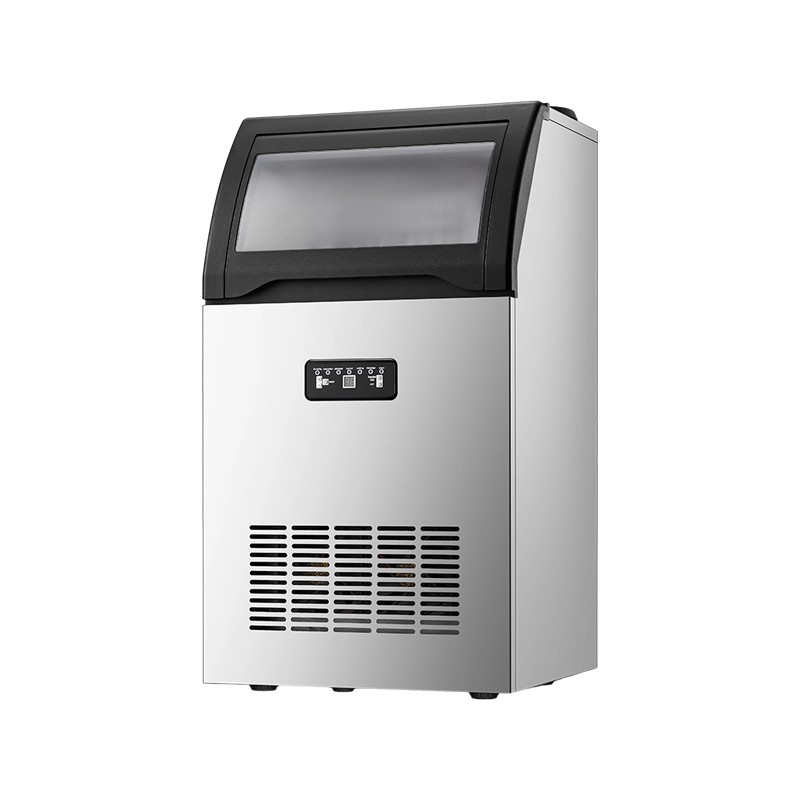
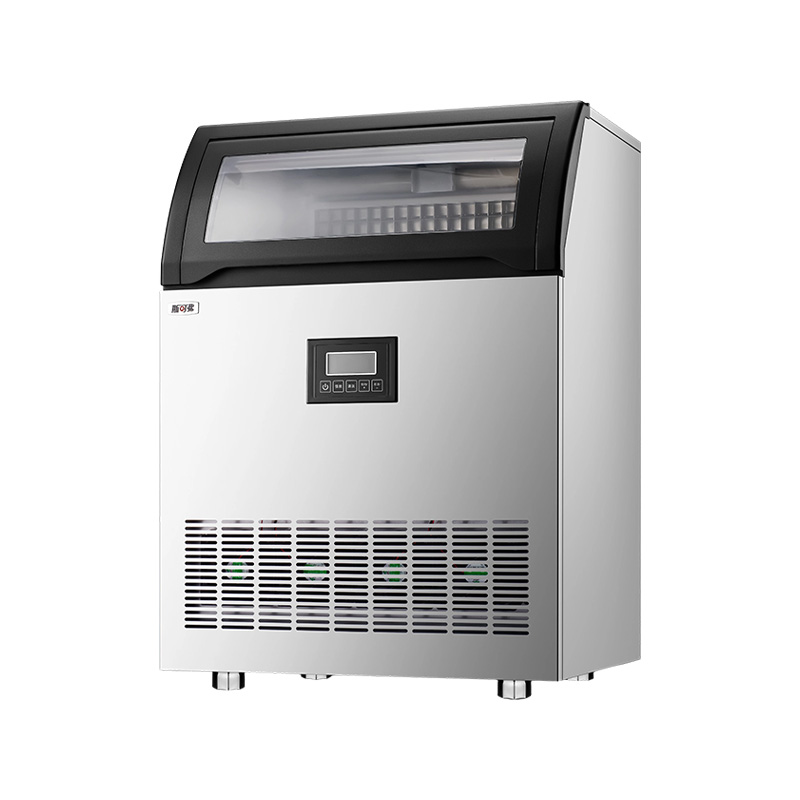
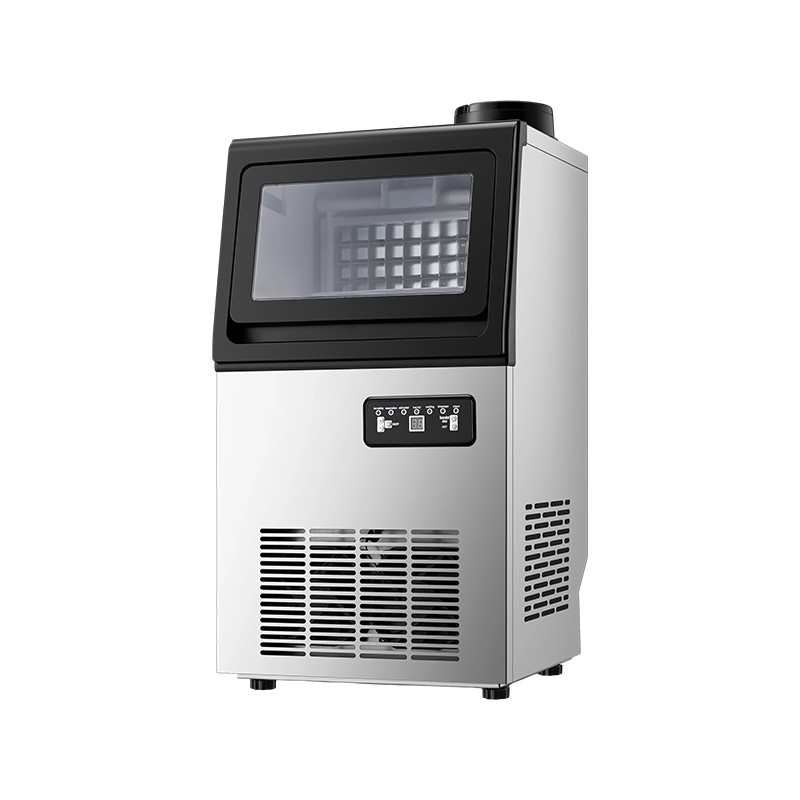
Cube ice machines freeze water in vertical or horizontal molds, then release solid, clear cubes. They are ideal for drinks, cocktails, and high-end presentations. Many of our R290 cube ice machines use a vertical air-cooling design and an automatic water fill system for consistent production. The slow freezing process helps push out dissolved gases, giving you denser cubes that melt more slowly.
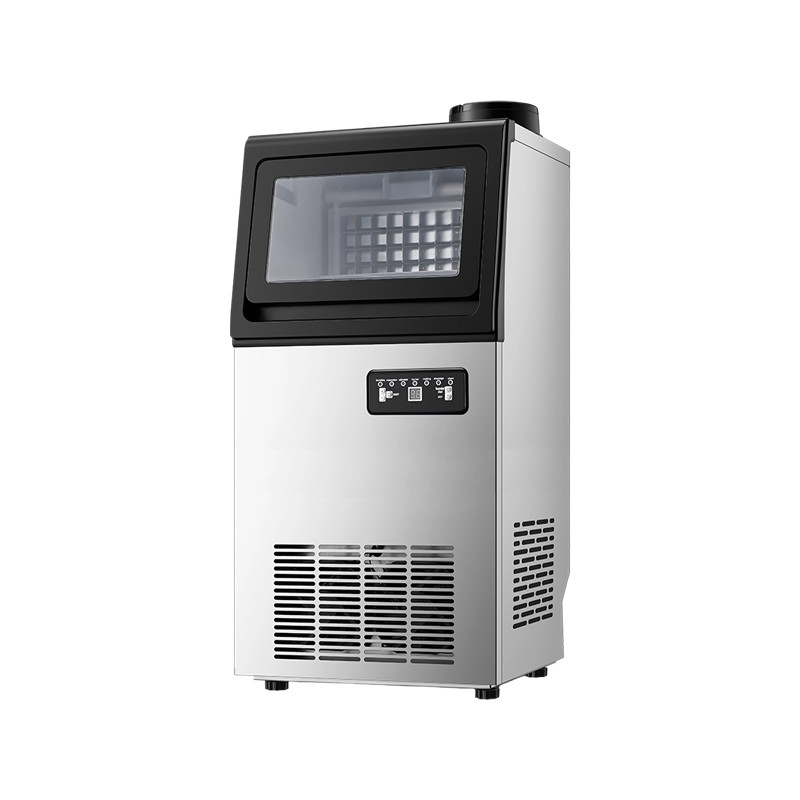 36kg/24h R290 Cube Ice Maker with Automatic Water FillThis cube ice maker delivers dense, slow-melting cubes for cocktails and premium drinks. It features automatic water filling, R290 refrigerant, and a user-friendly panel for consistent daily production.View Product →
Nugget Ice Machines
Nugget ice, also called chewable ice, is made by freezing water in a cylinder and then crushing it into small, soft pieces. These machines use an auger system that continuously compresses and breaks the ice. Nugget ice is a favorite in cafés and fast-food restaurants because it absorbs drink flavors and is easy to chew. Our chewable nugget ice maker is designed for countertop use and features touchpad programming for effortless portion control.
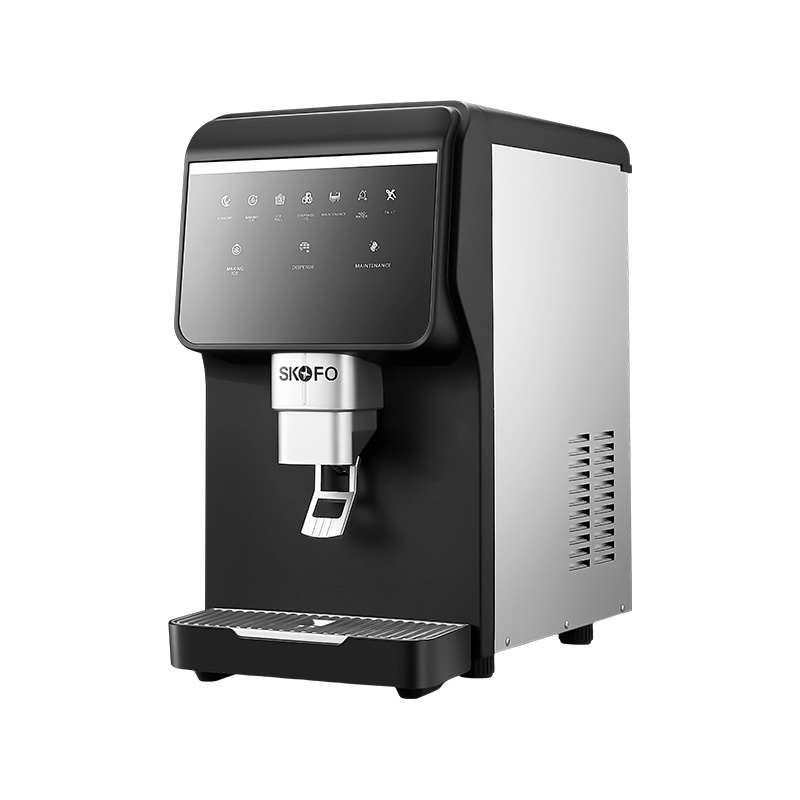 30kg/24h Countertop Nugget Ice Maker with Touchpad ControlsThis machine produces soft chewable nugget ice that absorbs drink flavors, ideal for cafes and fast food. Touchpad programming, R290 cooling, and a self-cleaning function make it convenient for countertop use.View Product →
Flake Ice Machines
Flake ice machines make small, irregular flakes that pack tightly around food products. They work by freezing water inside a chilled drum and scraping off thin layers with a rotating blade. Flake ice is commonly used in seafood displays, food processing, and even concrete cooling in hot climates. A compact flake machine is a good fit for kitchens with limited space and for businesses that need cold, dry ice in bulk.
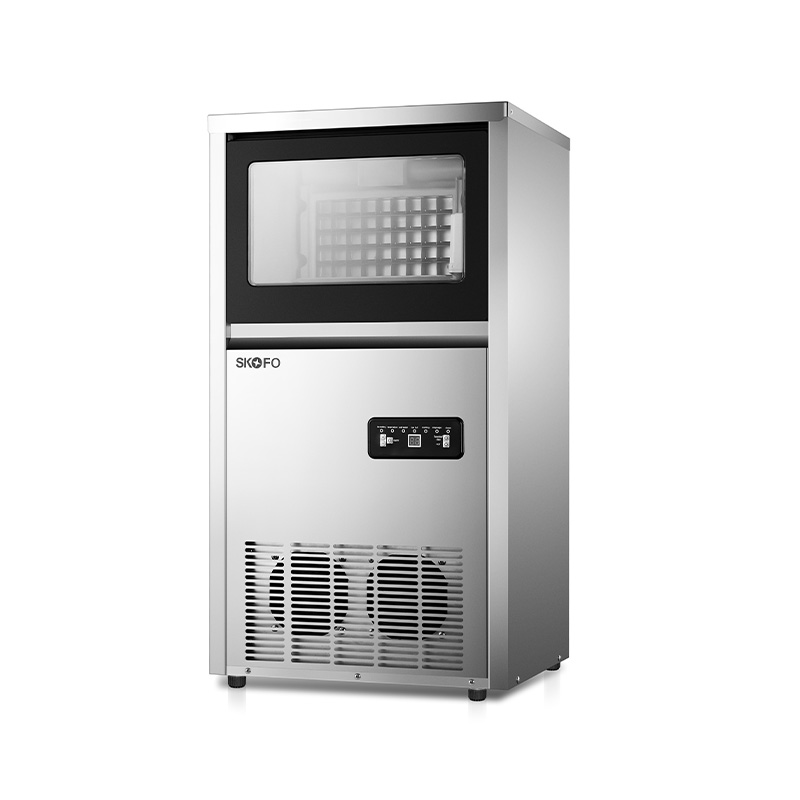 30kg/24h Stainless Steel Flake Ice Maker with Control PanelThis flake ice maker produces tightly packed ice for seafood displays and food processing. Its stainless steel body, own control panel, and efficient refrigeration suit kitchens with limited space.View Product →
Gourmet and Clear Ice
Gourmet cube machines control the freezing process to eliminate impurities, producing crystal-clear ice that melts slowly. They often have smaller capacities but add a premium touch to bars and hotels. These machines work by spraying water onto a chilled plate from above, which forces dissolved air out as the ice forms layer by layer. The result is a dense, glass-like cube that looks as good as it cools.
Commercial Ice Makers vs. Home Ice Makers
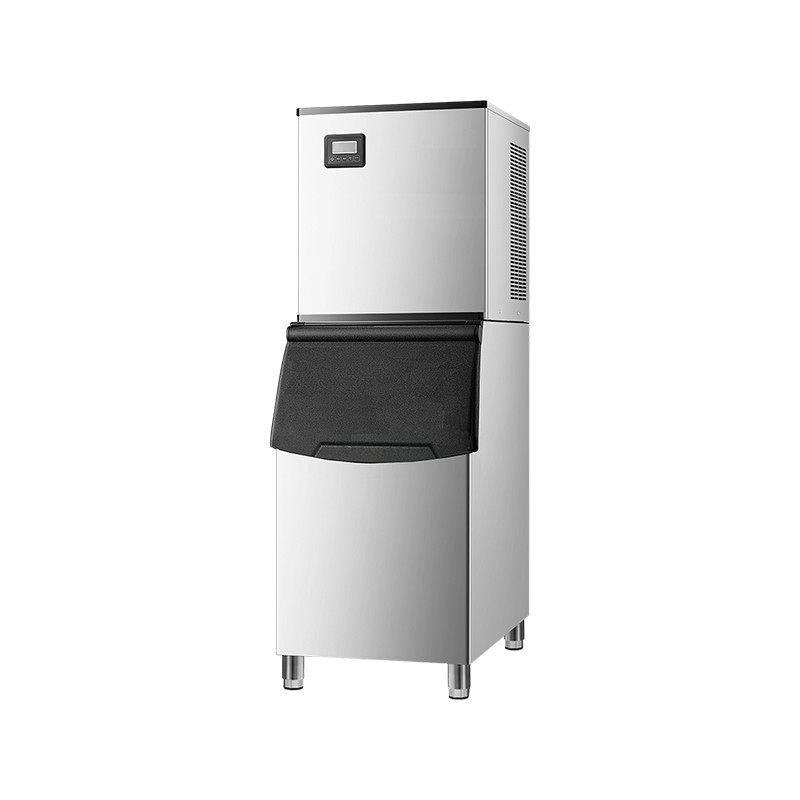
A refrigerator icemaker and a commercial machine share the same basic refrigeration cycle, but commercial units are built for speed, hygiene, and durability. A typical home icemaker produces a few dozen cubes per day, while a commercial unit can make hundreds of kilograms in 24 hours. Commercial machines also use larger condensers, food-grade components, and more robust water pumps.
If you are considering a built-in ice machine for your home, the technology is similar, but the capacity and build quality are quite different. Home units are usually compressor-based and make a narrow range of ice shapes, while commercial units are modular, repairable, and designed to run continuously under heavy demand.
Choosing the Right Ice Machine for Your Business
Now that you understand how ice machines work, the next step is matching the technology to your operation. Start by estimating your daily ice demand. A busy restaurant might need 90 kg or more per day, while a small coffee shop could manage with a 30 kg compact unit. Next, consider the ice shape that fits your drinks and food presentation. You should also think about installation space, water quality, energy source, and maintenance requirements.
Our complete ice machine guide for businesses covers these factors in detail, including sizing calculations and buying tips. And if you want to see how our machines are built, browse the product pages or contact our team for a quick quote.
Maintenance Tips to Keep Ice Machines Working
Understanding the working principle makes maintenance easier. Most service issues trace back to a few common causes: a dirty condenser, a clogged water filter, or low refrigerant pressure. Clean the condenser coils every three months, replace water filters regularly, and descale the evaporator as recommended by the manufacturer. In air-cooled machines, make sure the air intake is not blocked by boxes or curtains. For machines with a spray bar, check the nozzles for scale build-up because they directly affect ice quality.
Monitoring the freeze and harvest cycle helps you spot trouble early. If cubes look smaller than usual, the machine may be low on refrigerant or the water valve may be failing. If the bin is full but the machine keeps running, a sensor might need to be reset. These small checks keep your ice production running smoothly and extend the life of the equipment.
Ice machines may look like simple boxes, but they contain a carefully engineered loop of refrigeration, water flow, and timing. Whether you need solid cubes, chewable nuggets, or soft flakes, understanding each step helps you appreciate the equipment, and maintain it well. With the right machine, your business will never run out of ice during the busiest hours.