
 English
 中文简体
中文简体 عربى
عربى

Home / News / Industry News / How Do Portable Ice Makers Work? A Simple Guide to the Freeze and Harvest Cycle
Content
- 1 The Short Answer: A Tiny Refrigeration Cycle
- 2 Step by Step: One Batch of Ice, Start to Finish
- 3 The Parts Doing the Work
- 4 Cube, Bullet, Nugget: Same Idea, Different Cold Surface
- 5 Clear Gourmet Cubes: Slower Freeze, Clearer Ice
- 6 Where Does the Heat Go? Air-Cooled Versus Water-Cooled
- 7 Why a Portable Ice Maker Needs No Plumbing or Drain
- 8 What Changes How Fast Your Ice Maker Works
- 9 Simple Care Keeps the Cycle Running
- 10 When a Countertop Unit Is Not Enough
- 11 Quick Answers to Common Questions
If you have ever filled a countertop ice maker, pressed start, and watched it drop its first batch of bullet ice in under ten minutes, you have probably wondered what is happening inside that small box. There is no water line, no drain and no plumber involved, yet the ice keeps coming.
A portable ice maker is really a compact, self-contained refrigeration system with a water circuit wrapped around it. Once you see the two loops working side by side, one moving refrigerant and one moving water, the machine stops being a mystery. The same logic scales all the way up to the countertop units we build for cafes, bars and small kitchens.
The Short Answer: A Tiny Refrigeration Cycle
Every portable ice maker, whatever the brand, runs on the same principle your kitchen fridge uses: move heat out of one place and dump it somewhere else. A compressor pushes refrigerant into a hot, high-pressure gas. That gas travels through a condenser coil, where a fan blows room air across it and carries the heat away. The refrigerant then squeezes through a narrow capillary tube, its pressure drops sharply, and it becomes extremely cold.
That cold refrigerant now flows through the evaporator, which is the metal probe, finger array or cube mold sitting above the water tray. Water is pumped over this surface and freezes onto it, layer by layer. When the batch is thick enough, the machine briefly routes hot refrigerant back through the evaporator or switches on a small heater. The ice loosens, drops into the basket, and the whole sequence begins again.
Step by Step: One Batch of Ice, Start to Finish
On most countertop models the cycle repeats every eight to fifteen minutes. Here is what happens, in the order it actually happens.
- You pour water into the reservoir, or set a bottle upside down in the inlet. A small pump primes itself and pushes water up to the freezing area.
- The compressor starts and refrigerant begins circulating. Within a minute or two, the evaporator surface drops well below freezing.
- Water trickles continuously over the cold metal. It freezes in thin layers rather than all at once, which is why the pieces often come out with a hole or a hollow centre.
- A timer or a temperature sensor decides the batch is ready. This is the moment the machine switches from freeze mode into harvest mode.
- Hot refrigerant is routed back through the evaporator, or a small heating element warms the mold, so the ice releases cleanly instead of clinging to the metal.
- The ice falls into the basket, the unfrozen water drains back into the reservoir, and the cycle restarts. It stops when the basket sensor reads full, or when the reservoir runs dry.
The Parts Doing the Work
Open the cabinet of a portable ice maker and you will find the same handful of components in every model. Knowing what each one does makes troubleshooting far easier.
| Part | What it does | Why it matters to you |
|---|---|---|
| Compressor | Compresses refrigerant into a hot, high-pressure gas | The engine of the cycle; a steady hum and a warm cabinet are normal |
| Condenser coil and fan | Releases the heat collected from the water into the room | Warm air leaving the vents means heat is being removed correctly |
| Capillary tube | Drops refrigerant pressure so it turns bitterly cold | Sets how cold the freezing surface can get |
| Evaporator probe or mold | The surface the water freezes onto | Determines both the ice shape and the length of each batch |
| Water pump | Circulates water from the reservoir over the cold surface | Keeps fresh water flowing so ice builds evenly |
| Hot gas valve or heater | Warms the evaporator during harvest | Lets ice release instead of sticking to the metal |
| Ice basket and sensor | Holds finished ice and stops the cycle when full | Prevents overflow, jams and wasted energy |
Cube, Bullet, Nugget: Same Idea, Different Cold Surface
The refrigeration loop is identical across machines, but the shape of the evaporator decides what kind of ice you get.
- Bullet ice is the classic countertop output. Water drips over a row of vertical metal fingers, and each one builds a bullet-shaped piece with a hole through the middle. Fast to make, quick to melt.
- Cube ice freezes inside a grid of small molds. The cubes are denser, melt more slowly and look better in a glass.
- Nugget ice uses a different mechanism. A chilled cylinder freezes a thin sheet of ice, and a rotating auger scrapes it off and compresses it into soft, chewable pellets.
Nugget machines are the ones people ask about most, because the ice behaves so differently at the bottom of a glass. If you are curious what that looks like at countertop scale, our table-top nugget machine is a useful reference point.
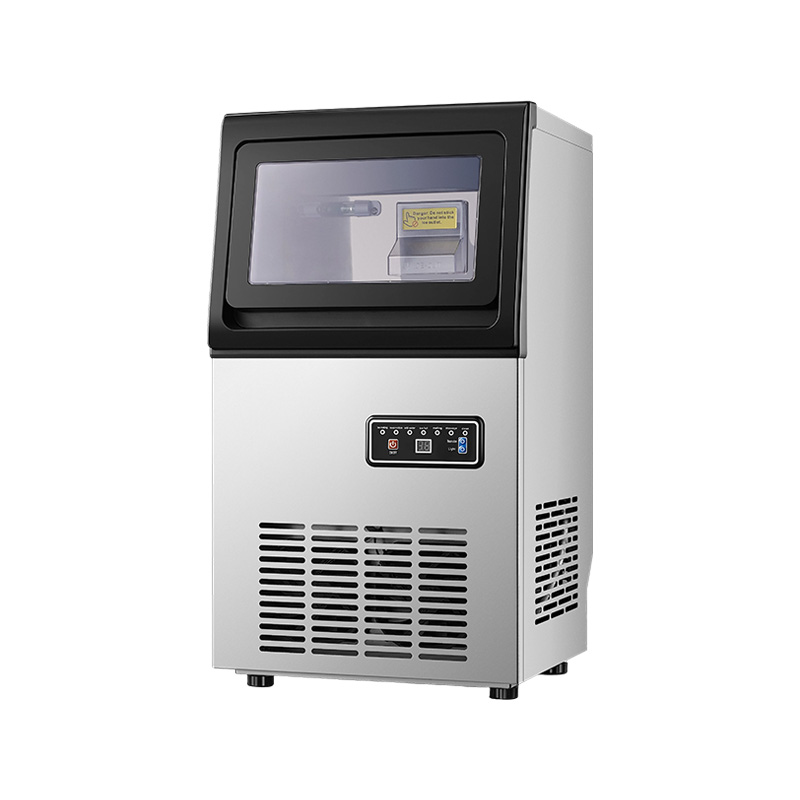 SKF-ATS30J Tabletop Nugget Ice Maker 30kg/24hFor countertop nugget ice production, the SKF-ATS30J offers 30kg/24h capacity, chewable nuggets, R290 cooling, self-cleaning, touch controls, and 304 stainless steel construction.View Product →
Clear Gourmet Cubes: Slower Freeze, Clearer Ice
Cloudy ice is not a defect. It is air and dissolved minerals trapped as the water freezes quickly from the outside in. Gourmet cube machines solve this by freezing more slowly while keeping water moving around the mold, so bubbles and impurities are pushed out before they get locked inside.
The trade-off is time. A clear cube takes considerably longer to form than a bullet, which is why gourmet machines turn up in bars and coffee service rather than in a dorm room. If clarity matters for what you serve, a countertop gourmet cube unit is the smallest sensible step up.
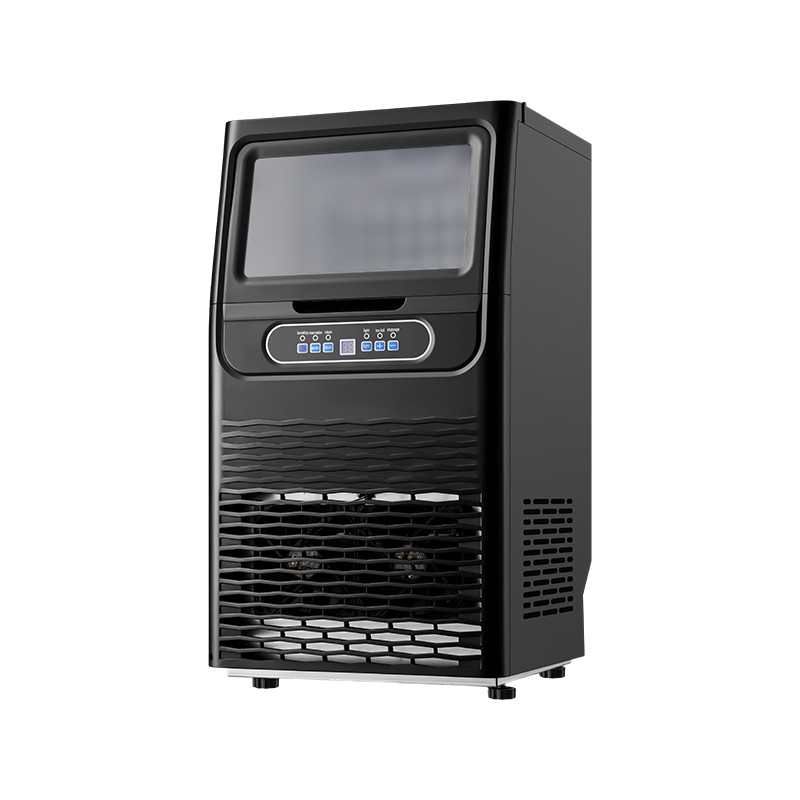 SKF-AT35PL Countertop Gourmet Cube Ice MachineFor clearer, slower-melting ice, this countertop gourmet cube maker offers 25–30 kg daily capacity, scale-reducing filtration, LCD monitoring, self-cleaning, and insulated storage.View Product →
Where Does the Heat Go? Air-Cooled Versus Water-Cooled
Almost every portable ice maker is air-cooled. A fan pushes room air across the condenser, and the heat leaves through vents at the back or side. That is why the machine needs a few centimetres of clearance around it, and why a busy ice maker noticeably warms up a small room.
Bigger commercial machines are sometimes water-cooled instead, using a constant stream of water to carry heat away. Water-cooled units run quieter and do not heat the room, but they need a drain connection, which is exactly what a portable unit is designed to avoid.
Why a Portable Ice Maker Needs No Plumbing or Drain
This is the part that surprises most people. The water inside a portable ice maker is not consumed, it is borrowed. Only the water that actually freezes leaves the reservoir. Everything that does not freeze drains straight back down and gets pumped over the evaporator again.
The same applies to ice melting in the basket. It drips back into the reservoir and is reused in the next batch. The loop only breaks when you empty the reservoir, when the machine shuts off because the basket is full, or when you pull the small drain plug at the bottom for a deep clean.
What Changes How Fast Your Ice Maker Works
Two identical machines can behave very differently in two different rooms. These are the variables that matter most.
- Room temperature. A machine rated at 12 kg per 24 hours will not hit that figure in a 35 degree kitchen. Heat has to go somewhere, and a hotter room makes the compressor work harder.
- Water temperature. Cold water freezes sooner, so starting with chilled water can shave minutes off every batch.
- Water hardness. Mineral-heavy water builds scale on the evaporator, and scale insulates the surface and slows freezing.
- Cleanliness. A dusty condenser coil cannot release heat efficiently, so the entire cycle drags.
- Batch settings. Thick cubes take longer than thin bullet ice, even on the same machine.
- The first few batches. Most manufacturers, including us, suggest discarding the first three or four rounds so any manufacturing residue is flushed out.
Simple Care Keeps the Cycle Running
There is not much to maintain, but the little there is really matters. Rinse the reservoir, wipe the evaporator with a soft cloth, and let the machine air dry before storing it. Every few months, run a descaling solution or a vinegar-and-water mix through a normal cycle to strip mineral build-up.
If you run a food service operation and want a proper routine for a larger machine, our step-by-step guide to cleaning a commercial ice machine covers the full schedule, including the parts most people forget.
When a Countertop Unit Is Not Enough
Portable ice makers are brilliant for a home bar, an office kitchen or a small cafe counter. They stop being brilliant the moment you need ice all day, every day, without babysitting the reservoir. When your team refills the machine more than once a shift, it is time to compare output ratings instead of batch times.
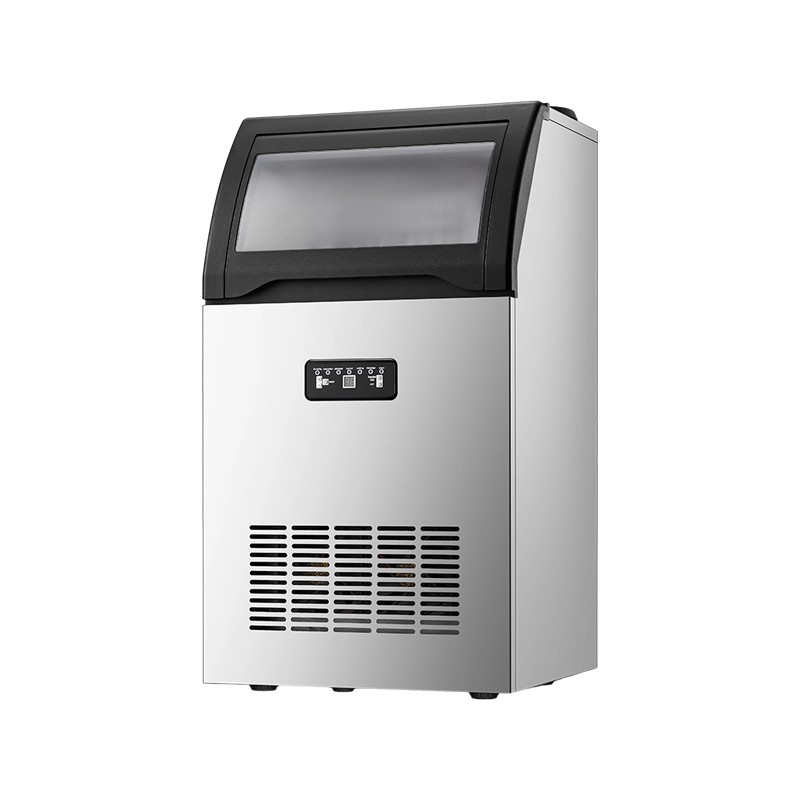
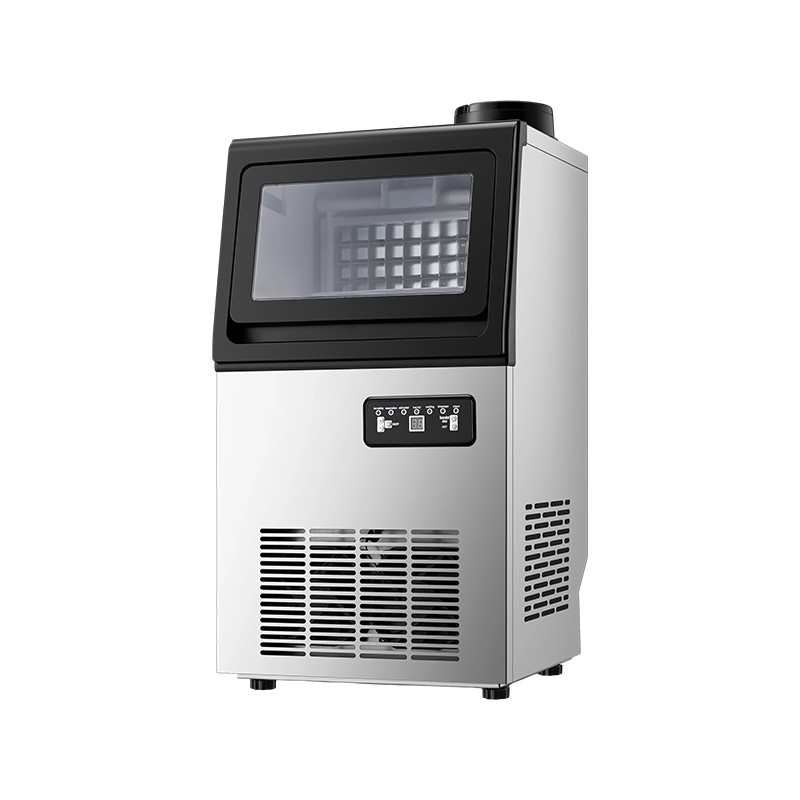
That is the world we work in. We build countertop and undercounter machines from 25 kg per 24 hours up to 380 kg, in cube, nugget, flake and gourmet cube formats. A commercial counter-top cube machine uses exactly the freeze-and-harvest logic described above, but with a larger evaporator, a bigger condenser and a control board that holds the cycle steady through a full service day.
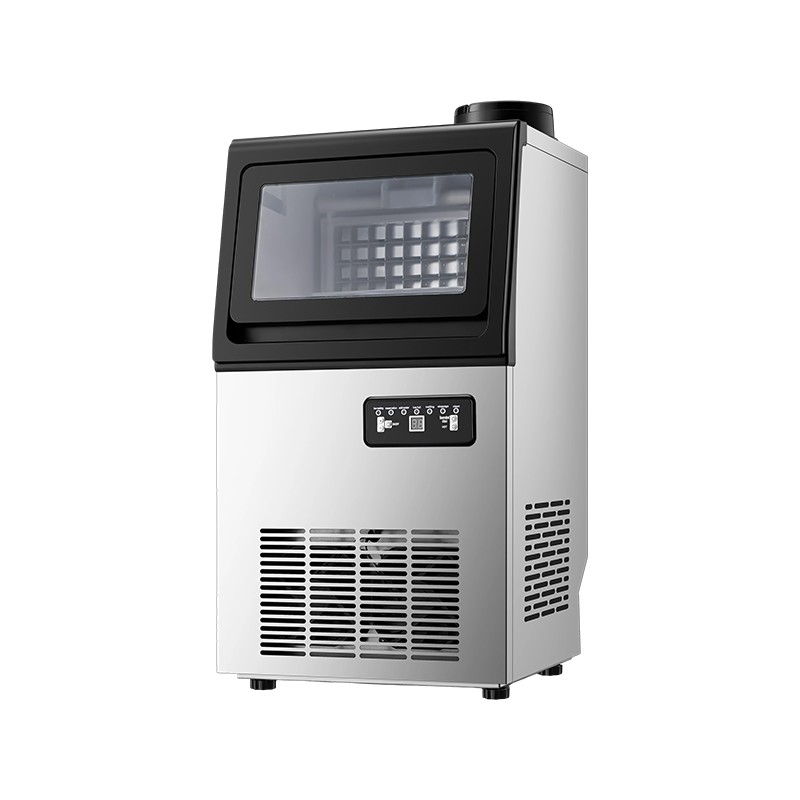 SKF-ATS80FT Commercial Countertop Cube Ice MakerA commercial countertop cube machine with 36kg/24h capacity, faster freezing and slower melting, automatic cleaning, timed reservation, adjustable ice thickness, and a brand compressor.View Product →
If you are working out what your space actually needs, you can compare formats side by side across our ice machine range before you request a quote.
Quick Answers to Common Questions
How long does a portable ice maker take to make ice?
Six to ten minutes per batch on most countertop models. The very first batch after switching on usually takes longer, because the system has to cool down from room temperature.
Can you put anything other than water in a portable ice maker?
Stick to plain water. Sugary drinks, juices and fizzy drinks clog the pump, coat the evaporator and are difficult to clean out afterwards.
Does a portable ice maker need to be drained?
Not after every cycle, since the water recirculates. But you should empty it whenever you will not use it for a few days, and drain it completely before storage so nothing sits stagnant.