
 English
 中文简体
中文简体 عربى
عربى

Home / News / Industry News / Commercial Ice Maker Maintenance: A Practical Guide for Food Service Operators
Content
- 1 Why Commercial Ice Maker Maintenance Matters
- 2 How Often Should You Maintain a Commercial Ice Maker?
- 3 Daily and Weekly Maintenance Habits
- 4 Deep Cleaning a Commercial Ice Maker: Step by Step
- 5 Water Quality and Filtration: The Hidden Maintenance Lever
- 6 Condenser and Airflow Maintenance
- 7 Common Warning Signs and Troubleshooting
- 8 Building a Maintenance Schedule That Sticks
- 9 Choosing Equipment That Is Easier to Maintain
- 10 When to Call a Professional
- 11 Final Thoughts
Commercial ice makers are the quiet workhorses of restaurants, bars, hotels, and beverage shops. When they run well, nobody notices. When they produce cloudy cubes, slow cycles, or odd tastes, the whole operation feels it. The good news is that commercial ice maker maintenance is not complicated. It is mostly consistent habits, clean water, and attention to airflow.
We have been building ice machines since 2007, and the pattern is always the same: machines that receive regular care last longer and produce better ice. This guide covers the practical routine we recommend, from daily checks to annual service.
Why Commercial Ice Maker Maintenance Matters
Ice is food. That makes maintenance a food-safety issue, not just a repair issue. A dirty bin, a clogged filter, or a neglected condenser can affect the taste, clarity, and safety of every drink you serve.
Regular care also protects your investment. Scale, dust, and worn parts force the compressor and water system to work harder, which shortens component life and raises energy bills. An unexpected breakdown during service hours costs far more than a planned cleaning.
- Food safety: clean ice and clean storage reduce contamination risk.
- Performance: efficient heat exchange means faster cycles and consistent ice.
- Longevity: small adjustments prevent major failures.
- Cost control: lower energy use and fewer emergency repairs.
How Often Should You Maintain a Commercial Ice Maker?
No single schedule fits every machine. Water hardness, daily production, ambient conditions, and design all matter. The table below is a practical starting point for most commercial kitchens and beverage operations.
| Task | Standard Conditions | Hard Water or High Volume |
|---|---|---|
| Wipe exterior and check for leaks | Weekly | Daily |
| Clean ice bin and scoop | Weekly | Every 2-3 days |
| Inspect water filter | Monthly | Every 2 weeks |
| Clean condenser coil | Every 3 months | Every 4-6 weeks |
| Sanitize water system | Every 6 months | Every 3-4 months |
| Professional inspection | Annually | Every 6 months |
In dusty areas or near a grill line, clean the condenser more often. With very hard water, descale more frequently than the table suggests.
Daily and Weekly Maintenance Habits
Most maintenance happens in short, simple tasks. They take a few minutes but catch problems before they become breakdowns.
Daily Checks
- Look at the ice. Clear, dry cubes are a good sign; cloudy or clumped ice points to water or cycle issues.
- Listen for grinding, rattling, or repeated clicking.
- Check for water on the floor or around the bin.
- Confirm the scoop is stored outside the bin, not inside it.
Weekly Cleaning
- Empty and clean the bin with a food-safe cleaner, then rinse.
- Wash the scoop and removable bin parts with warm water and mild detergent.
- Wipe stainless steel with a soft cloth. Avoid abrasive pads.
- Clear dust, grease, or boxes away from air intakes and exhausts.
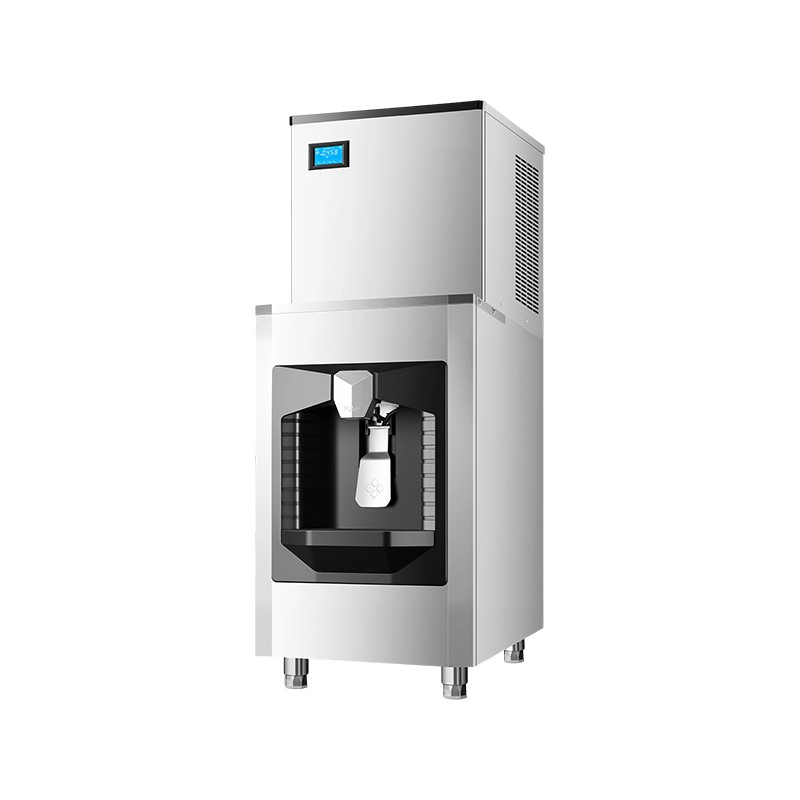
When choosing new equipment, easy access matters. Smooth food-grade surfaces and removable panels make daily care faster. Our commercial ice machine range includes models built with these service details in mind.
Deep Cleaning a Commercial Ice Maker: Step by Step
Deep cleaning removes scale, biofilm, and mineral deposits that daily wiping cannot reach. The exact process varies by model, but the sequence is similar. For a detailed walkthrough, see our step-by-step cleaning guide.
- Switch off and disconnect power. Never clean a running machine.
- Remove all ice and discard it.
- Take out removable parts such as the bin door, scoop, and shelves.
- Clean with an ice machine cleaner approved for food-contact equipment. Follow the dilution instructions.
- Rinse thoroughly with clean water.
- Apply a food-safe sanitizer, then allow the required contact time.
- Reassemble, restore power, and run two or three cycles. Discard the first batches of ice.
Avoid bleach, glass cleaner, and general degreasers unless the manufacturer approves them. They can corrode stainless steel, leave odors, or damage plastic.
Water Quality and Filtration: The Hidden Maintenance Lever
Water is the main ingredient in ice and the main source of maintenance problems. Hard water leaves scale on evaporators, lines, and pumps. Sediment clogs filters quickly. Even good-tasting water can contain minerals that affect ice clarity and machine efficiency.
Change filter cartridges as recommended, or earlier if ice production drops, flavors change, or sediment appears. In hard-water areas, a softener or scale inhibitor makes a real difference.
- Test water hardness and total dissolved solids once a year.
- Record filter changes so you know when the last one was installed.
- Keep spare cartridges on site, especially during peak season.
You can also reduce scale by choosing equipment with accessible water systems and food-grade components. For higher-volume operations, look for food-grade 304 stainless steel water-contact surfaces.
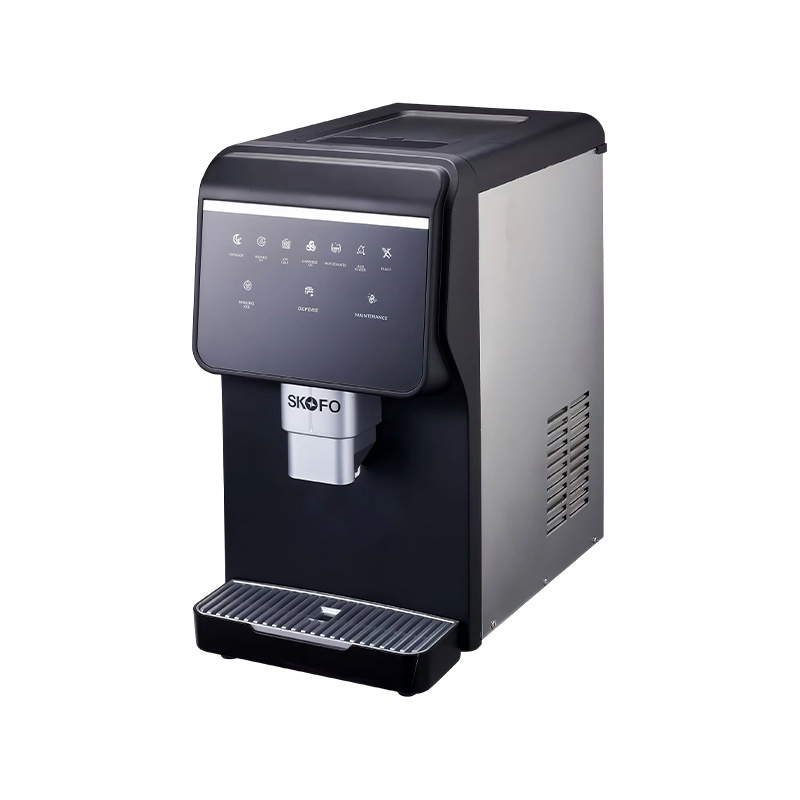
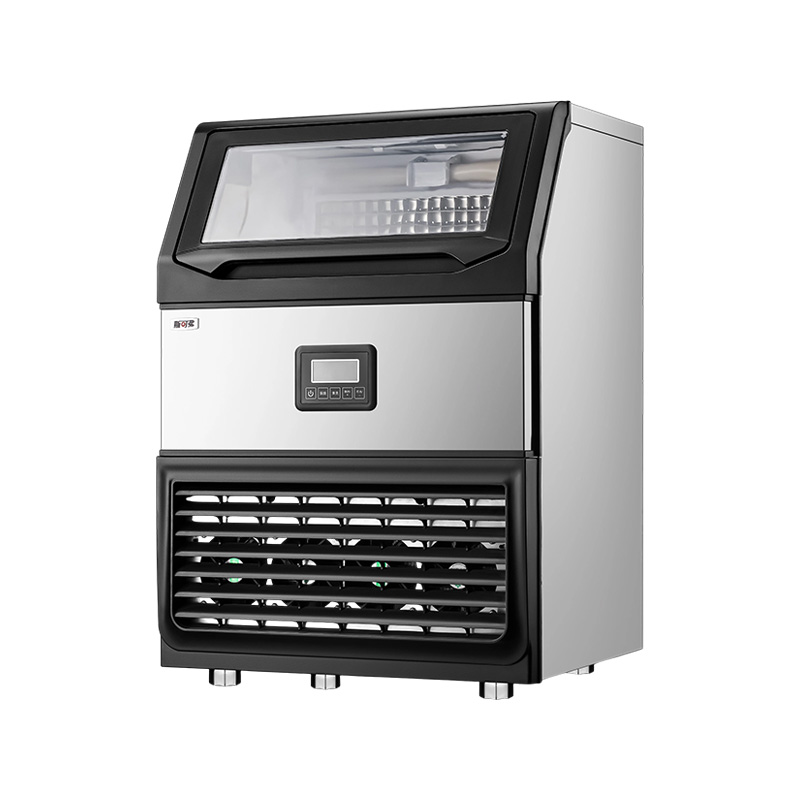 SKF-ES210F Food-Grade 304 Cube Ice MachineOffers food-grade 304 water-contact surfaces, high daily output options, and dual water-source flexibility for scale-conscious, higher-volume ice production.View Product →
Condenser and Airflow Maintenance
The condenser is where heat leaves the ice machine. If it cannot breathe, the whole system suffers. Dirty coils are a common cause of slow production, high head pressure, and compressor failure.
Air-Cooled Condensers
- Clean the coil every 1 to 3 months, depending on dust and grease.
- Use a soft brush or vacuum. Do not bend the fins.
- Keep at least 6 inches of clearance around the machine.
- Make sure nearby walls or equipment are not pushing hot air back into the intake.
Water-Cooled Systems
- Check supply and drain lines for leaks or restrictions.
- Monitor water quality. Scale reduces efficiency and can block flow.
- Inspect the water regulator and strainer, if fitted, and clean as needed.
Split ice machines place the condensing unit away from the bin, which can make service easier in tight kitchens. Our stainless steel split model, the SKFM300F, is designed for commercial kitchen use with service access in mind.
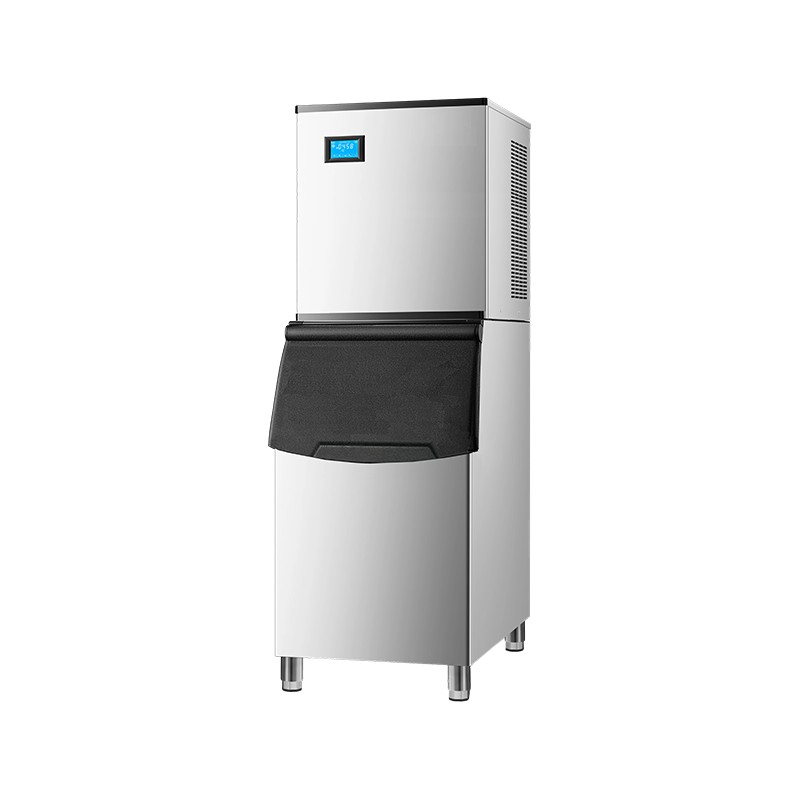 SKF-M300F Stainless Steel Commercial Kitchen Cube Ice MakerDesigned for commercial kitchens with service access in mind, this split model offers multiple capacities, R290 refrigerant, and a removable door for maintenance.View Product →
Common Warning Signs and Troubleshooting
Ice machines usually tell you something is wrong through changes in ice quality, output, or sound. The table below lists common symptoms and sensible first steps. It does not replace a qualified technician, but it helps you document the problem.
| Symptom | Likely Cause | First Step |
|---|---|---|
| Cloudy or soft ice | Water quality, scale, or worn filter | Test water, replace filter, inspect for scale |
| Low ice production | Dirty condenser, low refrigerant, or restricted airflow | Clean condenser and check clearances |
| Bad taste or odor | Dirty bin, old filter, or biofilm | Deep clean and sanitize the system |
| Water leaking | Loose fitting, blocked drain, or damaged hose | Switch off and inspect connections |
| Loud or unusual noise | Fan, pump, or compressor issue | Stop the machine and call a technician |
| Machine will not start | Power supply, control board, or safety switch | Check power and error codes, then call service |
Never ignore a refrigerant leak, a burning smell, or repeated electrical faults. These are jobs for a licensed technician. Attempting repairs without the right tools can damage the machine and void the warranty.
Building a Maintenance Schedule That Sticks
The best plan is the one your team actually follows. A simple log, clear responsibilities, and a few spare parts make a big difference.
- Create a written cleaning and service log. Note dates, tasks, and changes in ice quality.
- Assign daily and weekly owners. Opening or closing shifts can handle basic checks.
- Set reminders for filter changes, condenser cleaning, and inspections.
- Keep spare filters, gaskets, and cleaning supplies on site.
Choosing Equipment That Is Easier to Maintain
Some machines are simply easier to care for than others. When comparing models, look beyond daily output and consider how the machine will be cleaned and serviced over the next five to ten years.
- Removable panels and accessible water systems reduce cleaning time.
- Food-grade 304 stainless steel resists corrosion and wipes down easily.
- Self-diagnostic controls and clear error codes help technicians solve problems faster.
- Condenser placement must allow airflow without blocking a walkway.
- Built-in units need ventilation and rust-resistant construction, especially undercounter.
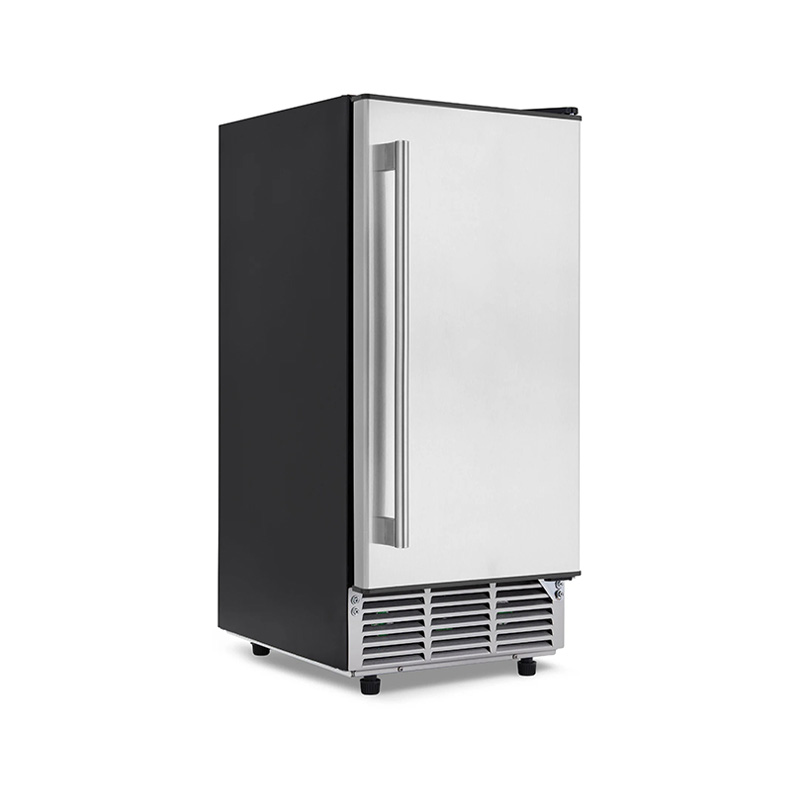
If you are planning a built-in installation, look for rust prevention and a service-friendly layout. Our SKFQR80F built-in ice making machine is one option for tight spaces.
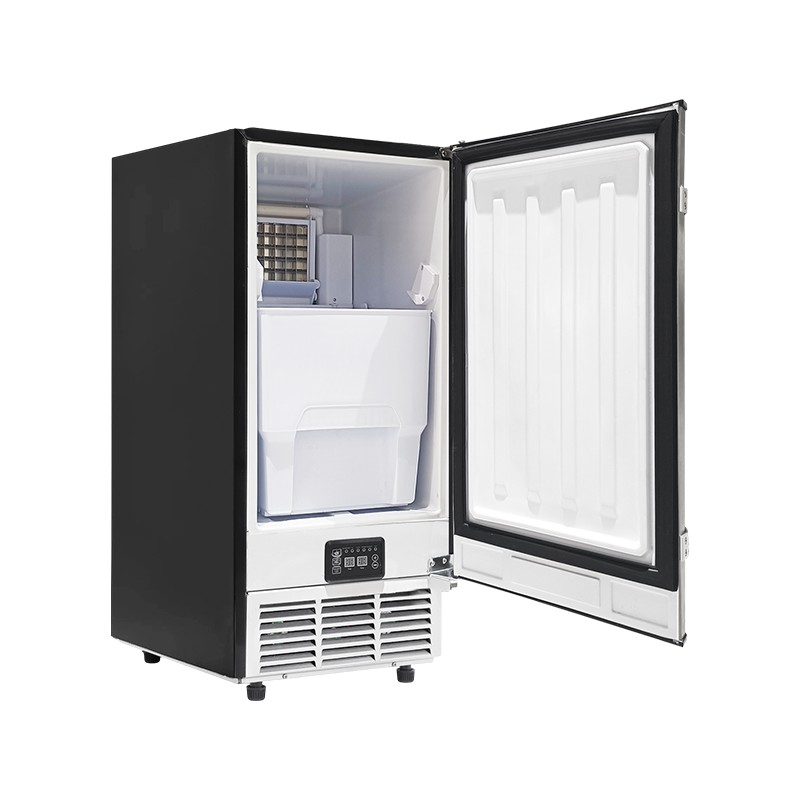 SKF-QR80F Rust-Prevention Built-In Undercounter Ice MachineA space-saving undercounter option at 382mm wide for built-in kitchens, with rust-prevention construction, alerts, cleaning functions, and a pull-out basket.View Product →
When to Call a Professional
Even with a solid routine, some problems need expert attention. Call a qualified refrigeration technician if you notice any of the following:
- Refrigerant leaks, oily residue around fittings, or a machine that runs but never cools.
- Compressor noise, repeated tripping, or a breaker that will not reset.
- Error codes you cannot clear after a power cycle.
- Water near electrical components.
- Ice production that drops significantly after cleaning and filter changes.
- Any burning smell, sparking, or exposed wiring.
Professional service is also a good time to replace worn gaskets, check refrigerant pressures, and inspect electrical connections.
Final Thoughts
Commercial ice maker maintenance is a habit, not a one-time project. Daily checks, weekly cleaning, regular filter changes, and a clear condenser keep your ice supply reliable. Combined with a well-designed machine, those habits deliver cleaner ice, lower energy costs, and fewer interruptions.
As a manufacturer of commercial ice machines and ice-processing equipment, we have helped operators choose and care for equipment in restaurants, bars, hotels, and beverage shops. If you are planning a new installation or replacing an aging machine, we are happy to help you find a model that fits your space and your routine.