
 English
 中文简体
中文简体 عربى
عربى

Home / News / Industry News / Commercial Undercounter Ice Machine Buying Guide: Output, Fit, and Service
Content
The best commercial undercounter ice machine is not the one with the largest daily output. It is the one that matches the ice volume your staff needs during the busiest two hours of service, fits below the counter without blocking air, and uses materials that will survive a wet, crowded kitchen.
If you start with that conclusion, the rest of the decision becomes a short checklist.
What an Undercounter Ice Machine Has to Deliver
Choose the machine that matches your peak hour, not your average day. A 35 kg/24h unit makes roughly 1.5 kg of ice per hour across a 24-hour cycle, but a real service rush may demand that whole harvest window in a single afternoon. That is why the real metric is the combined output and storage bin capacity.
Most commercial undercounter ice machines are one-piece units: the ice-making head, condenser, and insulated bin sit inside the same casing. The Shanghe integrated ice machine series is built around this layout. A compact unit with a corrosion-resistant body is easier to wipe down and less likely to fail near a drain.
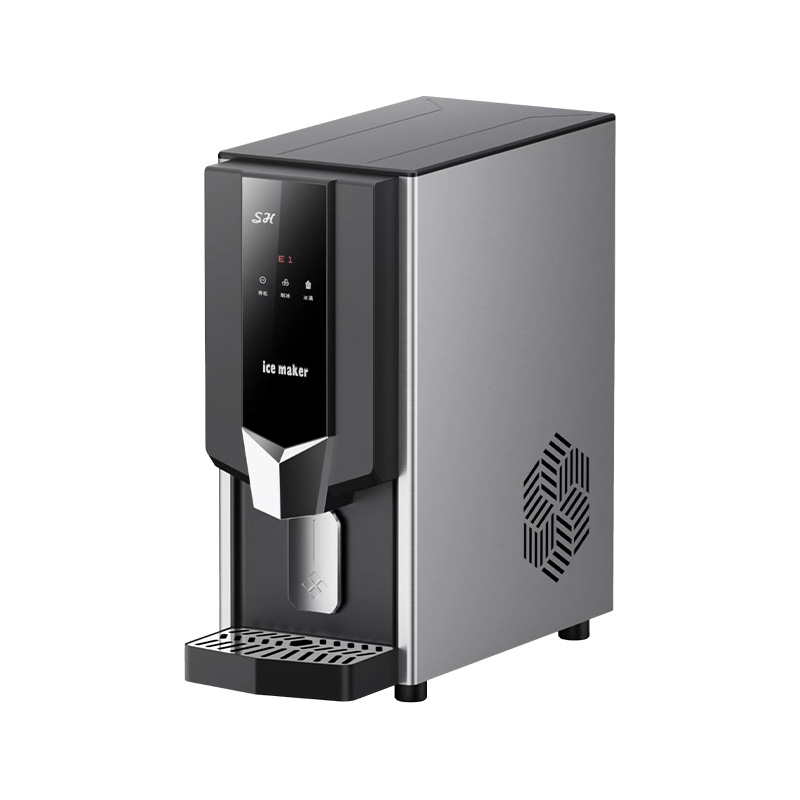
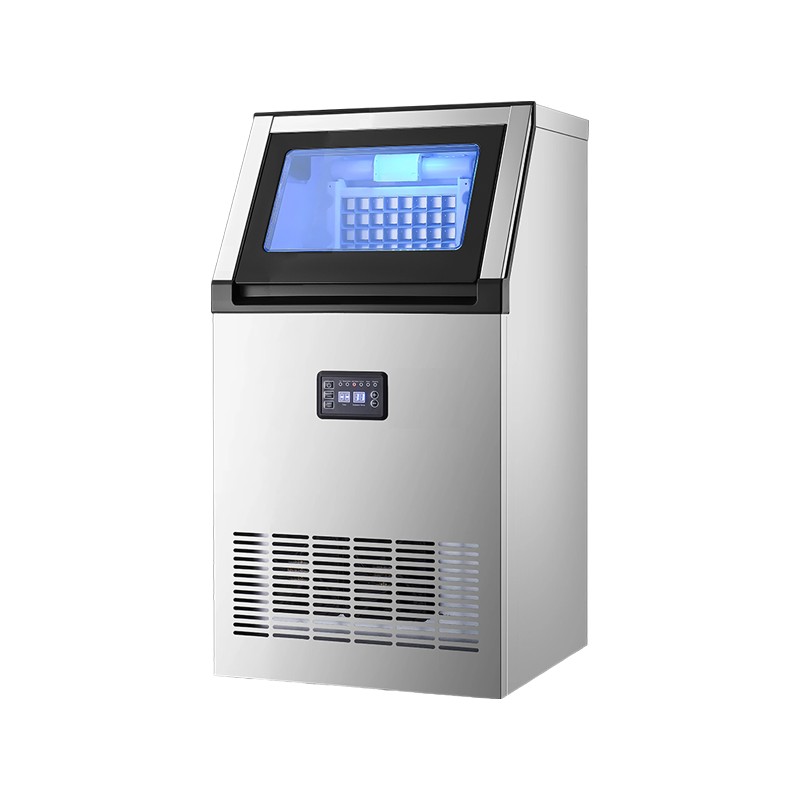
 Compact 35kg/24h Rust-Proof Undercounter Ice MachineThe SKFQR80F offers a space-saving design at only 382mm wide, making it ideal for tight bar counters. Its rust-prevention finish and affordable price provide practical value for moist environments.View Product →
The SKFQR80F is a useful reference because it keeps the daily output at 35 kg/24h while using a rust-prevention finish and a lower price point. That combination matters more than a big number on a specification sheet when the machine sits under a bar counter near a wet floor.
Capacity: How Much Ice Does Your Business Actually Need?
For a small restaurant or bar, output in the 25–40 kg/24h range is usually enough. For a beverage shop that fills 300 cups a day, the target should move closer to 50 kg/24h. Above that, a split machine or a high-output integrated unit is a better fit.
| Model | Daily output | Notable build details | Best fit |
|---|---|---|---|
| SKFQR80F | 35 kg/24h | Rust prevention, built-in, affordable | Bar, café, small kitchen |
| SKFAS80FT | 36 kg/24h | R290 refrigerant, automatic water feed, counter-top | Beverage shop, compact counter |
| SKFK80FT | 30 kg/24h | Overall foaming insulation, bottle and tap water supply | Restaurants with limited space |
One of the most important details is bin capacity. Two machines with the same daily output can have very different storage bins. If your kitchen runs a continuous prep line, the bin fills slowly and you can use a smaller bin. If the bar has one hour of high demand, a larger bin gives you a buffer without requiring more frequent harvesting.
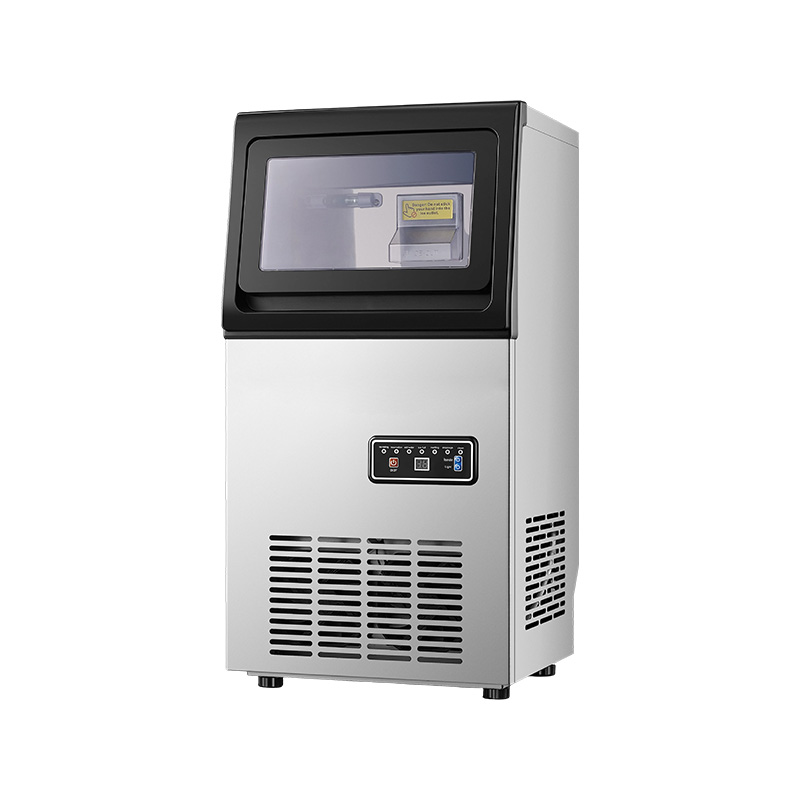
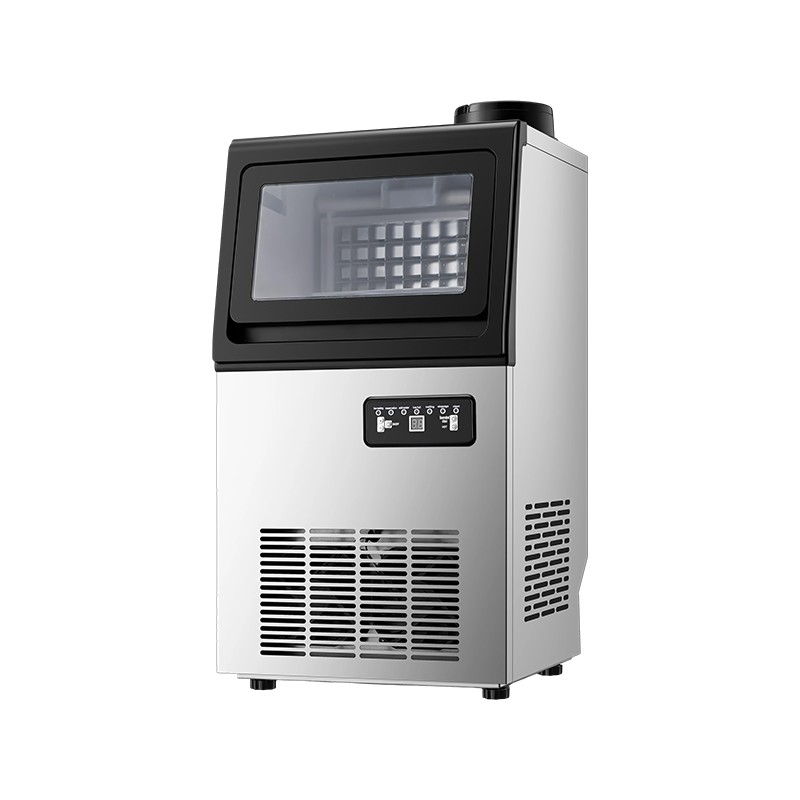 Automatic Commercial Countertop Ice Maker 36kg/24hThe SKFAS80FT features automatic water feed and R290 refrigerant, reducing manual attention. Its compact countertop size suits small businesses needing reliable daily ice production.View Product →
The SKFAS80FT is a good example for a small business because its automatic water feed reduces the amount of manual attention needed during the day. The model uses R290 refrigerant and is described as a commercial small counter-top unit, which keeps its footprint close to typical undercounter dimensions.
Installation Details That Save You a Service Call
Before you buy, confirm the machine will fit under the counter where your staff can load and unload ice. The height of the unit is usually the first constraint, but the depth and door swing matter just as much.
Clearance and Ventilation
Without enough airflow, a commercial ice machine will work harder, use more energy, and produce less ice. Leave space around the front and side vents. The exact gap depends on the model, but 10–15 cm of free space around the inlet and exhaust areas is a reasonable starting point.
Water and Drain
A commercial undercounter ice machine needs a clean water line, a drain, and an accessible shutoff valve. If the machine sits behind a closed cabinet, the water supply and drain lines should be routed before the unit is slid into place. Do not rely on a condensate pump unless the code in your area requires one.
Electrical and Noise
Most compact units run on a standard commercial outlet, but always check the required amperage. Noise is rarely listed in sales information, so ask for the sound rating when the machine will be placed near the front of a small café.
- Measure the height, width, and depth of the opening.
- Check the machine's side vents and leave at least 10–15 cm of clearance.
- Route the water supply and drain before sliding the unit in.
- Confirm the outlet location and breaker rating before installation.
Materials, Refrigerant, and Build Quality You Can Actually Inspect
The materials you cannot see in a photo often decide whether the machine lasts two years or seven. For a business, the important point is that the surfaces touching water and ice should be made from a food-grade material that does not corrode after daily washing.
- Look for food-grade 304 stainless steel on the ice tray or evaporator area.
- Ask whether the machine uses R290 refrigerant, which has a lower global warming potential than older refrigerants.
- Check for overall foaming insulation. This reduces heat transfer and helps the machine hold a full bin of ice longer.
- Confirm that the machine carries CE certification if you are purchasing for a European or export market.
- Consider models with vertical air cooling when the installation space is tight.
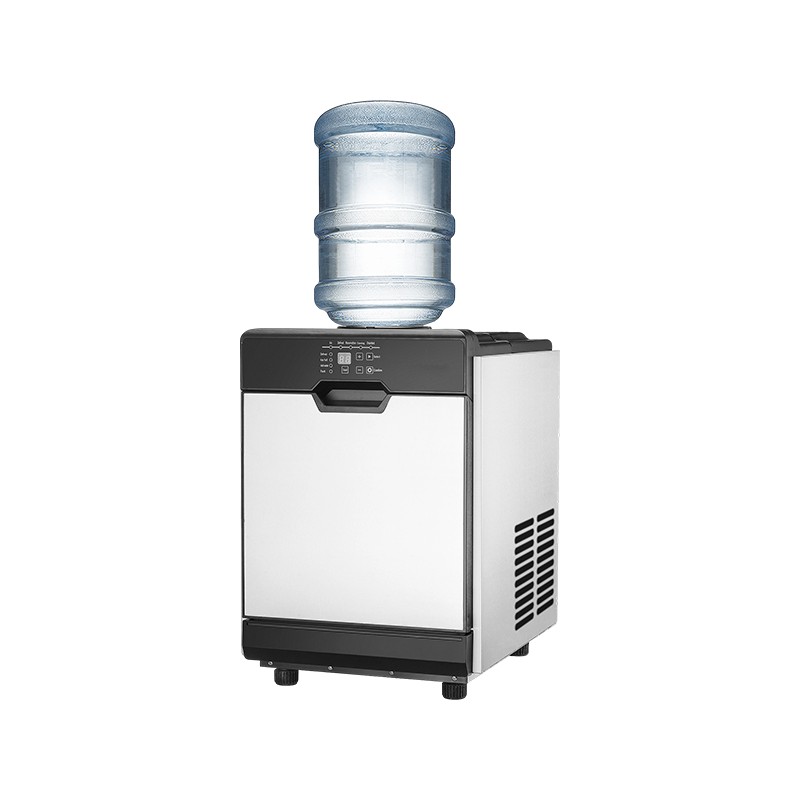
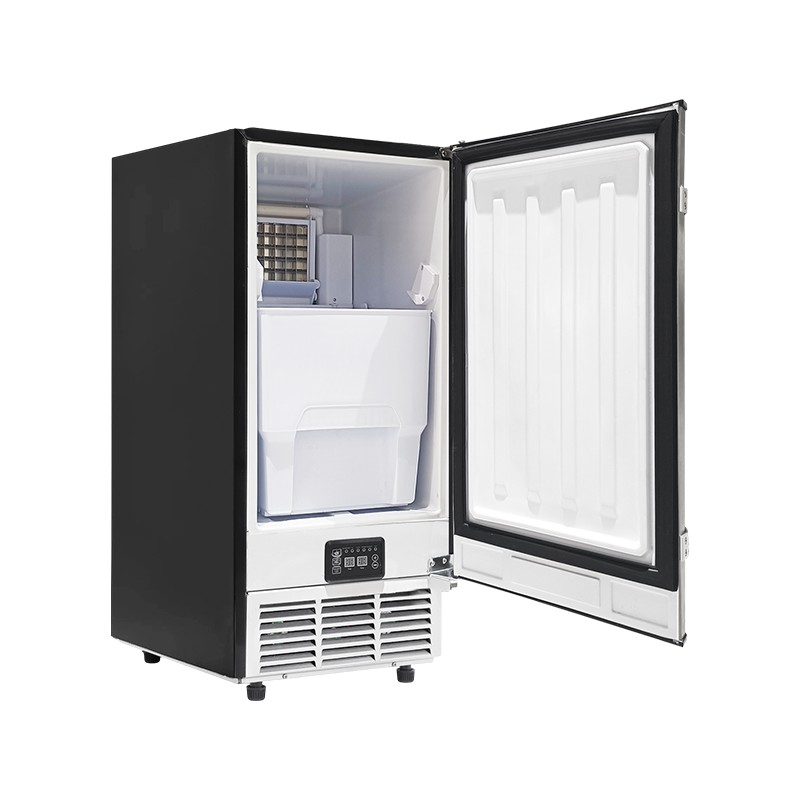
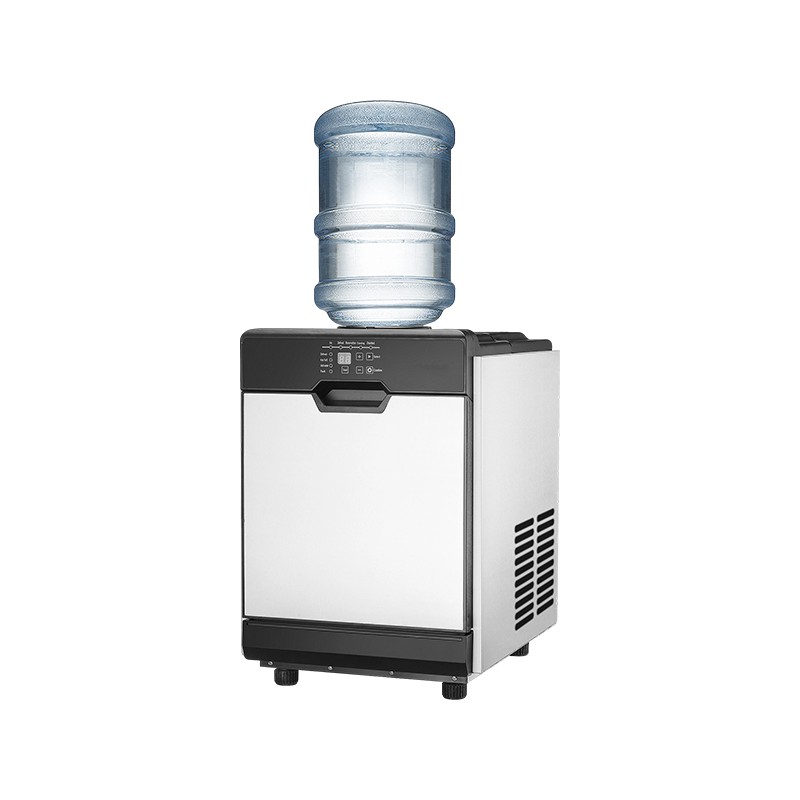 30kg/24h Overall Foaming Ice Machine with Dual Water SourceThe SKFK80FT uses overall foaming insulation to keep ice longer, and accepts both bottled and tap water. This flexibility and insulation make it a versatile choice when a dedicated water line is unavailable.View Product →
Overall foaming insulation is a detail many buyers overlook. It affects how long ice stays frozen after the machine shuts down, which matters during cleaning cycles or power interruptions. The SKFK80FT is a compact 30 kg/24h machine that uses overall foaming and can accept bottled or tap water, giving operators flexibility when a dedicated water line is not available.
Which Commercial Undercounter Ice Machine Should You Buy?
Start with a 25–40 kg/24h unit if you are setting up a bar, café, or small restaurant. Match the storage bin to your busiest hour, not to your weekly average. Then verify that the machine uses a modern refrigerant, food-grade materials, and adequate insulation. Finally, make sure the installation space allows airflow and easy access to water and drain lines.
The product range from Ningbo Shanghe Intelligent Equipment covers this niche well. The factory-based manufacturer applies its integrated design, production, and sales model to a wide series of compact commercial ice machines, including built-in and counter-top models that are commonly used as undercounter units.
If you are still weighing ice machine types for a new site, read the ice machine buying guide before you set a budget. The right undercounter unit should be selected with the same discipline you use to choose a refrigerator: capacity first, fit second, and daily serviceability above all.