
 English
 中文简体
中文简体 عربى
عربى

Home / News / Industry News / Air-Cooled vs Water-Cooled Ice Machines: A Buyer's Guide for Commercial Kitchens
Content
Picture two kitchens. The first is a specialty coffee shop with a compact cube ice machine under the counter, 5 cm of clearance behind it, and an air-conditioned room that stays near 24°C. The second is a fast-casual kitchen where the grill line pushes the room past 32°C by noon, and the ice machine sits in a corner between a hot cabinet and a wall. These two rooms need different cooling systems, and choosing the wrong one shows up in the production rate, the electricity bill, and the service call list.
Here is the conclusion up front: for most cafés, bars, tea shops, and restaurants, an air-cooled ice machine is the correct default. A water-cooled unit earns its extra cost only when the room stays hot, the air cannot move, and the operation runs enough daily output to justify the water bill. The rest of this guide explains how each system works and how to make that call for your specific space.
How the Two Cooling Systems Actually Work
An air-cooled ice machine is, in practical terms, a small radiator with an ice maker attached. The compressor sends hot refrigerant gas into a finned condenser coil, and a fan pulls room air across that coil to remove heat from the refrigerant. The cooled liquid refrigerant then goes back to the evaporator to freeze water into cubes, flakes, or nuggets. Everything the evaporator removes from the water gets dumped back into the room as hot exhaust air. That is why an air-cooled unit demands clearance: intake on one side, exhaust on the other, and no furniture or packaging blocking the path. When the air around the coil is already hot, the compressor has to work harder to reject the same amount of heat, which lowers production and raises energy use.
A water-cooled machine replaces the fan and coil with a condenser that is continuously supplied with tap water. Water absorbs heat far more efficiently than air, so the hot refrigerant sheds its load quickly and the warm water simply goes down the drain. Because the condenser stays cooler and there is no fan motor, the compressor operates at a lower condensing pressure. That is why water-cooled units generally draw less electricity and emit almost no heat into the room. The trade-off is equally obvious: the machine now consumes water for every minute the compressor runs, on top of the water that actually becomes ice.
Air-Cooled vs Water-Cooled at a Glance
The table below summarizes what changes when you switch between the two cooling methods.
| Consideration | Air-cooled | Water-cooled |
|---|---|---|
| Heat output | Heats the room around the machine | Heat goes down the drain; room stays cooler |
| Electricity use | Higher in hot rooms; fan adds to the load | Generally lower because the condenser stays cool |
| Water use | Minimal; only water used for ice | Continuous condenser water sent to the drain |
| Noise | Fan and compressor noise while running | Quieter; the fan is gone, some water-flow sound |
| Upfront cost | Lower and simpler to install | Higher; extra plumbing and often a water filter |
| Maintenance | Clean the air filter and condenser coil regularly | Descale the condenser and manage water quality |
| Best fit | Ventilated, air-conditioned spaces, small to mid output | Hot kitchens, cramped ventilation, heavy continuous output |
Read the table as a trade-off map, not a scoreboard. Air-cooled wins on upfront cost and water consumption; water-cooled wins on heat rejection and noise. The decision depends on which of those factors your room forces on you.
Where an Air-Cooled Machine Is the Smart Choice
The comfort zone
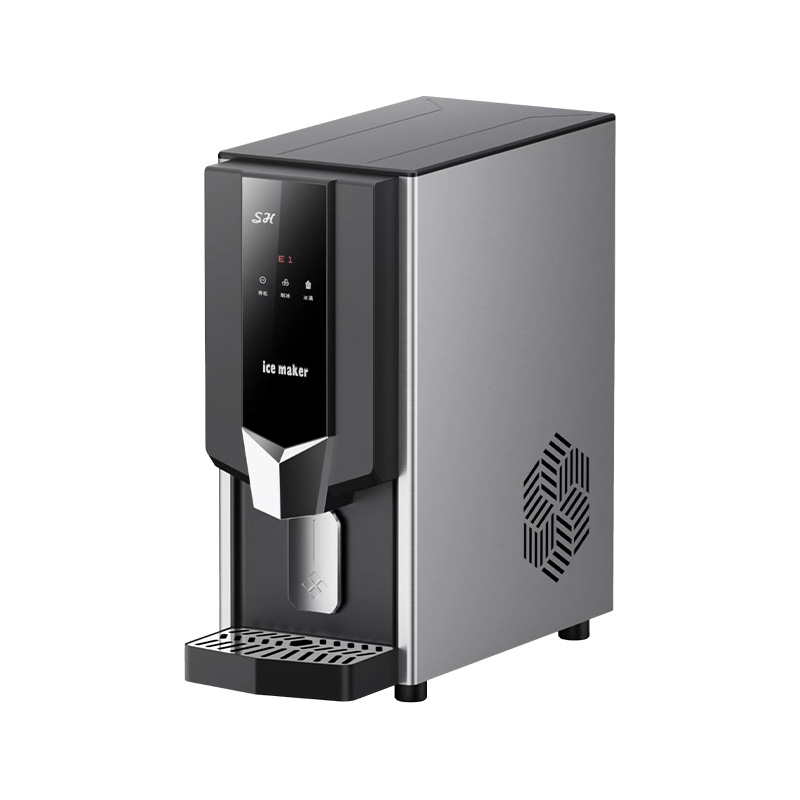
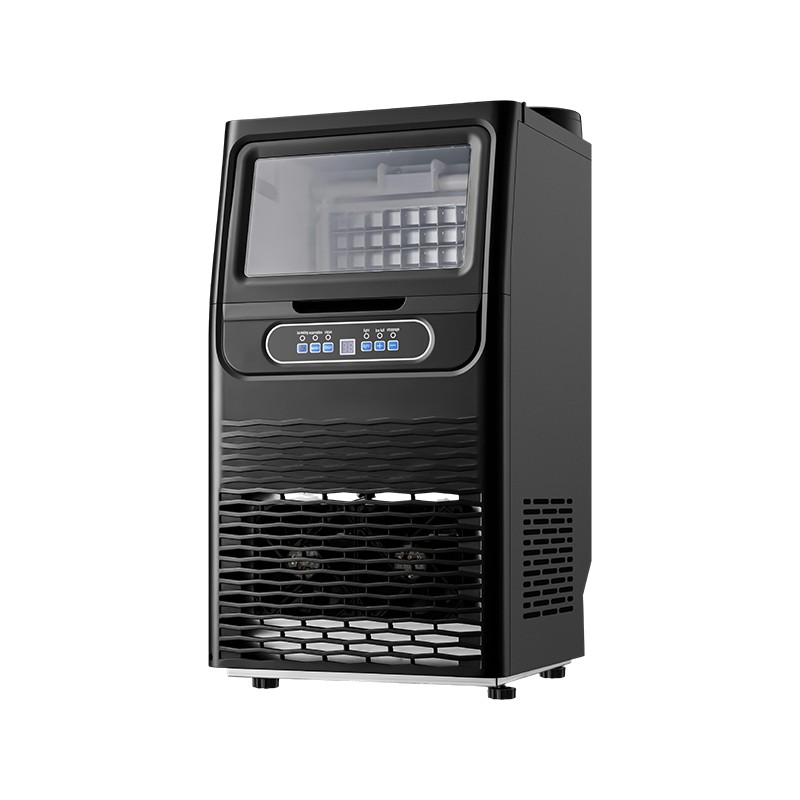
Most commercial ice machines under 100 kg per day sit in air-conditioned or well-ventilated rooms. In that environment, an air-cooled unit gets normal airflow, rejects heat without cooking itself, and never wastes a drop of water. The money you save on water is pure margin: no water treatment, no sewer charge, no scale in the condenser. For a café doing 20 to 40 kg a day, a compact unit like the 36 kg/24 h R290 counter-top cube ice machine provides clean, consistent cubes with maintenance that comes down to keeping the air path clean.
 Wholesale SKF-AS80FT 36kg/24h R290 Refrigerant automatically adding water ice cuNingbo Shanghe Intelligent Equipment Co., Ltd. is China wholesale SKF-AS80FT 36kg/24h R290 Refrigerant automatically adding water ice cub...View Product →
Where air-cooled starts to struggle
When the room regularly sits above 30 to 32°C, the air-cooled unit starts working against itself. It pulls in hot air, pushes out hotter air, and production drops exactly at the moment the bar or kitchen is busiest. The same failure appears when the machine is boxed in by equipment or a wall, because the hot exhaust has nowhere to travel. If your space falls into this category, you either fix the ventilation or you begin pricing water-cooled alternatives.
When a Water-Cooled Machine Earns Its Keep
The case for water-cooled
Water-cooled machines exist to solve heat, not to save energy. They justify themselves in three situations: kitchens that stay above 32°C for long service periods, installations where the exhaust of an air-cooled machine cannot be routed anywhere safe, and high-capacity operations that freeze ice back-to-back through rush hours. In those cases, the lower electrical load and steadier production can offset a meaningful share of the water bill.
The catch with water-cooled
The catch is that water is never free. You pay for the make-up water, and many municipalities add a sewer or hydraulic charge on top. Hard water is the second catch: scale builds up inside the condenser, and scale insulates the very heat transfer you are paying for. If you choose water-cooled, budget for water filtration, a descaling schedule, and a monthly check on water pressure. Some regions also restrict once-through cooling, so confirm local plumbing rules before you commit.
Questions to Ask Before You Buy
Run through these questions in front of the actual installation spot, not in the showroom.
- What is the warmest this room gets during peak service? If the answer is above 30 to 32°C, water-cooled moves up the list.
- How much clearance can you really give the machine? Air-cooled needs its specified intake and exhaust space; under-counter cabinetry makes this harder.
- What does water cost locally, and is the sewer charge metered separately? Continuous condenser water can cost more per year than the machine's electricity.
- How many kilograms of ice do you actually serve at the weekend peak? If it is under 50 to 60 kg per day, the cooling system is not the constraint; machine size is.
- Is the drain line accessible? Both types need one, but water-cooled needs a drain that handles a continuous warm water flow.
- Is there a water treatment plan? Even basic filtration protects both ice quality and the condenser.
Sizing is the part buyers get wrong most often. Our commercial ice machine buying guide in the industry news section walks through machine types and daily output calculations in practical steps.
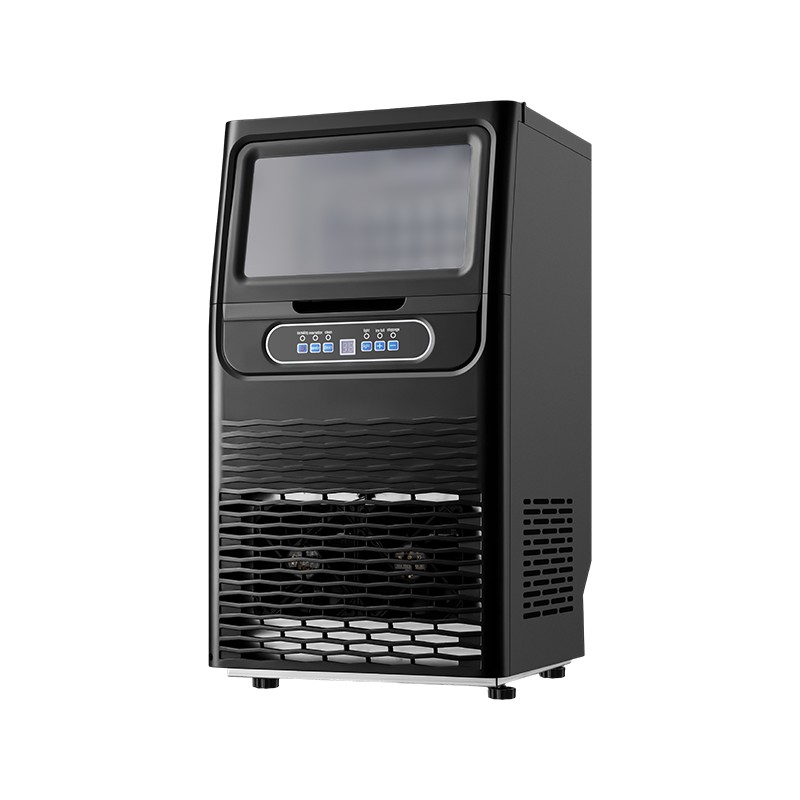
If your plan points toward a bigger output but the room is borderline, do not assume you must switch to water-cooled. A higher-output split unit such as the 160 kg/24 h beverage shop cube ice machine is worth comparing against a water-cooled model before you commit to extra plumbing.
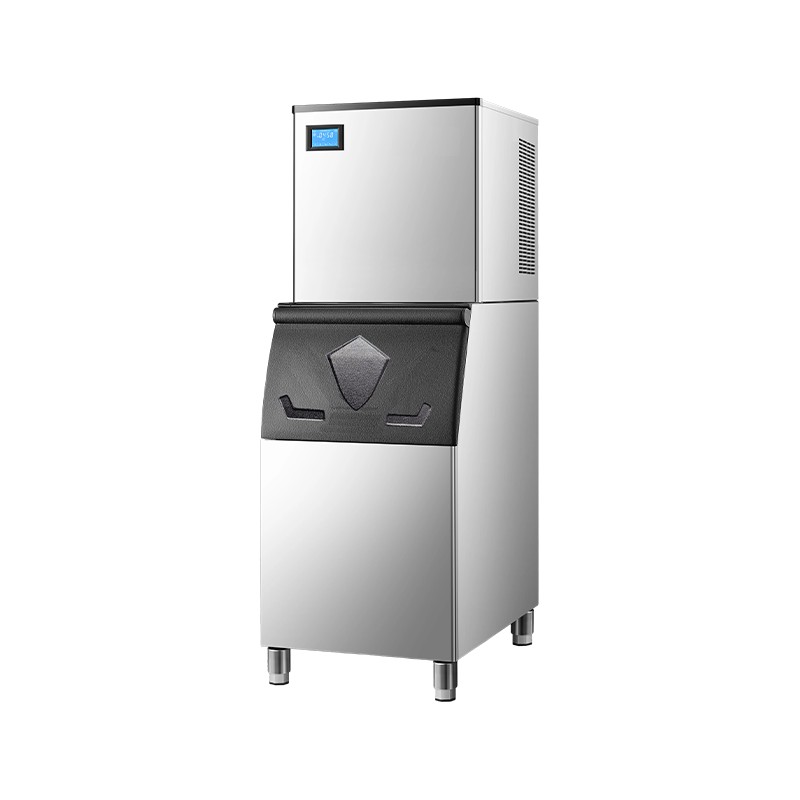 Wholesale SKF-MA360F 160kg/24h commercial used Beverage shop cube ice machine SNingbo Shanghe Intelligent Equipment Co., Ltd. is China wholesale SKF-MA360F 160kg/24h commercial used Beverage shop cube ice machine su...View Product →
Installation and Maintenance Realities
Installation is where the two options truly separate. An air-cooled machine needs an electrical supply, a water line for the ice-making circuit, and physical space for air movement. A water-cooled machine needs all of that plus a second water feed for the condenser, a drain sized for continuous flow, and usually a filter or pressure-limiting valve before the condenser. In a retrofit kitchen, that condenser water feed is often what turns a simple installation into a plumbing project.
The maintenance calendar is just as different. For air-cooled units, the two enemies are dust and grease: they coat the filter and coil, reduce airflow, and push the compressor harder until the machine slowly makes less ice. Clean the air filter monthly in a busy kitchen, and vacuum the condenser coil every couple of months. If the machine uses R290 refrigerant, which many compact units now do, the clearance rules on the data plate also act as a safety requirement, so never box the unit into a sealed cabinet.
For water-cooled units, the main enemy is scale. An untreated condenser can lose efficiency within one season, so schedule descaling two to four times a year depending on water hardness, and check the drain for blockages.
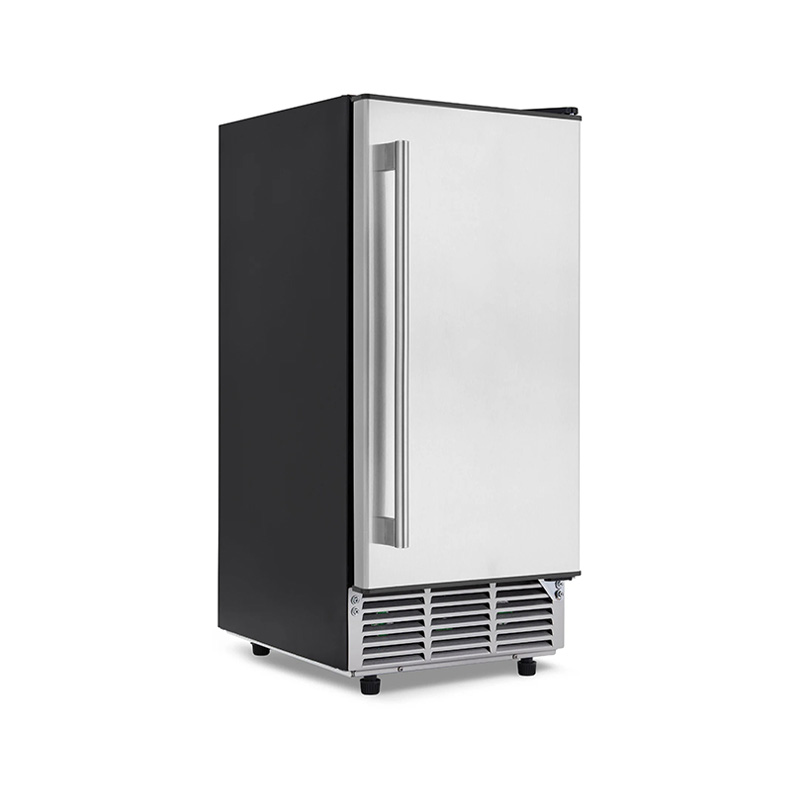
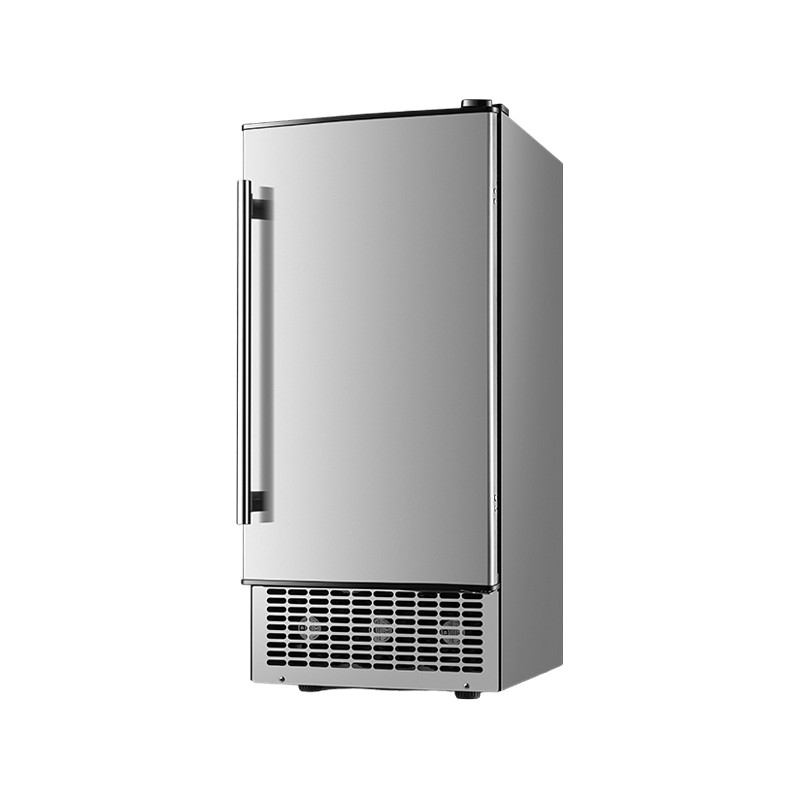
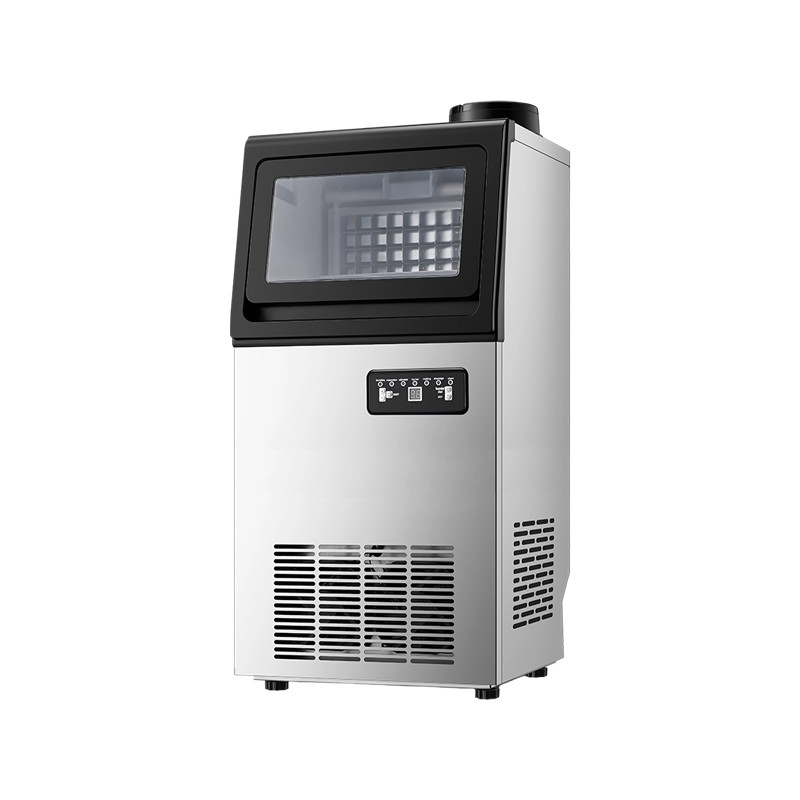
Placement deserves the same attention as the cooling choice. If you are squeezed into an under-counter spot, the airflow design matters more than bin capacity, and this is also where a built-in concept is sometimes mistaken for the answer; our article on built-in ice machine investment considerations explains the trade-offs. When space is tight, a 36 kg/24 h vertical air-cooling cube ice machine positions the intake and exhaust to fit compact cabinets with controlled airflow.
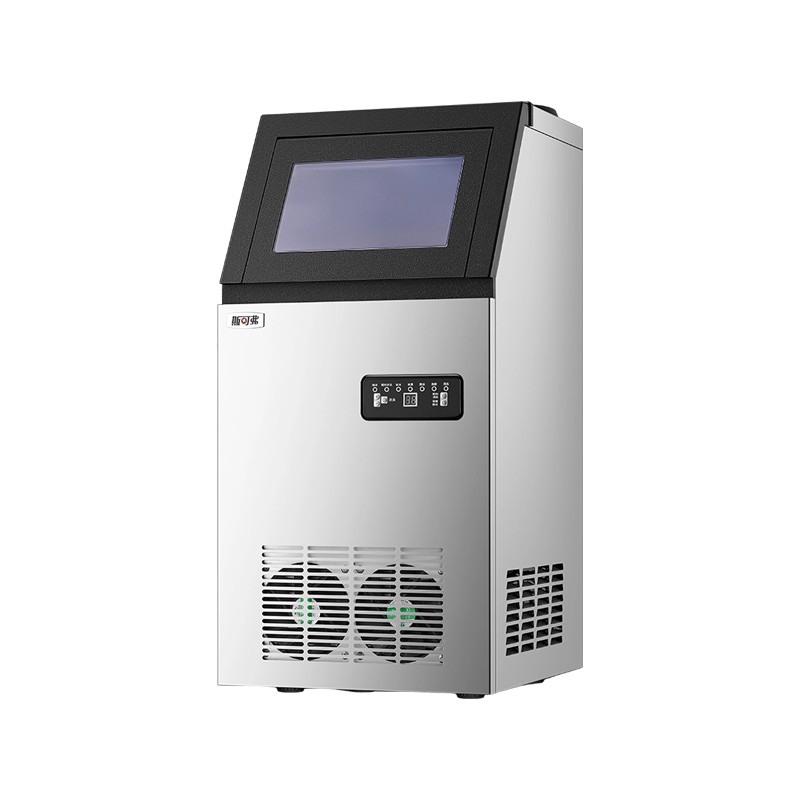 Wholesale SKF-BZ80FT 36kg/24h Vertical air cooling way cube ice machine SupplierNingbo Shanghe Intelligent Equipment Co., Ltd. is China wholesale SKF-BZ80FT 36kg/24h Vertical air cooling way cube ice machine suppliers...View Product →
Which One Should You Buy
Start with the room temperature and the weekend peak, not with a brochure. If the room stays below 30°C, ventilation is decent, and the daily output fits the machine's rated production, buy an air-cooled machine and spend the price difference on a cleaning kit. That is the right answer for the large majority of cafés, bars, quick-service restaurants, and small drink shops. If the room runs hot, the machine sits in a dead corner, or you are freezing 150 kg or more per day in continuous cycles, price a water-cooled unit seriously, and put water treatment into the budget before signing.
As a manufacturer, we build most of our compact and integrated series around air-cooled designs because that is what the majority of operators actually need. That does not make water-cooled wrong; it makes it a specialist tool for a hot-room problem. Choose based on your room's conditions, not on the name of the technology. Get those conditions right, and the machine will produce consistently for years.