
 English
 中文简体
 عربى


Home / News / Industry News / Best Shave Ice Equipment Package for Seasonal Businesses: A Practical Sizing Guide
Content
- 1 What a "Package" Should Actually Contain
- 2 Ice First — Decide Where Your Ice Comes From
- 3 Matching the Shaver to the Texture You Sell
- 4 Sizing to Your Peak Day, Not Your Average Day
- 5 The Supporting Cast Worth Paying For
- 6 Power, Water and Footprint: the Checks That Save a Season
- 7 What to Skip in Year One
- 8 Off-Season Care Decides Whether Season Two Is Cheap
- 9 How We Would Put It Together
A shave ice stand lives on a short calendar. You have a handful of good months to earn back everything you spent, and the weather decides how many of those months actually show up. That is why the best shave ice equipment package for a seasonal business is rarely the biggest one on the quote sheet — it is the one sized to your busiest Saturday, built to sit quietly for six months, and simple enough that a first-day hire can run it without calling you.
We build ice machines and shavers for a living, and we have watched enough seasonal operators open and close to know where packages usually go wrong. So here is how we would think it through if we were standing behind your counter instead of our workbench.
What a "Package" Should Actually Contain
Most packages offered to seasonal vendors bundle a shaver, a syrup kit, a starter set of cups and spoons, and maybe a freezer. That is a serving kit, not a production plan. The expensive, decisive part — the ice itself — is often left as an afterthought. A complete package has four layers, and each one deserves a deliberate decision:
- Ice production or ice supply — how ice reaches your shop, and what it costs per cup.
- Shaving — the machine that turns that ice into the texture your customers recognise.
- Holding and serving — bins, freezers, syrup stations, display and signage.
- Consumables and spares — cups, lids, straws, spoons, napkins, blades, gaskets, sanitiser.
A package that quietly skips the first layer and the last layer will cost you more by August than the machine ever did.
Ice First — Decide Where Your Ice Comes From
Before you compare shavers, decide whether you are buying ice or making it. Buying is a sensible first season when volumes are still a guess: no capital tied up in a machine, no plumbing, no electrician. The trade-offs appear on a hot holiday weekend, when everyone in town wants the same bags at the same time, and again in late summer, when the supplier who delivered reliably in June quietly stops answering the phone.
Making ice on site removes that risk and drops your cost per cup, but it comes with requirements: a decent water supply, a drain, airflow, and enough electrical capacity. Cube ice is the flexible choice, because the same cubes go into drinks, blenders and shavers alike. Flake ice is softer and drier, drains less in the bin, and gives a finer, snow-like result when shaved — which suits dessert menus better than it suits soda cups.
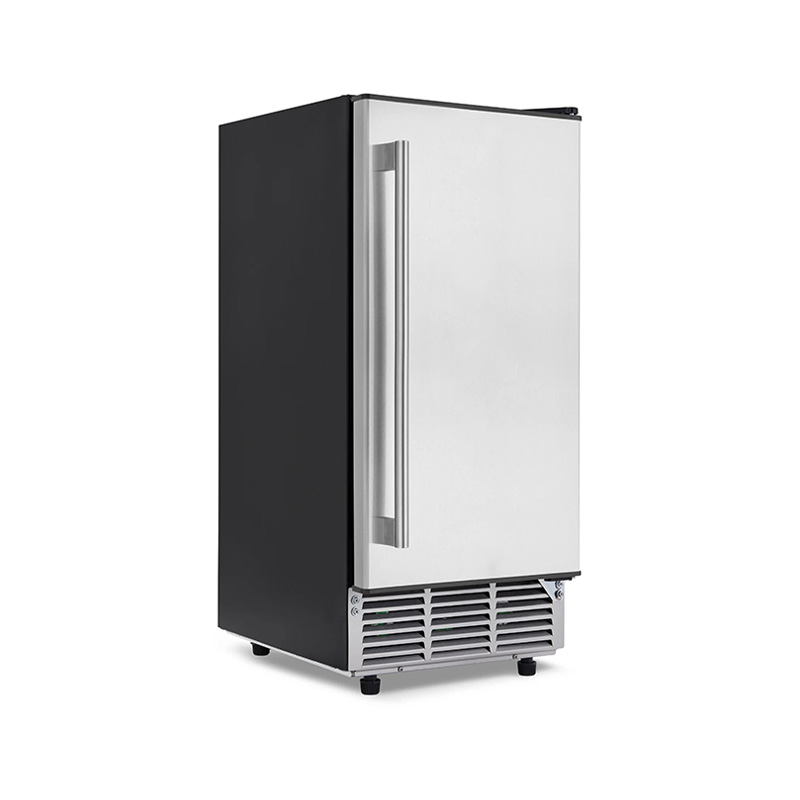
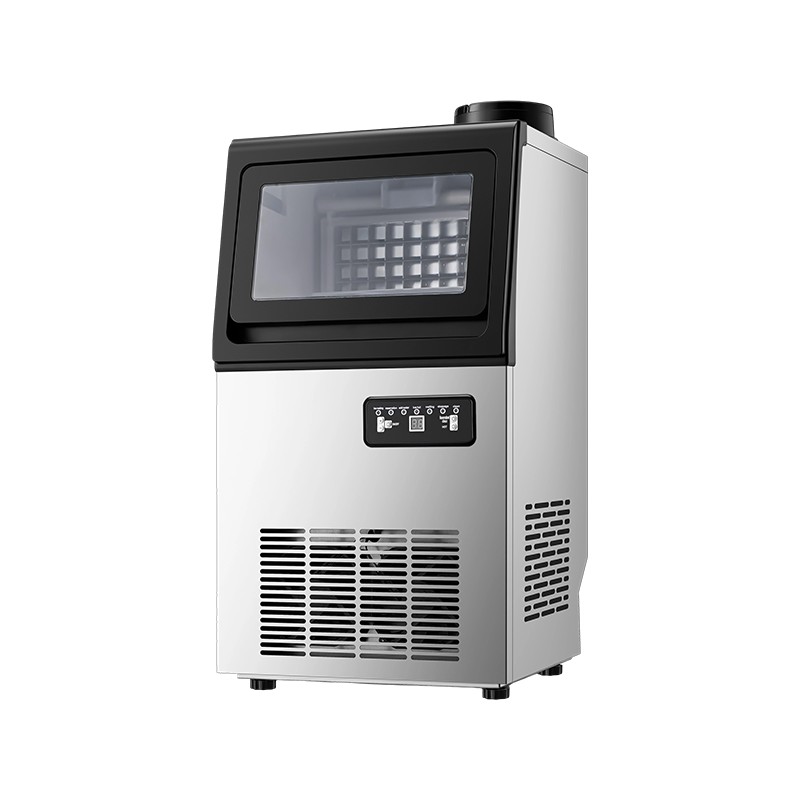
For a compact seasonal counter, kiosk or trailer, a small flake machine is often the easiest first step into on-site production. Thirty kilos in 24 hours covers a modest menu without demanding a dedicated plant room.
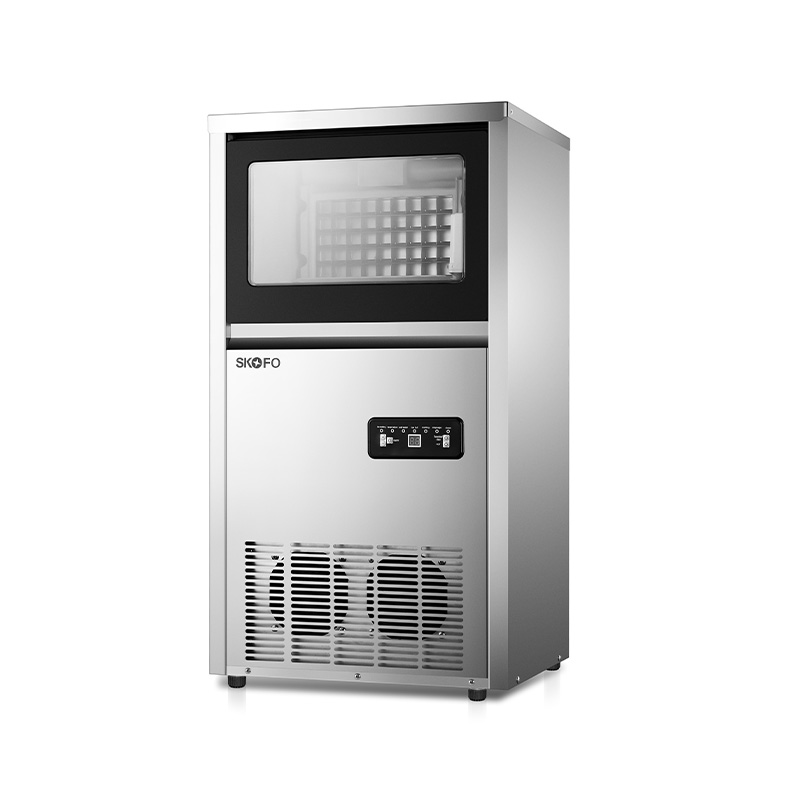 SKF-S30 Compact Stainless Steel Flake Ice MakerA compact stainless flake ice maker with 30 or 50 kg/24h options, adjustable thickness and timing, cleaning, scheduling and insulated construction.View Product →
Matching the Shaver to the Texture You Sell
Customers use "shaved ice", "snow cone" and "snow ice" almost interchangeably. Equipment people do not, because each texture needs different hardware. Snow cones are crunchy and coarse, shaved ice is light and fluffy, and snow ice desserts are dense and ribbon-like. Pick the texture first; the machine follows almost automatically.
At the counter, these details decide whether a shaver survives a season:
- Blade and head design — a sharp, well-seated blade gives an even shave and less vibration.
- Motor duty — a motor rated for continuous serving will not overheat halfway through a queue.
- Hopper and feed — how much ice you can load before stopping to refill.
- Speed control — adjustable RPM lets you shift from coarse to fine without changing machines.
If you are still deciding between the two main styles, this closer look at shaved ice versus snow ice shaver machines walks through the trade-offs in more detail.
Where lines never really stop, a high-throughput unit with a generous hopper is worth the extra spend, because the queue — not the syrup — is your real bottleneck.
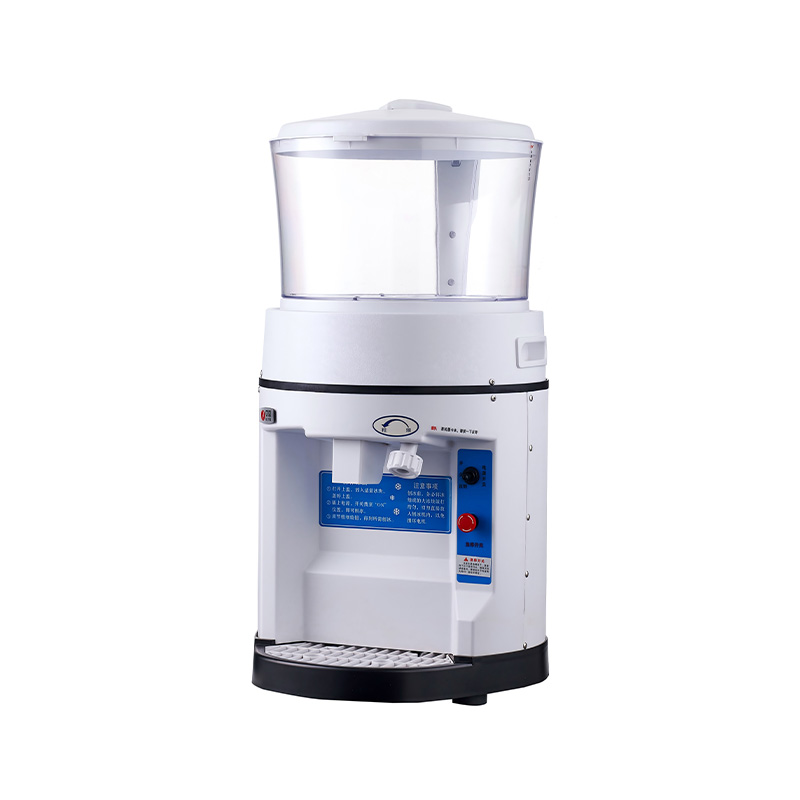 BY-568 High-Capacity Commercial Ice Shaver with 11 kg HopperA high-capacity commercial ice shaver with an 11 kg hopper, adjustable blade for coarse or fluffy texture, and a stated 480 kg/h output.View Product →
Sizing to Your Peak Day, Not Your Average Day
Write down three numbers: servings on a busy Saturday, the weight of ice in one serving, and the hours you are open. Multiply the first two and you have your raw ice requirement; then add 20–30% headroom for spillage, second helpings, heat loss and the fact that machines slow down in a hot back room. Seasonal operators almost always regret undersizing, and rarely regret a machine running at 70% capacity.
| Peak-day servings | Ice per serving | Ice needed on peak day | Suggested maker output | Shaver duty |
|---|---|---|---|---|
| 100–150 | 0.2–0.3 kg | 25–40 kg | 30–40 kg / 24 h cube or flake | Single head, light duty |
| 150–300 | 0.2–0.3 kg | 40–80 kg | 90–126 kg / 24 h cube | Single head, spare blade on hand |
| 300–600 | 0.2–0.3 kg | 70–160 kg | 135–160 kg / 24 h split cube | High-output unit or two shavers |
| 600+ | 0.2–0.3 kg | 130–200 kg | 280–380 kg / 24 h, or part-supply | Two shavers plus holding bin |
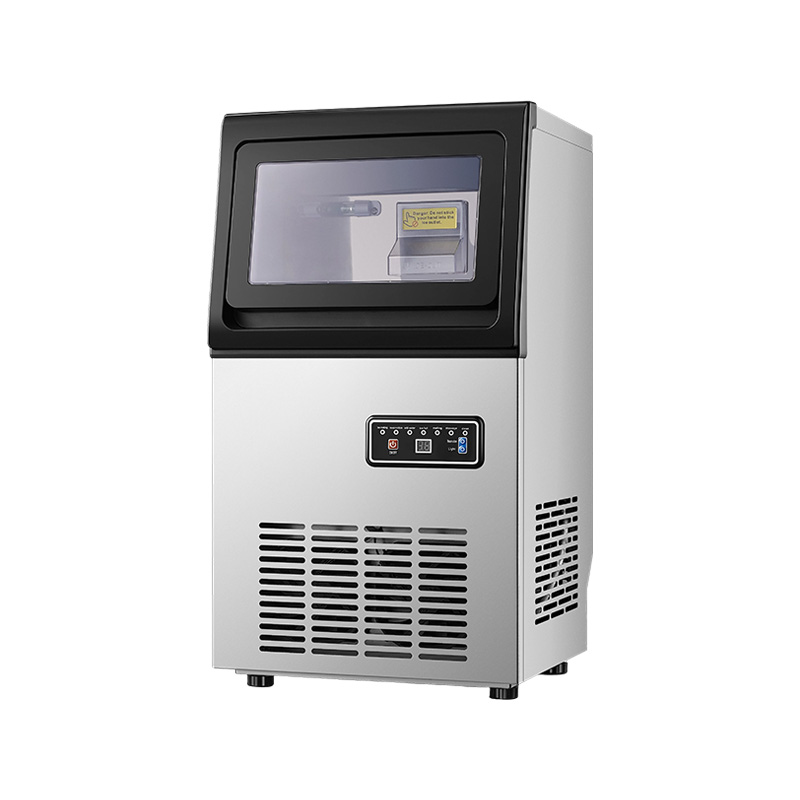
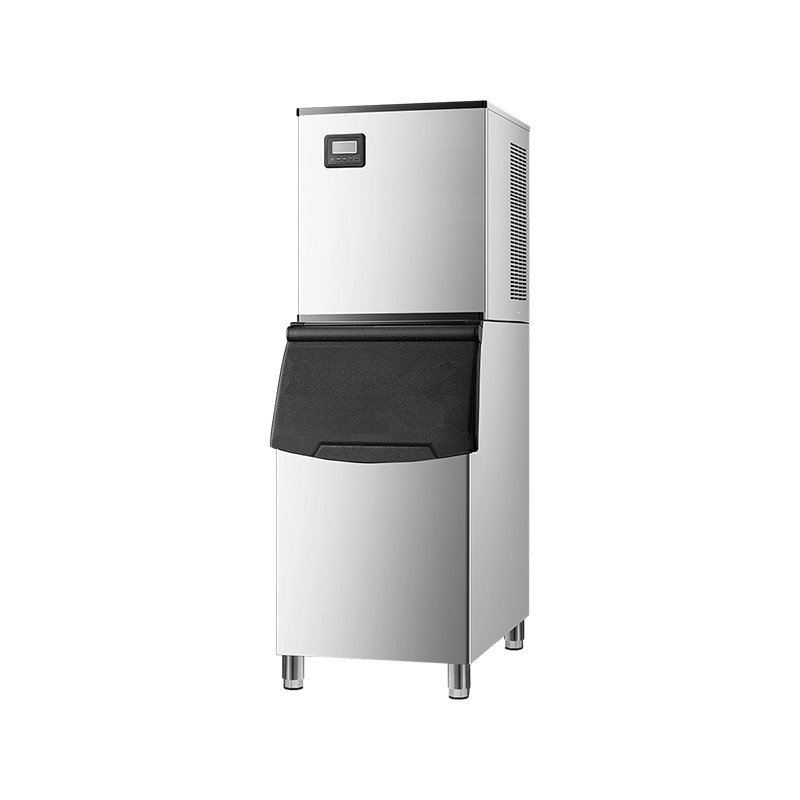
Once your peak day pushes past roughly 160 kg, a split unit earns its place: separating the condenser from the storage bin makes placement, cleaning and servicing far easier in a narrow back room, and the machine runs cooler.
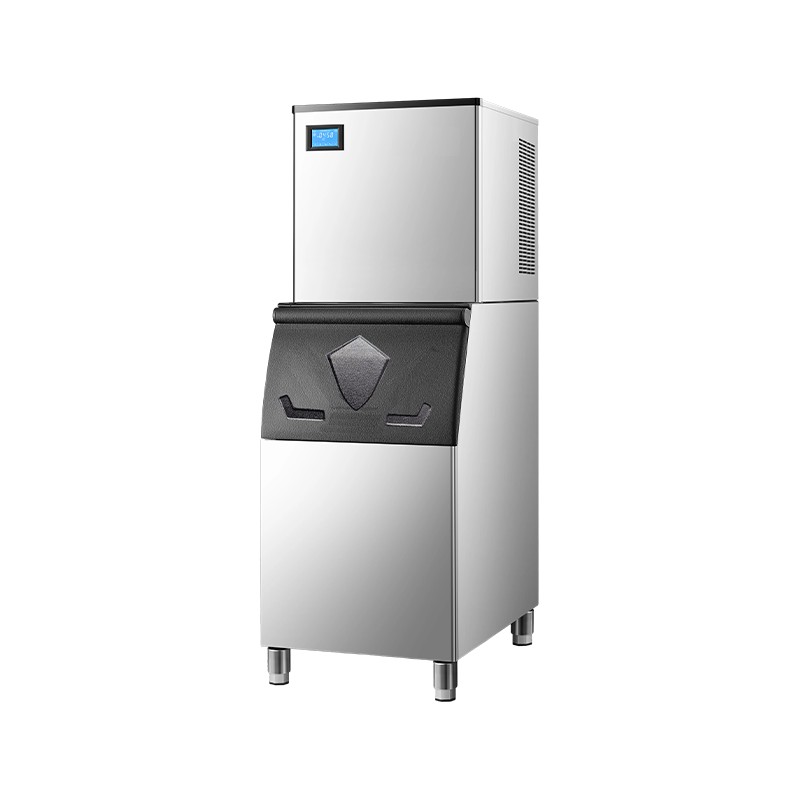 SKF-MA360F Commercial Cube Ice Machine for Beverage ShopsA 160 kg/24h cube ice machine for beverage shops, with insulated main unit and bin, R290 refrigerant, removable door and multiple electrical protections.View Product →
The Supporting Cast Worth Paying For
Not every accessory belongs in a first-season budget, but a few do. A commercial blender pays for itself the moment you add smoothies, slush or milkshakes to the board, and it also handles fruit purées and syrups. An ice crusher is useful if you sell texture as a feature — crushed-ice lemonades, layered desserts — but it is not the same tool as a shaver and should not be bought as a substitute. A reliable chest freezer for bagged ice backup, plus insulated holding bins, will save more sales on a 38°C afternoon than any signage will.
Power, Water and Footprint: the Checks That Save a Season
These are the unglamorous items that turn a good package into a bad week. Walk your site with a checklist before you sign anything:
- Does the machine's voltage and amperage fit the circuits you actually have? Add up total load, not one machine at a time.
- Is water pressure stable through the afternoon, and is filtration in place to protect the evaporator?
- Is there a gravity drain, or do you need a condensate pump and somewhere for it to discharge?
- Is there clearance for airflow? Ice machines that cannot breathe underperform and cost more to run.
- Will the unit fit through the door, past the corner and under the counter you have?
- How loud is it? A shaver and a maker running beside a serving window changes the customer experience.
What to Skip in Year One
Soft-serve, an elaborate glass display case, a second shaver "just in case", and a decorative ice press are all things you can buy in season two with money the first season earned. Every extra machine adds cleaning time, service risk and floor space — three things a small seasonal operation never has spare. Buy capacity and reliability first; buy theatre later.
Off-Season Care Decides Whether Season Two Is Cheap
Seasonal equipment fails in the months it is ignored, not in the months it works. At the end of your season, drain the water lines and reservoir, run a full clean and descale, dry the bin thoroughly, leave the door ajar, and cover the unit against dust rather than sealing it in plastic. Store it somewhere that will not drop below freezing. Keep blades sharpened or replaced, order gaskets and wear parts in the quiet months when lead times are short, and write down the settings that worked so nobody has to rediscover them in May.
How We Would Put It Together
If we were opening a seasonal shave ice counter tomorrow, the package would look like this: an ice maker sized at roughly 1.5 times our peak-day need, a shaver matched to the texture we actually sell, one spare blade, one spare gasket, a decent blender, insulated bins, and a written cleaning routine taped inside a cupboard door. Nothing on that list is impressive on a quote sheet, and every item on it earns its keep by the second weekend.
We have been building refrigeration and shaving equipment in Ningbo since 2007, and much of it ends up in exactly this kind of seasonal operation, so if you want to see how the machines are made and tested before you compare packages, you are welcome to take a look around our factory and product lines. Start with your peak Saturday, and the rest of the package tends to sort itself out.