
 English
 中文简体
中文简体 عربى
عربى

Home / News / Industry News / Home Ice Maker Buying Guide: Ice Type, Capacity, and Installation Choices
Content
- 1 Start with the Ice Shape, Because You Cannot Change It Later
- 2 Match Daily Output to What Your Home Actually Consumes
- 3 Countertop or Built-in: Installation Decides More Than You Think
- 4 Materials and Mechanics That Decide How Long It Lasts
- 5 When a Home Ice Maker Should Actually Be Commercial-Grade
- 6 Budget for Maintenance, Not Just the Purchase Price
- 7 Final Pre-Purchase Checklist
Picture a warm weekend with guests in the backyard: every glass needs ice, the freezer trays went empty an hour ago, and someone drives to a store for a bag. That is the moment most households start searching for a home ice maker. The conclusion from years of building ice machines for commercial kitchens is simple: the right machine is not the cheapest or the smallest, but the unit that matches the ice shape you prefer, the volume your family actually uses, and the installation style your kitchen can support. When those three criteria align, the appliance becomes a quiet utility. When they do not, you spend months refilling water, fighting cloudy ice, and clearing counter space.
Start with the Ice Shape, Because You Cannot Change It Later
Every ice maker is engineered around one ice shape, so the shape is the most important filter and the easiest way to narrow the market. It determines how fast ice melts in a glass, how it feels when chewed, and how much engineering the machine requires.
Nugget Ice
Nugget ice, sometimes called chewable or soft ice, is porous and absorbs the flavor of coffee or syrup quickly. That makes it the top choice for iced coffee, soft drinks, and households with children. The trade-off is mechanical complexity: producing porous nuggets needs a compressor, auger, and control system that cost more to build and maintain than a simple cube maker.
Clear Cube Ice
Dense clear cubes are what cocktail bars use because they melt slowly and look clean in a glass. True clear ice requires the water to be agitated or circulated during freezing, which slows production and raises the price. If you mainly serve whiskey, spirits, or tall drinks, a cube machine is the more fitting choice even though the ice takes longer to form.
Bullet Ice
Bullet-shaped ice is the most economical design. Heated pins in a mold produce small, usually hollow cylinders quickly, which is why inexpensive portable machines favor it. The ice is cloudier, melts faster, and may taste flat because it freezes from water that was not fully filtered. If budget is the main constraint and the ice is mostly for cooling, bullet ice still does the job.
| Ice shape | Texture and melt rate | Best suited to | Main trade-off |
|---|---|---|---|
| Nugget | Soft, porous, melts quickly in the mouth | Iced coffee, soft drinks, kids | Higher purchase price and maintenance |
| Clear cube | Dense, slow-melting, clean look | Whiskey, cocktails, entertaining | Slower production, more complex design |
| Bullet | Hollow, cloudy, fast-melting | Everyday cooling on a budget | Lower ice quality and faster melt |
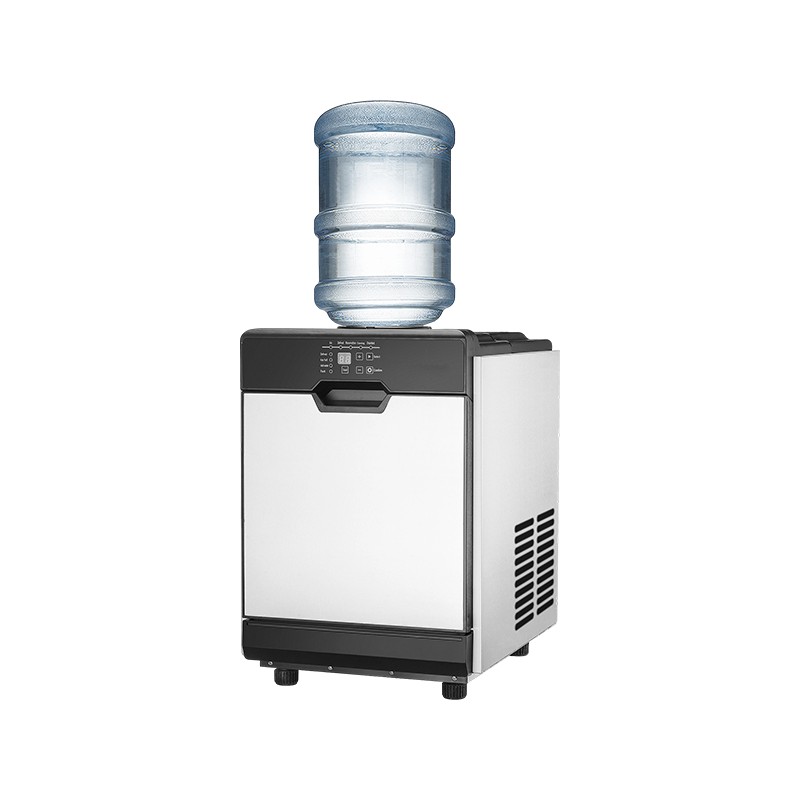
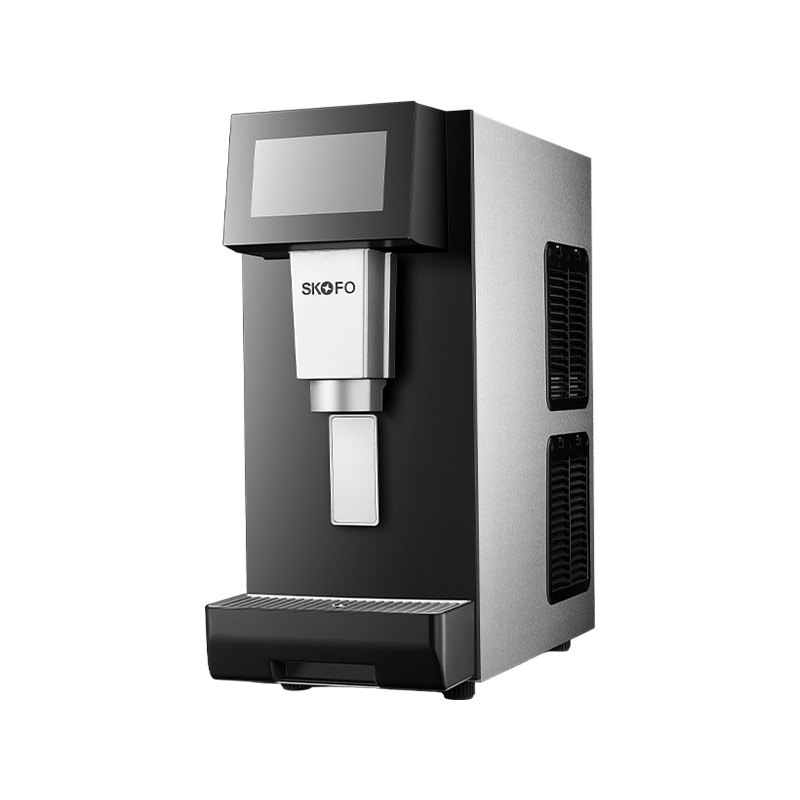
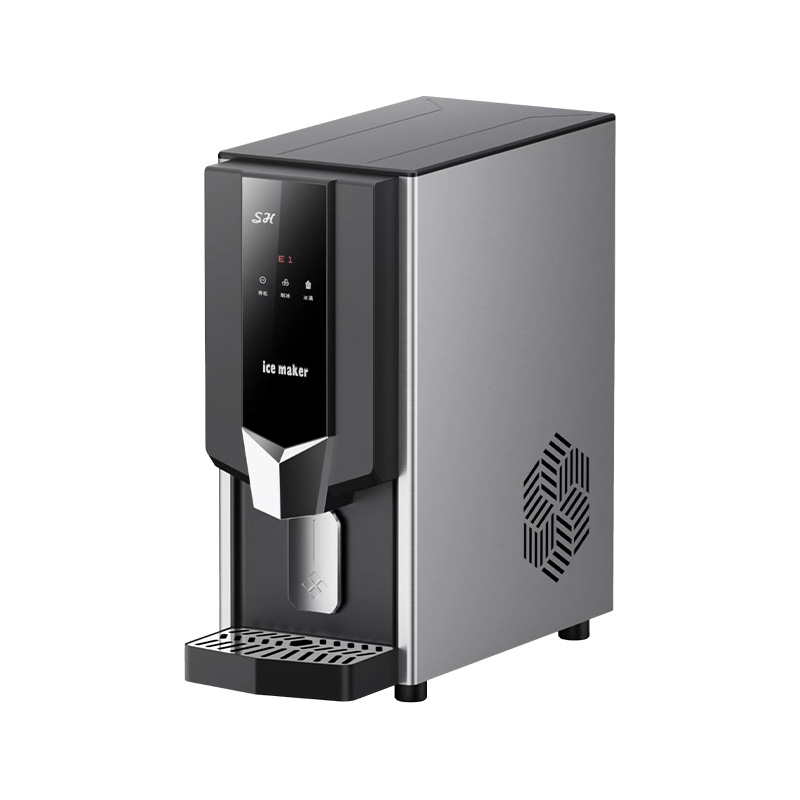
If someone in the house loves chewable nugget ice, a dedicated nugget unit is worth the extra cost, because machines that advertise multiple shapes tend to compromise on all of them. A solid example in the kitchen-counter category is a table-top nugget ice maker built for continuous use.
 Wholesale SKF-ATS30J 30kg/24h table top nugget ice maker machine Suppliers, FactNingbo Shanghe Intelligent Equipment Co., Ltd. is China wholesale SKF-ATS30J 30kg/24h table top nugget ice maker machine suppliers and fa...View Product →
Match Daily Output to What Your Home Actually Consumes
Ice machines are rated by output in kilograms per 24 hours, a number many home buyers ignore until the first party. The practical issue is that a 15 kg/24h portable unit does not hold 15 kilograms at once. It produces ice in batches, stores a small amount, and needs regular refills. Three spec-sheet numbers matter more than the brand name:
- 24-hour production: maximum capacity if the machine runs non-stop; this tells you whether it can survive a busy weekend.
- Storage capacity: how much ice is ready when you open the lid; this decides how many glasses you can serve before the next batch.
- First batch time: the gap between switching on and having usable ice; this matters for unexpected guests.
As a rule of thumb, a household that wants ice mainly for coffee and evening drinks can manage with 10–15 kg/24h. A family of four that entertains regularly should aim for 20–25 kg/24h. If you host gatherings weekly or operate a home bar, choose at least 30 kg/24h so the machine is not running permanently at maximum load.
| Usage profile | Typical daily need | Recommended output |
|---|---|---|
| Single or couple, coffee and casual drinks | 1–2 kg | 10–15 kg/24h |
| Family of four, active summer months | 3–5 kg | 20–25 kg/24h |
| Frequent hosting, home bar, small at-home café | 6–10 kg | 30 kg/24h and up |
These figures also explain why models at the top of the range are often classified as light commercial. That classification is good news for a demanding home buyer, because it means the components are selected for more runtime and fewer breakdowns.
Countertop or Built-in: Installation Decides More Than You Think
Installation style determines how much water, space, and daily attention the machine needs, and it changes the cost of ownership more than the sticker price suggests.
Countertop Portable Ice Makers
Portable units plug into a standard outlet, need no plumbing, and can move from kitchen to patio. Their downside is manual work: you refill the reservoir, empty the bin, and clean the interior regularly. Countertop models also take up counter space and generally produce less because the water reservoir limits how long they can run uninterrupted. For small families and occasional use, the flexibility usually wins.
Built-in Undercounter Ice Makers
Built-in machines connect to a water line and drain, which means continuous production without refilling and a much larger storage bin. They sit below the counter, free up workspace, and typically use stronger insulation and condensers. The cost is installation: you need a water supply, a drain point, and a cabinet opening with correct clearance. If you are renovating the kitchen, this is the moment to plan it.
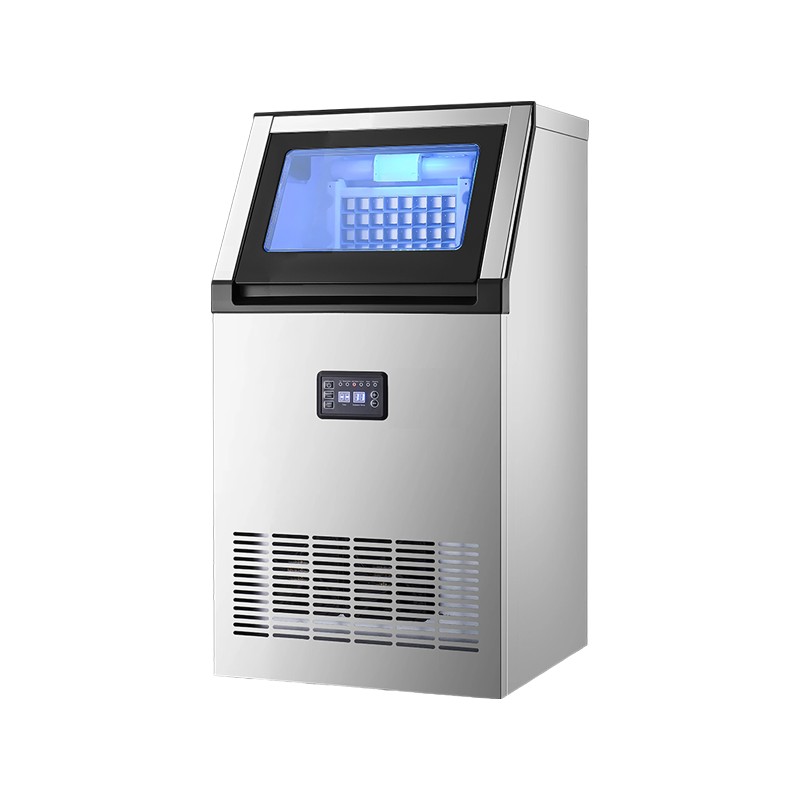
Before committing, read about what a built-in ice machine involves and whether it is worth the investment for a home kitchen. A built-in option such as the rust-prevention built-in ice maker shows how much output a properly installed unit can deliver from a compact footprint.
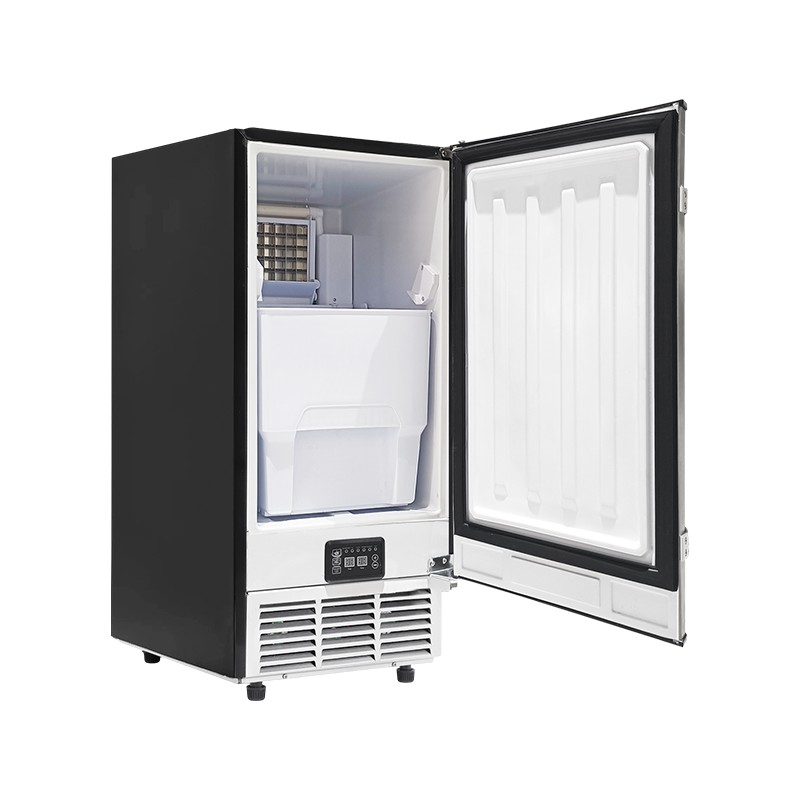 Wholesale SKF-QR80F 35kg/24h Rust prevention affordable Built-In ice making machNingbo Shanghe Intelligent Equipment Co., Ltd. is China wholesale SKF-QR80F 35kg/24h Rust prevention affordable Built-In ice making machi...View Product →
| Criterion | Countertop portable | Built-in undercounter |
|---|---|---|
| Water supply | Manual refill | Permanent water line |
| Drainage | Manual emptying | Connection needed |
| Typical output | 10–25 kg/24h | 25–40 kg/24h or more |
| Installation cost | None | Plumbing and carpentry |
Materials and Mechanics That Decide How Long It Lasts
The difference between a machine that lasts five years and one that fails in eighteen months is rarely the brand name. It is the material that touches the ice, the refrigerant in the sealed system, and the insulation around the evaporator.
Food-Grade Stainless Steel Where Water Touches Ice
Plastic bins can absorb odors and develop a film that is hard to remove. Food-grade 304 stainless steel resists corrosion, cleans easily, and does not transfer a metallic taste to the water. If the spec sheet does not state the material of the bin or evaporator, treat it as a warning sign.
R290 Refrigerant Is Becoming the Responsible Standard
R290, a pure hydrocarbon refrigerant, is increasingly common in small ice machines because it is efficient and has near-zero global warming potential. Machines using R290 also tend to cool faster, shortening the wait for the first batch. The catch is that the factory must seal the system properly, since R290 is flammable under misuse; a responsible manufacturer states the refrigerant clearly on the label.
Insulation and Airflow Control Output and Noise
Overall foaming insulation keeps the freezing chamber stable and reduces energy use by preventing the compressor from cycling too often. Vertical air-cooling designs discharge heat upward and sideways, lowering the ambient temperature around the unit and improving output in a small kitchen. Experienced manufacturers list both details; if a product page omits them, the machine is likely built down to a price.
When a Home Ice Maker Should Actually Be Commercial-Grade
There is a gray zone between a consumer appliance and a commercial machine, and many households live in it. A home bar that serves dinner parties, an Airbnb kitchen that supplies ice to guests, or a growing at-home beverage business will push a 15 kg portable unit past its limit within a season. The reliable boundary is around 25–30 kg/24h of continuous output: above that, consumer-grade components start to fail.
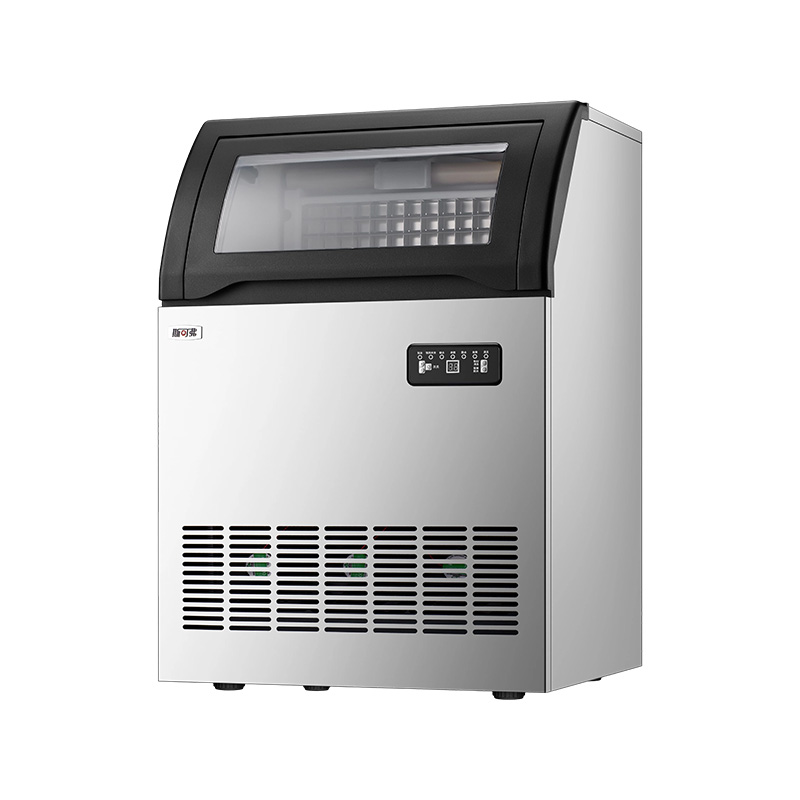
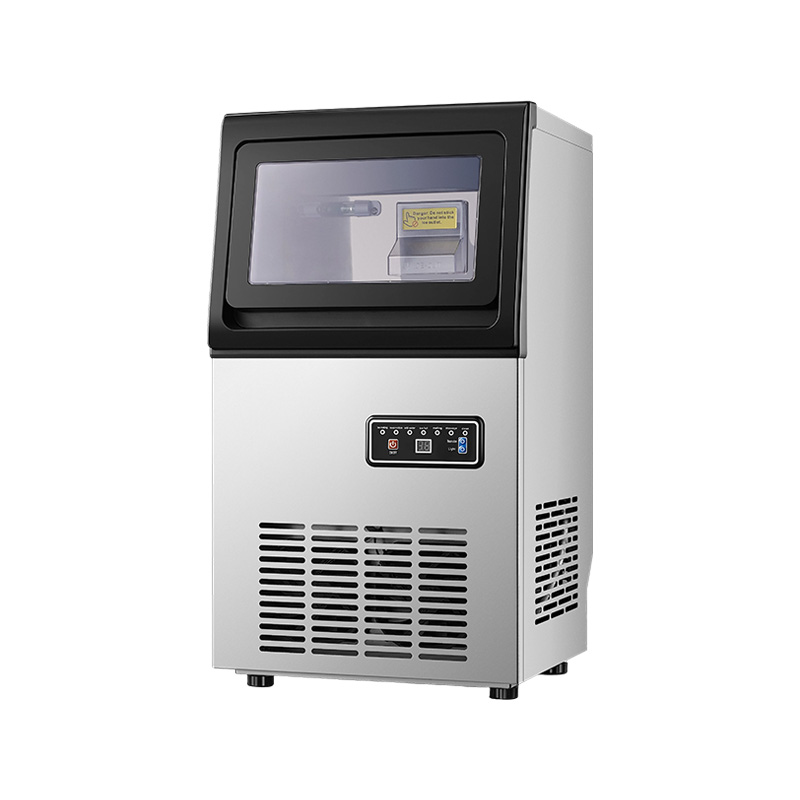
A counter-top machine with commercial components fits the same kitchen footprint as a portable unit but runs longer, holds more in a better-insulated bin, and keeps output when the outdoor temperature climbs. That is why the smallest units in a commercial factory lineup are often the best answer for demanding home use. A compact counter-top cube ice machine that produces about 36 kg/24h is one example of a machine small enough for a counter yet built from commercial parts.
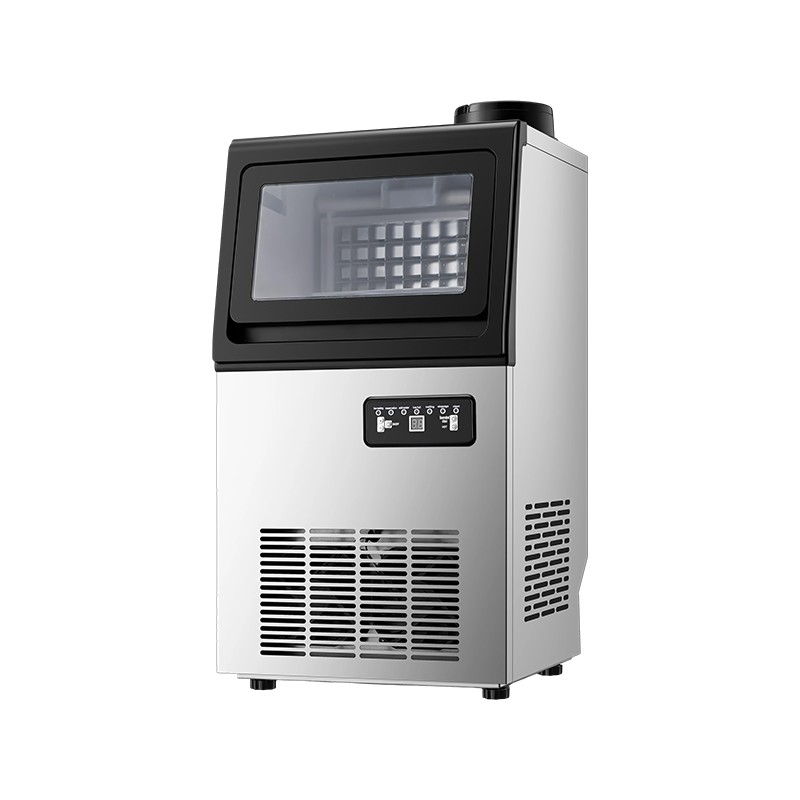 Wholesale SKF-ATS80FT 36kg/24h Automatic commercial small counter top ice makerNingbo Shanghe Intelligent Equipment Co., Ltd. is China wholesale SKF-ATS80FT 36kg/24h Automatic commercial small counter top ice maker ...View Product →
The broader technical picture, including how ice machine families differ and how to compare them, is covered in the guide to ice machine types and business buying tips. Buyers who want to see what a single factory can offer can browse our commercial ice machine product lines.
Budget for Maintenance, Not Just the Purchase Price
A home ice maker that is never cleaned will eventually produce stale, foul-tasting ice regardless of its price. Plan for a few routines:
- Wipe the interior and empty the bin every one to two weeks.
- Run a descaling and sanitizing cycle every two to three months, depending on water hardness.
- Replace or clean the water filter if the machine has one; unfiltered water affects taste and scale.
- Keep clearance around the vents for proper airflow.
Machines with a self-cleaning mode reduce the work but do not eliminate it. Keep in mind that a small machine consumes electricity like a compact refrigerator and pushes heat into the room, so place it where the heat does not fight a warm corner or an air conditioner.
Final Pre-Purchase Checklist
Before ordering, run through this list:
- Confirm the ice shape first and do not compromise on it.
- Calculate the highest usage day you can imagine, then buy a machine with that output on the label.
- Check storage capacity, not just 24-hour production.
- Verify whether a water line and drain are realistic in your kitchen before choosing built-in.
- Look for food-grade 304 stainless steel, R290 refrigerant, and stated insulation details.
- Prefer a machine with a self-cleaning mode and a removable bin.
- Confirm the warranty, spare parts availability, and what the distributor supports after year one.
The best home ice maker does not have to be the most expensive. It has to produce the shape you like, keep up with your peak usage, and sit where you and the machine can both operate comfortably.