
 English
 中文简体
中文简体 عربى
عربى

The Cultural Reinvention of Ice
Ice has a longer cultural history than most people realize. In nineteenth-century America, the natural ice trade was one of the largest industries on the continent, with crews harvesting frozen lake surfaces and shipping the product to households, hotels, and hospitals across the eastern seaboard and, eventually, the tropics. The invention of mechanical refrigeration did not diminish the status of ice — it democratized it, making available to every household what had previously been a luxury of geography and means.
The current reinvention of ice is subtler but no less significant. It is driven by three converging forces: the craft beverage movement, which has elevated cocktail culture to a level of technical precision that demands ice as an engineered ingredient rather than a generic coolant; the wellness movement, which has introduced ice consumption — particularly in the form of crushed or nugget ice — as a hydration aid and therapeutic ritual; and the sustainability imperative, which has made the energy and water efficiency of ice production a legitimate consideration for both commercial operators and environmentally conscious households.
What Makes Ice Crisp: The Science Behind Quality Ice Production
The word crisp has become the dominant descriptor in enthusiast ice culture, and it carries a precise technical meaning that distinguishes premium automatic ice makers from commodity refrigerator ice bins. Crisp ice is dense, clear, and slow-melting. It does not cloud drinks with mineral haze or dilute them rapidly with absorbed off-flavors. It contributes temperature without compromising taste, and it maintains structural integrity through the duration of a drink rather than collapsing into a watery slush within minutes.
Achieving crisp ice requires controlled freezing conditions that differ significantly from the frost-accumulation process inside a conventional freezer compartment. The key variables are freezing rate, water purity, and the directionality of the freeze front.
Directional Freezing and Clarity
Standard refrigerator ice cubes freeze from all surfaces simultaneously, trapping dissolved minerals, gases, and organic compounds in the center of the cube as the freeze front progresses inward. The result is the characteristic cloudy white core that indicates entrapped impurities and weakened crystal structure. High-performance ice makers using directional freezing technology freeze water from one direction — typically from above downward, or circularly in crescent-mold systems — pushing dissolved content progressively to a drainage point from which it is removed before freezing is complete. The result is a cube composed of interlocking ice crystals with no entrapped air or mineral concentration, producing the optical clarity and structural density that characterizes premium ice.
Water Filtration as a Production Prerequisite
The mineral content of source water is the primary determinant of ice clarity independent of freezing technique. Fully automatic ice makers equipped with integrated multi-stage filtration — typically combining sediment pre-filtration, activated carbon adsorption for organic compound and chlorine removal, and in premium models, reverse osmosis membrane filtration — control the dissolved solid content of water before it reaches the freezing system. This filtration layer simultaneously improves the taste profile of the resulting ice, removes potential microbial contaminants in source water, and enables the directional freezing process to achieve the clarity levels that distinguish commercial-grade ice from household alternatives.
The standard for premium spirits and whiskey service. Maximum density and minimum surface area produce the slowest melt rate, preserving drink temperature and concentration over extended service periods.
The versatile workhorse of foodservice. Faster chilling than full cube, fits standard dispensing equipment, and serves effectively across carbonated beverages, cocktails, and blended applications.
The cult favorite of the wellness community. Soft, chewable pellets with high surface area that chill rapidly and absorb beverage flavor, creating the distinctive texture that has made nugget ice makers the fastest-growing home appliance subcategory of 2024-2026.
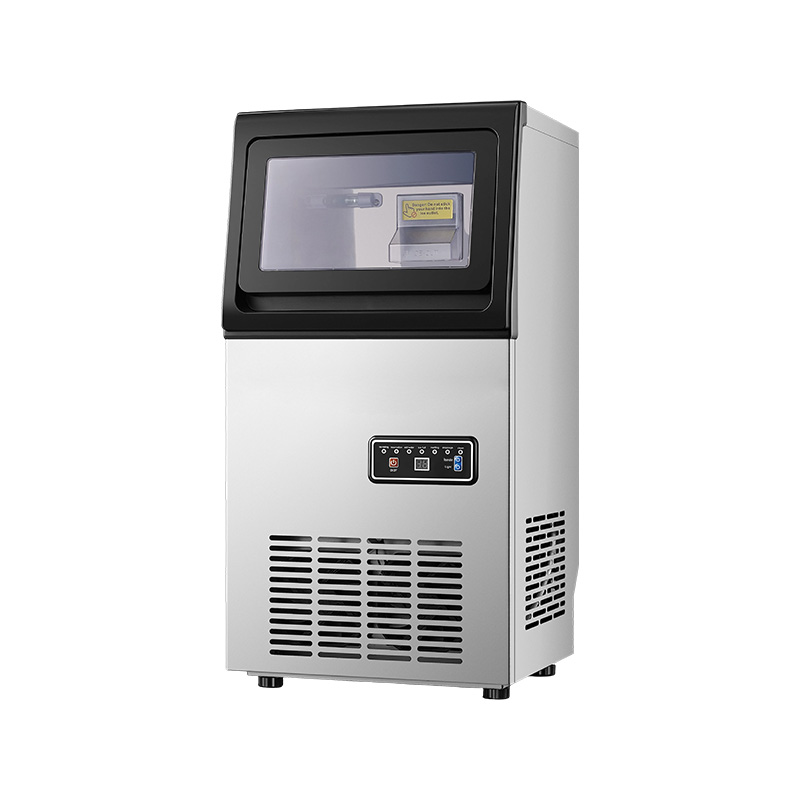
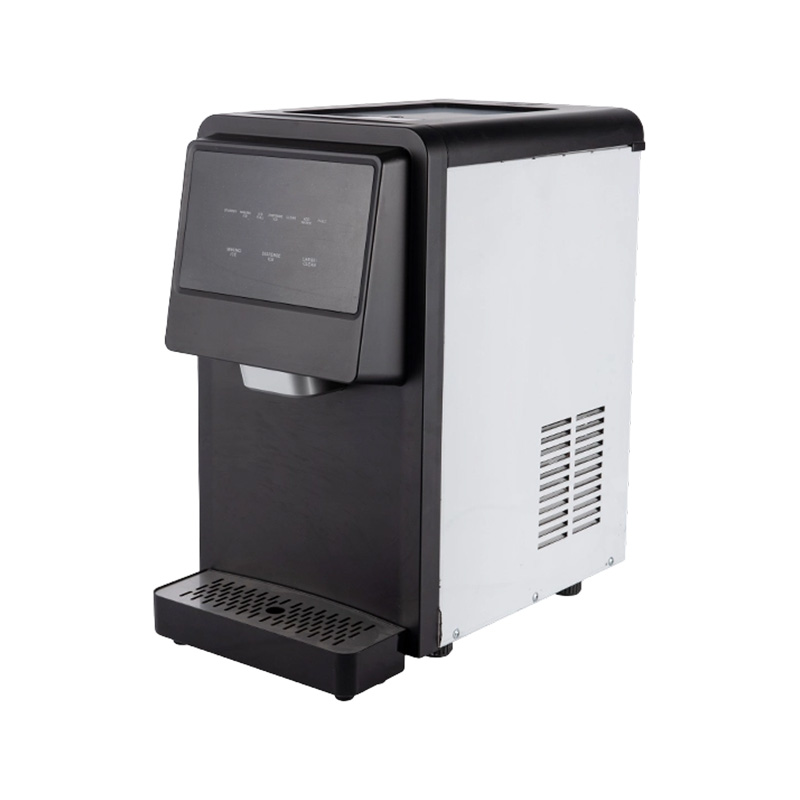
The standard output of most countertop automatic ice makers. The curved geometry enables efficient directional freezing and reduces splashing in dispensing applications, making it the practical choice for general home use.
The professional's choice for food presentation, seafood display, and blended beverage preparation. High surface area and malleable texture enable rapid chilling of irregular surfaces and smooth blending without hard edges.
The showpiece of cocktail culture. Spherical geometry minimizes surface-to-volume ratio to its theoretical minimum, producing the longest melt time of any ice form and the most dramatic visual presentation in premium glassware.
Green Energy Efficiency: The Sustainability Imperative in Ice Production
Ice production is an energy-intensive process. The thermodynamic work of removing heat from water to below freezing point, maintaining storage conditions, and cycling the ice-making mechanism continuously through a commercial service day places ice makers among the more significant energy consumers in foodservice facility energy profiles. For a busy restaurant or hotel, ice production can account for eight to fifteen percent of total kitchen energy use — a figure that has attracted serious attention from operators navigating rising energy costs and sustainability reporting requirements.
The engineering response to this challenge has been substantial and is accelerating. The fully automatic ice makers entering the market in 2025 and 2026 deploy multiple energy efficiency technologies simultaneously, achieving efficiency gains that would have required significant performance compromises in previous generations of equipment.
Energy Efficiency Technologies in High-Performance Automatic Ice Makers
The Inverter Compressor Revolution
The most consequential single technology advance in automatic ice maker efficiency is the adoption of inverter-driven variable-speed compressors borrowed from the air conditioning and premium refrigeration sectors. Conventional fixed-speed compressors operate at full power whenever active, cycling on and off to regulate output — an inherently inefficient mode that produces peak power draw at startup and cannot adapt output to ambient temperature or demand conditions. Inverter compressors modulate speed continuously, matching refrigeration output to instantaneous need and eliminating the energy-intensive start-stop cycle entirely. The efficiency gain in ice making applications, where ambient conditions and demand vary substantially across daily and seasonal cycles, typically ranges from thirty to forty-five percent compared to equivalent fixed-speed equipment.
Sustainable Refrigerants and Environmental Responsibility
The refrigerant chemistry used in ice maker compressor circuits has significant environmental implications beyond the energy efficiency of the equipment itself. Hydrofluorocarbon refrigerants that dominated commercial refrigeration through the 2000s and 2010s carry global warming potentials hundreds to thousands of times greater than carbon dioxide. The leading ice maker manufacturers have transitioned their product ranges to natural refrigerants — propane (R290) and isobutane (R600a) — that combine high thermodynamic efficiency with global warming potentials below five. This transition, accelerating under the Kigali Amendment framework and national regulatory programs, makes the environmental footprint calculation for premium ice makers substantially more favorable than equivalent analyses conducted even five years ago.
The Foodservice Industry: Ice as Competitive Advantage
In commercial foodservice, ice quality is increasingly treated as a differentiator rather than a commodity input. The beverage programs of leading cocktail bars, specialty coffee shops, hotel restaurants, and premium quick-service chains have elevated ice from background ingredient to active element of the brand experience — something customers notice, comment on, and associate with overall quality standards.
We replaced our ice machine with a directional-freeze clear cube system three years ago. Within a month, customers were asking what we had changed. Ice is the first thing your guest touches in a drink. If it is cloudy, soft, and tasting of freezer, you have started the experience in deficit. If it is clear, dense, and neutral, you are invisible — which is exactly where you want to be. Bar Director, Award-Winning Cocktail Venue, Singapore
Operational Efficiency in High-Volume Service
Beyond the quality dimension, fully automatic ice makers deliver operational advantages in foodservice settings that translate directly to labor cost, service consistency, and waste reduction. The defining characteristic of the fully automatic format — continuous production that maintains a target inventory level without staff intervention — eliminates the ice shortages during peak service that disrupt beverage operations in venues relying on manual or semi-automatic systems. Staff time previously allocated to ice monitoring, manual transfers from storage bins, and emergency restocking can be redirected to guest-facing service roles where its contribution to revenue generation is direct and measurable.
Sanitation management in fully automatic systems is similarly advantaged. Automatic self-cleaning cycles, ultraviolet sanitization of storage bins, and closed production pathways that minimize human contact with the ice supply between production and dispensing reduce both microbial contamination risk and the labor burden of manual cleaning programs. In the post-pandemic food safety environment, where both regulatory scrutiny and consumer awareness of food hygiene have heightened, these sanitation engineering features have moved from premium specification to standard expectation in commercial installation decisions.
| Factor | Fully Automatic High-Performance | Semi-Automatic | Refrigerator Ice Bin |
|---|---|---|---|
| Ice clarity and density | Excellent (directional freeze) | Moderate | Poor (omnidirectional) |
| Production continuity | Uninterrupted, demand-responsive | Manual initiation required | Fixed batch, slow |
| Energy efficiency | Inverter-optimized | Fixed-speed | Integrated refrigerator load |
| Water filtration | Multi-stage integrated | Optional external | None standard |
| Sanitation management | Auto-clean cycles, UV option | Manual schedule | Manual only |
| Staff intervention required | Minimal | Regular | Frequent |
| Suitable for home wellness use | Countertop models available | Some models | Limited ice type flexibility |
Healthy Living at Home: The Domestic Ice Maker Revolution
The penetration of high-performance automatic ice makers into domestic settings represents one of the more interesting appliance category stories of the mid-2020s. What drove this penetration was not primarily the craft cocktail aspirations of home bartenders — though that segment has been real and vocal — but rather a health and wellness narrative centered on hydration, the therapeutic properties of certain ice forms, and the specific cult following of nugget ice among health-conscious consumers.
The Nugget Ice Phenomenon and Hydration Culture
Nugget ice — variously called pellet ice, chewable ice, Sonic ice, or hospital ice by its devotees — occupies a category of fervent consumer enthusiasm that exceeds any rational utility analysis of frozen water. Its unique properties, a soft, compressed-snow texture that absorbs beverage flavor while chilling it, a chewable consistency that satisfies an oral fixation common among individuals managing anxiety, dietary restriction, or simply the sensory desire for texture in beverages, have generated social media communities numbering in the millions and driven home ice maker sales to the fastest-growing appliance category in several major markets during 2024 and 2025.
The health dimension of the nugget ice phenomenon is multifaceted. Nutritionists and hydration specialists have noted that cold, textured beverages increase voluntary fluid intake among individuals who struggle to meet daily hydration targets with plain water. The sensory reward of nugget ice — its texture, its temperature, its ability to absorb the flavor of whatever it contacts — makes consuming large volumes of water or healthy beverages more appealing than drinking the same volume from a glass without ice. Hydration tracking communities on major wellness platforms consistently identify nugget ice as a behavior-change tool that has meaningfully improved their daily fluid consumption.
Wellness Benefits Associated with Quality Home Ice Production
- Hydration compliance: Cold, textured beverages increase voluntary water intake by measurable margins in clinical hydration studies, with nugget ice producing the strongest effect among ice types due to its high surface area and chewable texture.
- Beverage quality control: Home-produced filtered ice eliminates the mineral and flavor contamination from bagged commercial ice that can discourage consumption of plain water, protein shakes, and herbal infusions.
- Recovery applications: Athletes and fitness enthusiasts using ice baths, localized ice therapy, and cold-water recovery protocols benefit from consistent, clean ice production capacity that emergency freezer methods cannot reliably provide.
- Medication and supplement preservation: Consistent ice availability for cold-chain medications, insulin storage during power outages, and the preparation of temperature-sensitive dietary supplements is a practical health utility that motivates purchase for medically complex households.
- Mental wellness dimension: The sensory satisfaction of chewing nugget ice has been documented in anxiety and ADHD management communities as a stimming behavior that provides acceptable oral sensory input, reducing more disruptive alternatives.
Smart Home Integration and the Automated Wellness Kitchen
The most advanced home ice maker models entering the 2026 market integrate with smart home ecosystems through Wi-Fi connectivity, enabling scheduling, production monitoring, and maintenance alerts accessible through smartphone applications. This integration positions the ice maker within a broader automated wellness kitchen concept in which appliances coordinate to support health goals — the ice maker producing a morning batch before the blender cycles for a post-workout smoothie, the hydration reminder on a smartwatch triggering the ice maker to ensure supply is ready for the recommended afternoon water consumption increase.
Voice assistant compatibility, real-time production status visibility, and predictive maintenance notifications that alert users to filter replacement needs before water quality degrades represent the connected feature layer that premium home ice maker brands are using to justify price premiums and differentiate from the growing field of commodity countertop alternatives. For users who have integrated health tracking into their daily routines, these connectivity features are not gimmicks but functional extensions of the wellness infrastructure they have already built around sleep tracking, nutrition logging, and fitness monitoring.
Key Features That Distinguish High-Performance Automatic Ice Makers
Variable-speed motor control that modulates output to demand, reducing energy consumption by up to 45 percent versus fixed-speed equivalents while extending compressor service life through reduced thermal cycling stress.
Integrated sediment, carbon, and in premium models reverse-osmosis filtration that controls dissolved solids entering the freezing system, directly determining ice clarity, taste neutrality, and food safety margins.
Programmatic cleaning cycles that flush water circuits with citric acid or silver-ion sanitizing solutions on scheduled intervals, maintaining microbial safety without staff or owner intervention in the cleaning process.
Bin-level sensing that halts production when storage capacity is reached and resumes automatically as ice is drawn, eliminating both overflow waste and the shortfall periods that occur with fixed-cycle production schedules.
R290 or R600a refrigerant circuits with global warming potential below five, meeting the most stringent current environmental regulations and future-proofing the installation against upcoming HFC phase-down requirements.
Silver-ion impregnated plastic components in contact zones with produced ice, providing passive bacteriostatic protection between active cleaning cycles and reducing biofilm formation on water-contact surfaces.
Optimized refrigerant circuit pre-charging and compressor startup protocols that achieve first ice production within ten to fifteen minutes of activation, eliminating the extended wait periods of first-generation automatic models.
Component architecture that allows filter replacement, water circuit cleaning, and common wear part substitution without specialized tools or technical service visits, reducing lifetime maintenance cost and extending equipment service life.
Selecting the Right Ice Maker: Commercial and Domestic Decision Frameworks
For Foodservice Operators
Commercial ice maker selection begins with an accurate assessment of peak demand — the maximum hourly ice requirement during the busiest service period — and works backward from this figure to determine the minimum production capacity specification, allowing a buffer of twenty to thirty percent for ambient temperature variation and equipment aging effects. Ice type selection follows from the primary application: cube ice for beverage service, flake or nugget for food display and blended applications, and crescent for general-purpose mixed use.
Energy efficiency certification — most meaningfully expressed through Energy Star compliance in North America and equivalent schemes in European and Asian markets — provides a standardized basis for comparing operating cost projections across competing models. Water use efficiency, typically expressed as gallons of water consumed per hundred pounds of ice produced, is the secondary environmental metric that should inform selection in water-stressed operating regions or where wastewater disposal costs are significant.
For Domestic Users
Home ice maker selection is dominated by three practical constraints: counter or installation space, household daily ice volume requirement, and the specific ice type desired. The nugget ice category has simplified selection for the large majority of wellness-motivated home buyers by creating a clear product subcategory with defined feature expectations, but buyers should verify filtration specification, cleaning cycle automation, and connectivity features against their specific usage context before committing to a platform.
Practical Selection Checklist for Home Automatic Ice Makers
- Define your ice type priority: Nugget for hydration and chewing satisfaction, crescent for general beverages, clear cube for cocktail and spirits service. Ice type determines which product subcategory to evaluate and eliminates most irrelevant options immediately.
- Assess your daily volume requirement honestly: A household of two adults using ice primarily for beverages requires five to eight pounds daily. A household with children, frequent entertaining, or athletic recovery applications may require fifteen to twenty-five pounds. Match the machine's rated daily output to your realistic peak demand.
- Prioritize integrated filtration: Models with built-in filtration eliminate the ongoing purchase of filter pitchers and the inconsistency of ice made from unfiltered tap water. Verify the filter specification covers both particulate and organic compound removal at minimum.
- Verify self-cleaning automation: Manual cleaning compliance is the most common maintenance failure mode in home ice maker ownership. Automatic cleaning cycle scheduling transforms a task that many owners neglect into a passive system function.
- Check refrigerant specification: Natural refrigerant (R290 or R600a) models carry lower environmental impact and in many markets qualify for energy rebates that partially offset purchase price premiums over HFC-refrigerant alternatives.
- Evaluate connectivity against your actual usage pattern: Smart home integration is genuinely useful if you already operate a connected kitchen ecosystem and will engage with the application features. If your use pattern is simply continuous passive production, connectivity features add cost without proportional benefit.
The Intersection of Green Efficiency and Lifestyle: Where the Trends Converge
The fully automatic ice maker occupies an unusual position in the current consumer appliance landscape: it is simultaneously a green efficiency technology, a culinary quality instrument, and a wellness lifestyle accessory. This convergence is not accidental. The engineering priorities that produce energy-efficient ice — precise compressor control, optimized water circuits, demand-responsive production — are the same priorities that produce high-quality, consistent ice output and the operational reliability that makes automated home use practical without professional maintenance support.
The consumer who purchases a high-performance automatic ice maker in 2026 is, in most cases, acting on multiple motivations simultaneously. They may have seen nugget ice on a health influencer's hydration content and been attracted by the wellness narrative. They may be replacing aging commercial equipment and motivated by energy cost reduction and improved service quality. They may be outfitting a home bar and seeking the clear cube that their favorite cocktail venue uses. In each case, the same technology ecosystem — inverter efficiency, multi-stage filtration, directional freezing, automated sanitation — serves their specific priority while delivering the others as compounding benefits.
This convergence represents a genuine maturation of the ice maker category from commodity appliance to considered purchase. The consumer who once bought the cheapest available ice maker without specification research is increasingly replaced by a buyer who knows what HEV blocking means for blue light lenses and what inverter efficiency means for compressors, who reads energy ratings, who has formed a preference for a specific ice type based on direct experience rather than default, and who is prepared to pay a premium for equipment that performs to the standard their culinary and wellness goals demand.
For the foodservice industry and the health-conscious home alike, the message of the high-performance fully automatic ice maker is consistent: crisp ice, produced cleanly, efficiently, and without interruption, is not a luxury but a baseline expectation whose achievement has become more accessible, more sustainable, and more deeply integrated with the way people understand and pursue healthy living than at any previous point in the long, underappreciated history of ice.